Big Fish
Mola Mola (Ocean Sunfish)
Mola mola · Bony fish, family Molidae
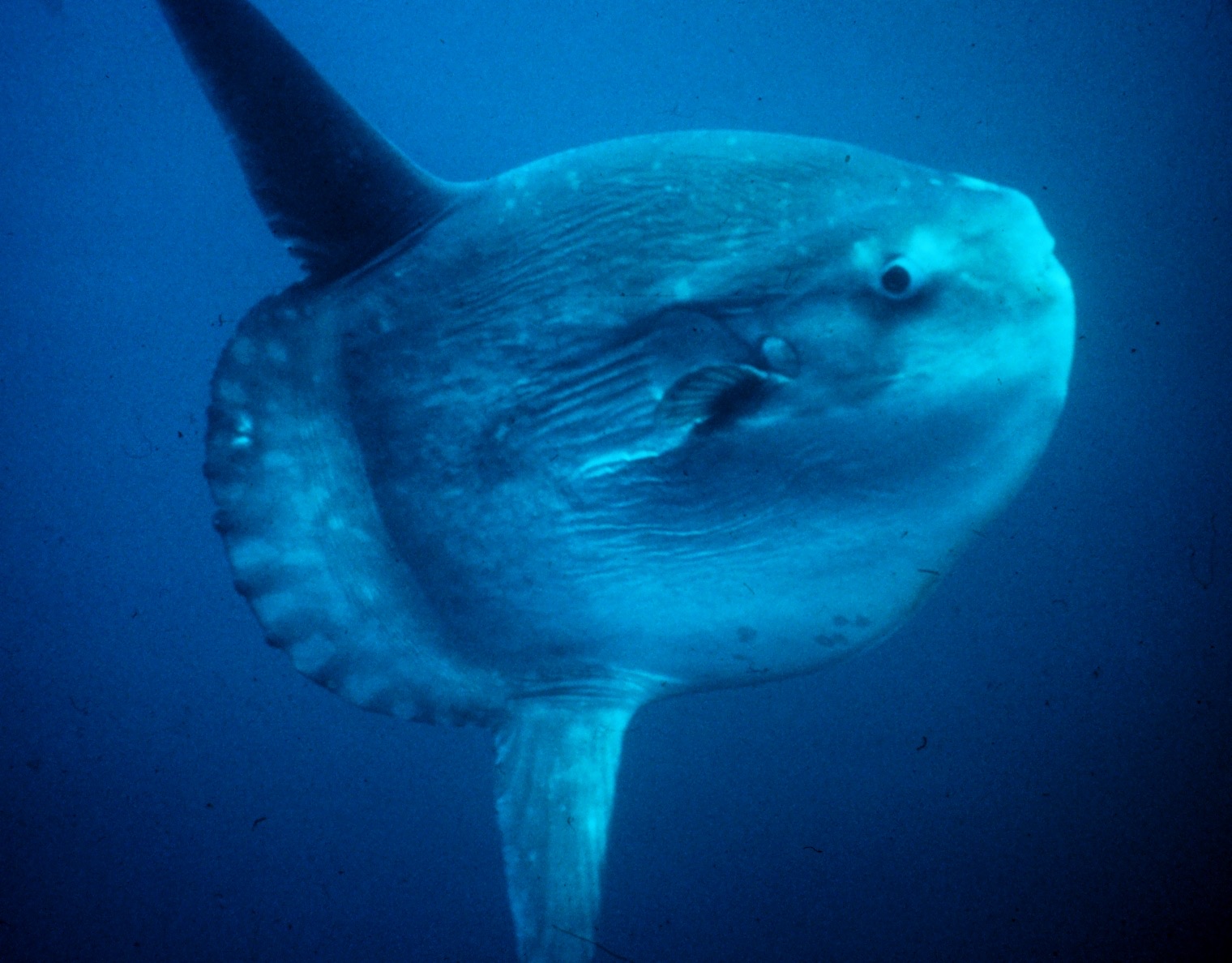
The sunfish looks like the ocean ran out of fish halfway through building one: a huge silver head that simply stops, finished off with a scalloped rudder where the tail should be. Then it moves, and the joke dies: a big mola sculls past with unhurried authority, an eye the size of a plum tracking you, on its way to hang tilted at a cleaning station while bannerfish groom it like pit crew. Bali's cold-upwelling season delivers the world's most reliable encounters, strange gray giants materializing out of thermocline haze at Crystal Bay. It remains one of diving's oddest and most coveted sightings: a deep-sea jellyfish-eater moonlighting as a wall ornament.
Dónde y cuándo ver uno
"Residente" significa que la mayoría de las inmersiones en ese destino tienen encuentros con ellos; "estacional" significa que su presencia es fiable en los meses indicados; cualquier otra cosa es un extra, no algo con lo que contar.
| Destino | Fiabilidad | Meses | Notas |
|---|---|---|---|
| Bali & Nusa PenidaIndonesia | Seasonal: reliable in season | Jul–Oct | |
| Galápagos IslandsEcuador | Occasional | Todo el año | |
| The AzoresPortugal | Occasional | Jun–Sep | |
| California Channel IslandsUnited States | Occasional | Jul–Oct |
El mejor mes, de un vistazo
| Mes | Destinos fiables |
|---|---|
| January | Galápagos Islands |
| February | Galápagos Islands |
| March | Galápagos Islands |
| April | Galápagos Islands |
| May | Galápagos Islands |
| June | Galápagos Islands · The Azores |
| July | Bali & Nusa Penida · Galápagos Islands · The Azores · California Channel Islands |
| August | Bali & Nusa Penida · Galápagos Islands · The Azores · California Channel Islands |
| September | Bali & Nusa Penida · Galápagos Islands · The Azores · California Channel Islands |
| October | Bali & Nusa Penida · Galápagos Islands · California Channel Islands |
| November | Galápagos Islands |
| December | Galápagos Islands |
Comprendiéndolos
Hábitat: Open ocean through the water column; rises to cleaning stations on reef walls and basks flat at the surface after cold deep dives
Rango: Temperate and tropical oceans worldwide; diver encounters cluster at Bali's channel reefs, the Mediterranean, California, and the Azores
Comportamiento: A vertical dinner-plate of a fish that flaps along on dorsal and anal fins, yaws like a badly trimmed kite, and queues at cleaning stations where bannerfish pick its parasites. Surface basking (lying flat, side up) warms it after deep foraging. Utterly placid around divers unless crowded off the station.
Dieta: Jellyfish and other gelatinous plankton, plus small fish and zooplankton, a low-calorie diet consumed in bulk
Tamaño: normalmente alrededor de 1.8 m; documentado hasta 3.3 m (total length; among the heaviest bony fishes, with big animals beyond a tonne. Bali's famous 'mola' is now identified as the bump-head sunfish, Mola alexandrini).
Cómo comportarse cerca de uno
Nusa Penida's code of conduct is the model: stay behind the reef line at cleaning stations, minimum distances, no flash barrages, no bubbles beneath a cleaning fish, and never chase a departing mola; it won't come back that day.
Conservación
Vulnerable: vast numbers die as bycatch in drift and set nets worldwide; its slow-motion surface basking makes it easy accidental catch.
Puntos conocidos por avistamientos
Los puntos destacados fueron registrados para esta especie por nuestros editores; los números son registros de ocurrencia de GBIF anotados en un radio de unos 5 km de un punto desde 1990.
Ver
Desde los canales oficiales

Wildlife of Monterey | New film in our auditorium

Live Aviary Cam | Monterey Bay Aquarium

Live Aviary Cam | Monterey Bay Aquarium
Los vídeos son enlaces insertados a los canales de sus propios creadores. No alojamos nada y acreditamos todo.