Macro
Nudibranchs
Nudibranchia · Marine gastropod mollusks, order Nudibranchia; order-level overview of more than 3,000 described species
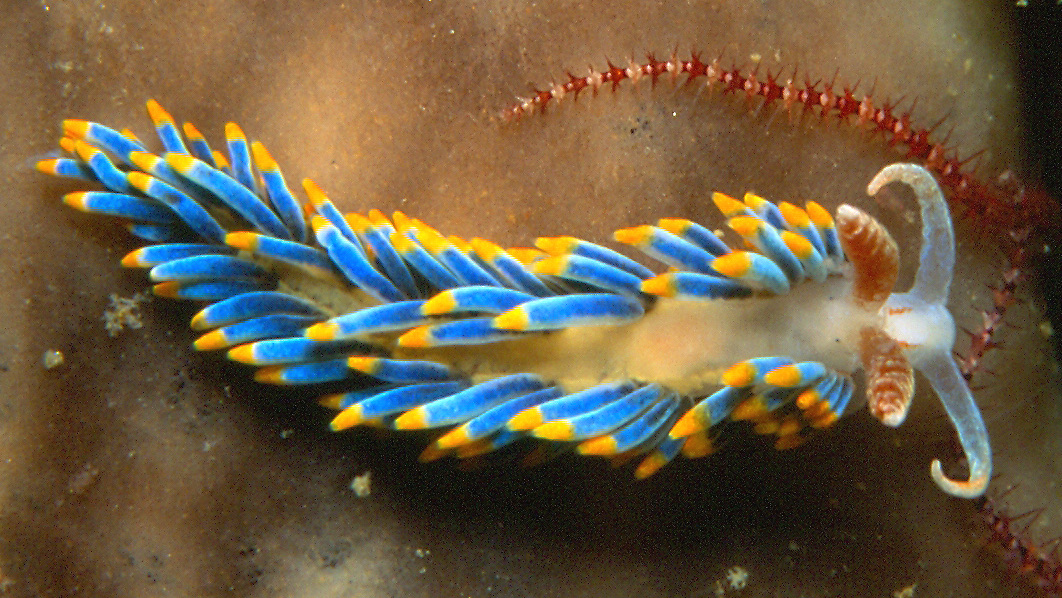
Nudibranchs are the reason macro divers stop covering distance. More than three thousand described species of these shell-less snails crawl the world's seafloors wearing colors that work as warnings, advertisements, and camouflage all at once, and more are named every year, with muck hotspots regularly producing animals new to science. The order splits broadly in two: dorids, carrying a rosette of gills on the back, many recycling sponge toxins into chemical defense; and aeolids, fringed in tentacle-like cerata that store working stinging cells stolen from the hydroids they eat. Rhinophores, the paired head antennae, smell the water for prey and mates. Most species live weeks to a year, so casts turn over fast and no two months on the same site produce the same list. Slow to a crawl and the sand starts producing.
Wo und wann man eines sieht
„Resident" bedeutet, dass die meisten Tauchgänge am jeweiligen Tauchziel eine Begegnung erwarten lassen; „saisonal" bedeutet, dass die Art in den genannten Monaten zuverlässig anzutreffen ist; alles andere ist ein Bonus, keine Planungsgrundlage.
| Ziel | Zuverlässigkeit | Monate | Hinweise |
|---|---|---|---|
| AnilaoPhilippines | Resident: seen on most dives | Ganzjährig | |
| Lembeh StraitIndonesia | Resident: seen on most dives | Ganzjährig | |
| Dumaguete, Dauin & Apo IslandPhilippines | Resident: seen on most dives | Ganzjährig | |
| Poor Knights IslandsNew Zealand | Resident: seen on most dives | Ganzjährig | |
| British ColumbiaCanada | Resident: seen on most dives | Ganzjährig | |
| Milne BayPapua New Guinea | Resident: seen on most dives | Ganzjährig |
Bester Monat auf einen Blick
Sie verstehen
Lebensraum: Every bottom type divers visit (reef, rubble, sand, kelp, jetty piles, mud), wherever each species' prey grows; the order as a whole ranges from tide pools to the deep sea.
Verbreitung: All oceans, polar to tropical; the Coral Triangle holds the richest shallow-water diversity known.
Verhalten: Slow, chemically defended browsers; hermaphrodites that mate side by side and lay coiled egg ribbons. Aeolid species store working stinging cells from the hydroids they eat.
Ernährung: Specialists almost to a species: sponges, hydroids, bryozoans, tunicates, anemones, eggs, or other sea slugs.
Größe: typischerweise rund 0.03 m; dokumentiert bis zu 0.6 m (order-wide range; most diver-found species are 1–6 cm, while the Spanish dancer reaches about 60 cm).
Wie man sich in ihrer Nähe verhält
Shoot without touching or relocating: posed slugs on borrowed backgrounds are the macro world's staged wildlife problem. Keep strobe sessions short per animal.
Naturschutz
Almost none have been evaluated for the IUCN Red List; their fortunes track the sponges, hydroids, and other prey they depend on.
Bekannte Tauchplätze dafür
Hervorgehobene Tauchplätze wurden von unseren Redakteuren für diese Art kartiert; die Zahlen sind GBIF-Vorkommensdatensätze, die seit 1990 im Umkreis von etwa 5 km um einen Tauchplatz protokolliert wurden.
Ansehen
Aus den offiziellen Kanälen

Wildlife of Monterey | New film in our auditorium

Live Aviary Cam | Monterey Bay Aquarium

Live Aviary Cam | Monterey Bay Aquarium
Videos sind eingebettete Links zu den Kanälen der jeweiligen Ersteller – wir hosten nichts und geben für alles die Quelle an.