Macro
Nudibranchs
Nudibranchia · Marine gastropod mollusks, order Nudibranchia; order-level overview of more than 3,000 described species
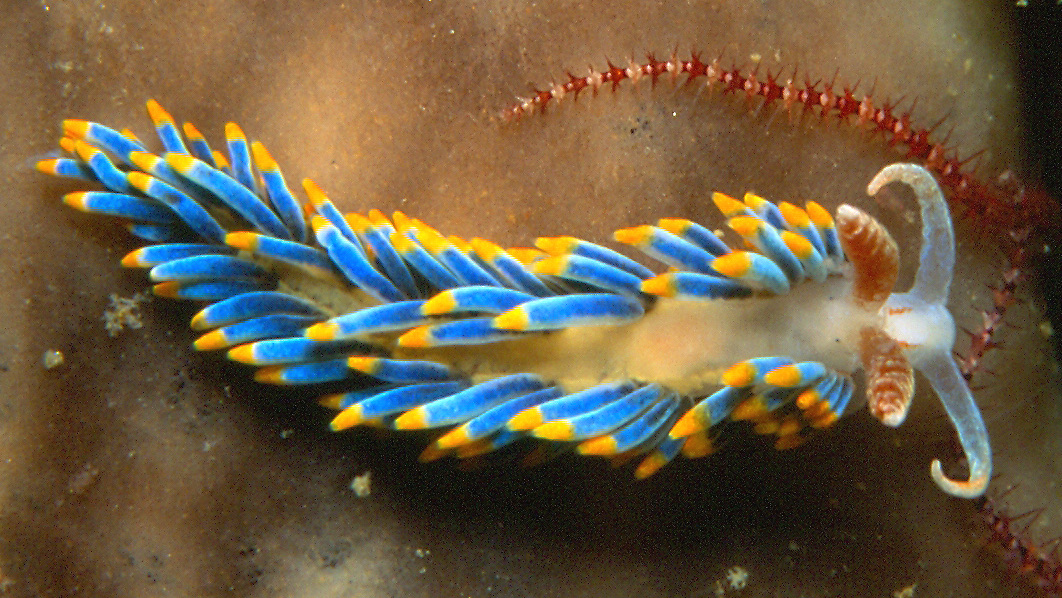
Nudibranchs are the reason macro divers stop covering distance. More than three thousand described species of these shell-less snails crawl the world's seafloors wearing colors that work as warnings, advertisements, and camouflage all at once, and more are named every year, with muck hotspots regularly producing animals new to science. The order splits broadly in two: dorids, carrying a rosette of gills on the back, many recycling sponge toxins into chemical defense; and aeolids, fringed in tentacle-like cerata that store working stinging cells stolen from the hydroids they eat. Rhinophores, the paired head antennae, smell the water for prey and mates. Most species live weeks to a year, so casts turn over fast and no two months on the same site produce the same list. Slow to a crawl and the sand starts producing.
Où et quand en observer un
« Résident » signifie que la plupart des plongées sur ce site permettent de les observer ; « saisonnier » signifie qu'ils sont présents de manière fiable durant les mois indiqués ; tout le reste est un bonus, pas une certitude.
| Destination | Fiabilité | Mois | Notes |
|---|---|---|---|
| AnilaoPhilippines | Resident: seen on most dives | Toute l'année | |
| Lembeh StraitIndonesia | Resident: seen on most dives | Toute l'année | |
| Dumaguete, Dauin & Apo IslandPhilippines | Resident: seen on most dives | Toute l'année | |
| Poor Knights IslandsNew Zealand | Resident: seen on most dives | Toute l'année | |
| British ColumbiaCanada | Resident: seen on most dives | Toute l'année | |
| Milne BayPapua New Guinea | Resident: seen on most dives | Toute l'année |
Meilleur mois, en un coup d'œil
Les comprendre
Habitat: Every bottom type divers visit (reef, rubble, sand, kelp, jetty piles, mud), wherever each species' prey grows; the order as a whole ranges from tide pools to the deep sea.
Aire de répartition: All oceans, polar to tropical; the Coral Triangle holds the richest shallow-water diversity known.
Comportement: Slow, chemically defended browsers; hermaphrodites that mate side by side and lay coiled egg ribbons. Aeolid species store working stinging cells from the hydroids they eat.
Régime alimentaire: Specialists almost to a species: sponges, hydroids, bryozoans, tunicates, anemones, eggs, or other sea slugs.
Taille: généralement autour de 0.03 m; documenté jusqu'à 0.6 m (order-wide range; most diver-found species are 1–6 cm, while the Spanish dancer reaches about 60 cm).
Comment se comporter avec lui
Shoot without touching or relocating: posed slugs on borrowed backgrounds are the macro world's staged wildlife problem. Keep strobe sessions short per animal.
Conservation
Almost none have been evaluated for the IUCN Red List; their fortunes track the sponges, hydroids, and other prey they depend on.
Sites répertoriés connus pour leur présence
Les sites mis en évidence ont été cartographiés pour cette espèce par nos éditeurs ; les chiffres correspondent aux occurrences GBIF enregistrées dans un rayon d'environ 5 km d'un site depuis 1990.
Regarder
Depuis les canaux officiels

Wildlife of Monterey | New film in our auditorium

Live Aviary Cam | Monterey Bay Aquarium

Live Aviary Cam | Monterey Bay Aquarium
Les vidéos sont des liens intégrés vers les chaînes de leurs créateurs. Nous n'hébergeons rien et créditons tout.