Macro
Nudibranchs
Nudibranchia · Marine gastropod mollusks, order Nudibranchia; order-level overview of more than 3,000 described species
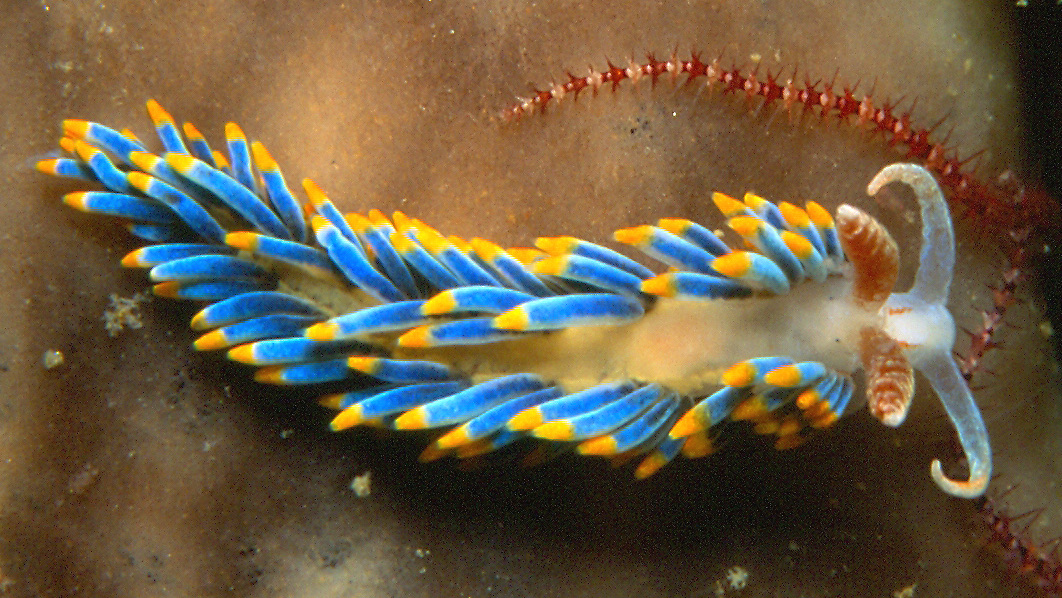
Nudibranchs are the reason macro divers stop covering distance. More than three thousand described species of these shell-less snails crawl the world's seafloors wearing colors that work as warnings, advertisements, and camouflage all at once, and more are named every year, with muck hotspots regularly producing animals new to science. The order splits broadly in two: dorids, carrying a rosette of gills on the back, many recycling sponge toxins into chemical defense; and aeolids, fringed in tentacle-like cerata that store working stinging cells stolen from the hydroids they eat. Rhinophores, the paired head antennae, smell the water for prey and mates. Most species live weeks to a year, so casts turn over fast and no two months on the same site produce the same list. Slow to a crawl and the sand starts producing.
Nơi và thời điểm có thể gặp
"Thường trú" nghĩa là hầu hết các lần lặn tại điểm đó đều gặp được chúng; "theo mùa" nghĩa là chúng xuất hiện đáng tin cậy trong các tháng được liệt kê; bất kỳ điều gì ngoài ra là điểm thưởng, không phải kế hoạch.
| Điểm đến | Độ tin cậy | Các tháng | Ghi chú |
|---|---|---|---|
| AnilaoPhilippines | Resident: seen on most dives | Quanh năm | |
| Lembeh StraitIndonesia | Resident: seen on most dives | Quanh năm | |
| Dumaguete, Dauin & Apo IslandPhilippines | Resident: seen on most dives | Quanh năm | |
| Poor Knights IslandsNew Zealand | Resident: seen on most dives | Quanh năm | |
| British ColumbiaCanada | Resident: seen on most dives | Quanh năm | |
| Milne BayPapua New Guinea | Resident: seen on most dives | Quanh năm |
Tháng tốt nhất, nhìn tổng quan
Tìm hiểu về chúng
Môi trường sống: Every bottom type divers visit (reef, rubble, sand, kelp, jetty piles, mud), wherever each species' prey grows; the order as a whole ranges from tide pools to the deep sea.
Phạm vi phân bố: All oceans, polar to tropical; the Coral Triangle holds the richest shallow-water diversity known.
Hành vi: Slow, chemically defended browsers; hermaphrodites that mate side by side and lay coiled egg ribbons. Aeolid species store working stinging cells from the hydroids they eat.
Chế độ ăn: Specialists almost to a species: sponges, hydroids, bryozoans, tunicates, anemones, eggs, or other sea slugs.
Kích thước: thường vào khoảng 0.03 m; ghi nhận đến độ sâu 0.6 m (order-wide range; most diver-found species are 1–6 cm, while the Spanish dancer reaches about 60 cm).
Cách ứng xử khi ở gần loài này
Shoot without touching or relocating: posed slugs on borrowed backgrounds are the macro world's staged wildlife problem. Keep strobe sessions short per animal.
Bảo tồn
Almost none have been evaluated for the IUCN Red List; their fortunes track the sponges, hydroids, and other prey they depend on.
Các điểm lặn đã ghi nhận có loài này
Các điểm được làm nổi bật là những điểm đã được ban biên tập ghi chép cho loài này; các con số là bản ghi xuất hiện từ GBIF được ghi nhận trong phạm vi khoảng 5 km của điểm lặn kể từ năm 1990.
Xem
Từ kênh chính thức

Wildlife of Monterey | New film in our auditorium

Live Aviary Cam | Monterey Bay Aquarium

Live Aviary Cam | Monterey Bay Aquarium
Video là các liên kết nhúng dẫn đến kênh của chính tác giả. Chúng tôi không lưu trữ gì và ghi công đầy đủ.