Reef Fish
Ribbon Eel
Rhinomuraena quaesita · Bony fish, family Muraenidae (moray eels); the only member of its genus
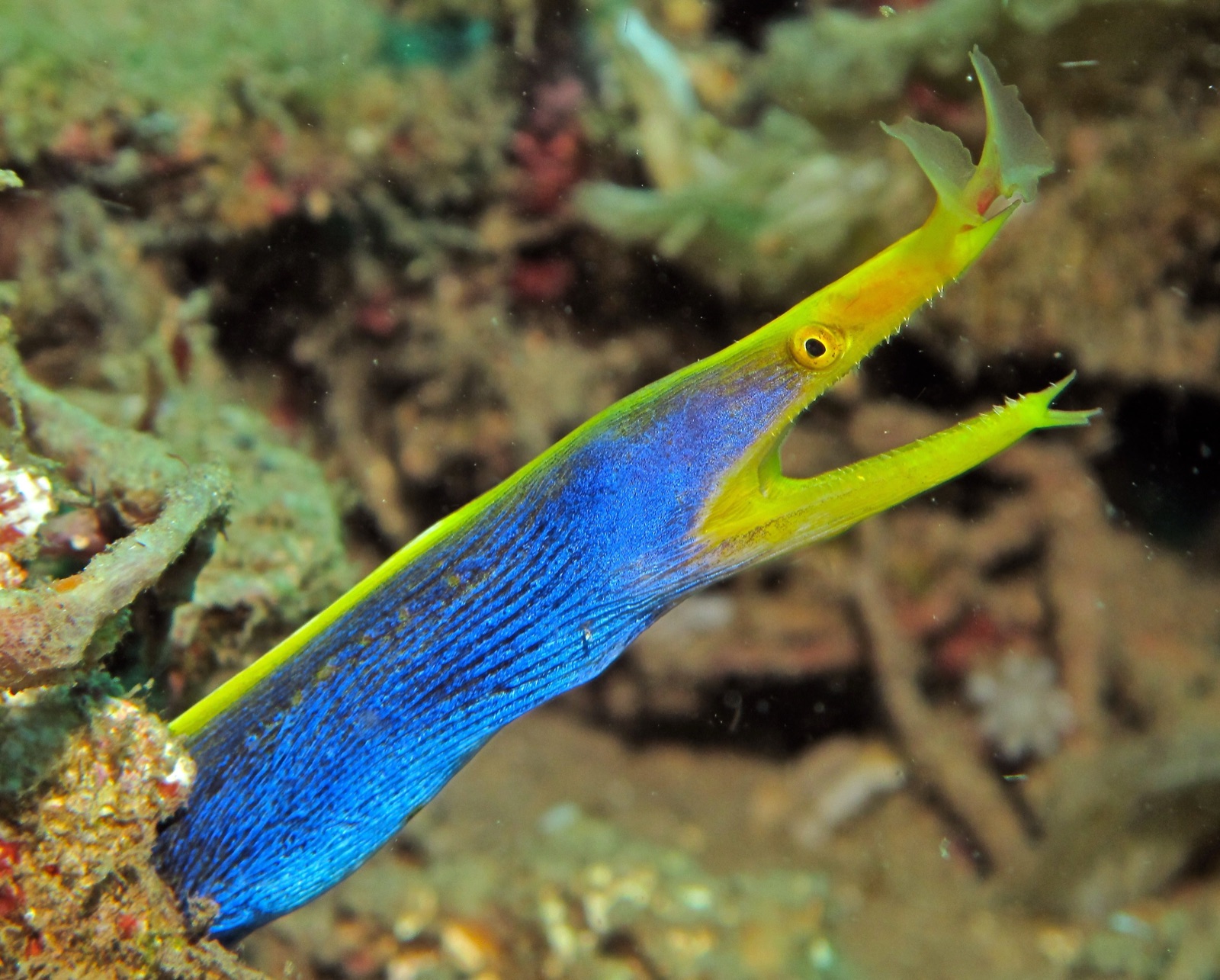
A ribbon eel in full display looks less like a fish than a ribbon caught in current: a pencil-thin body anchored in a sand burrow, front third waving, jaws flared beneath trumpet-shaped nostrils. The species wears three costumes: juveniles jet black with a yellow dorsal stripe, mature males electric blue and yellow, and late-stage animals yellow overall, widely described as females in a male-to-female sequence. Most encounters are jack-in-the-box moments on rubble slopes and muck flats, the eel striking at passing silversides or simply tasting the water. Individuals reuse the same burrow for months, which is why good guides find them on demand. Come in low and unhurried from the front; a burst of exhaust bubbles overhead sends the whole animal underground until tomorrow.
Onde e quando ver um
"Residente" significa que a maioria dos mergulhos naquele destino os encontra; "sazonal" significa presença confiável nos meses listados; qualquer outra coisa é um bônus, não um plano.
| Destino | Fiabilidade | Meses | Notas |
|---|---|---|---|
| Bali & Nusa PenidaIndonesia | Resident: seen on most dives | Todo o ano | |
| Lembeh StraitIndonesia | Resident: seen on most dives | Todo o ano | |
| AnilaoPhilippines | Resident: seen on most dives | Todo o ano | |
| Dumaguete, Dauin & Apo IslandPhilippines | Resident: seen on most dives | Todo o ano | |
| MoalboalPhilippines | Occasional | Todo o ano |
Melhor mês, em resumo
Entendendo-os
Habitat: Sand and rubble burrows on reef margins, slopes, and muck flats, usually with just the head and front third showing.
Distribuição: Indo-Pacific from East Africa to French Polynesia, north to southern Japan, south to Australia.
Comportamento: Anchors in a burrow and waves the forebody in the current; individuals reuse the same hole for months. Flared nostrils and constant open-mouth posture are sensory and respiratory, not aggression.
Dieta: Small fishes snatched from the water column above the burrow.
Tamanho: normalmente cerca de 1.0 m; documentado até 1.3 m (total length; the body is only a few centimeters deep).
Como se comportar perto de um
Approach low and slow from the front and keep bubbles off the burrow; a startled eel withdraws for the rest of the dive. Divers should never pull or bait one out.
Conservação
Common across a vast range; collected for aquaria despite surviving poorly in captivity, a trade worth declining to support.
Pontos mapeados conhecidos por eles
Os locais destacados foram cartografados para esta espécie pelos nossos editores; os números são registos de ocorrência do GBIF num raio de cerca de 5 km do local desde 1990.
Assista
Dos canais oficiais

Wildlife of Monterey | New film in our auditorium

Live Aviary Cam | Monterey Bay Aquarium

Live Aviary Cam | Monterey Bay Aquarium
Os vídeos são ligações incorporadas para os canais dos próprios criadores. Não alojamos nada e creditamos tudo.