Reef Fish
Seahorses
Hippocampus · Bony fish, genus Hippocampus, family Syngnathidae (seahorses and pipefishes); genus-level overview of roughly 50 species
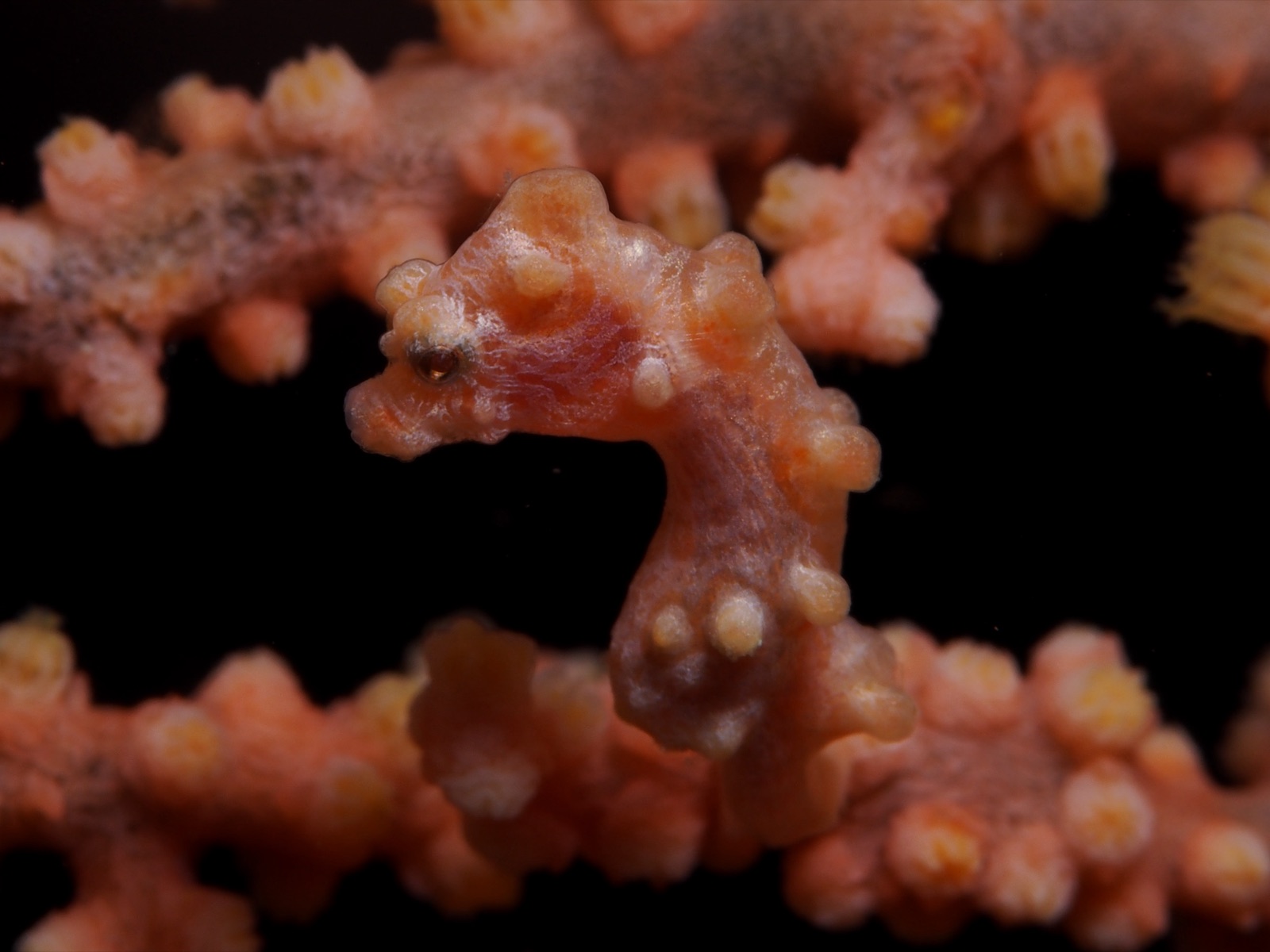
Seahorses ask divers to recalibrate. Upright posture, prehensile tail, independently swiveling eyes, and a brood pouch in which the male carries and births the young: nothing else on the reef works quite this way. Roughly fifty species make up the genus, from thumbnail pygmies to the big-belly seahorse of southern Australia, most of them ambush feeders sucking tiny crustaceans through tubular snouts. They are weak swimmers and strong holders: find one gripping a sponge, sea whip, or net fragment and it will likely be within meters of that spot next month. That site fidelity, plus a huge dried-animal trade, is why the entire genus has sat on CITES Appendix II since 2004. Move slowly, keep lights short, and let the animal keep its grip: a dislodged seahorse spends real energy getting home.
Dónde y cuándo ver uno
"Residente" significa que la mayoría de las inmersiones en ese destino tienen encuentros con ellos; "estacional" significa que su presencia es fiable en los meses indicados; cualquier otra cosa es un extra, no algo con lo que contar.
| Destino | Fiabilidad | Meses | Notas |
|---|---|---|---|
| BonaireBonaire | Resident: seen on most dives | Todo el año | |
| Bali & Nusa PenidaIndonesia | Resident: seen on most dives | Todo el año | |
| AnilaoPhilippines | Resident: seen on most dives | Todo el año | |
| Lembeh StraitIndonesia | Resident: seen on most dives | Todo el año | |
| Dumaguete, Dauin & Apo IslandPhilippines | Resident: seen on most dives | Todo el año | |
| South AustraliaAustralia | Resident: seen on most dives | Todo el año |
El mejor mes, de un vistazo
Comprendiéndolos
Hábitat: Seagrass beds, sponge and soft-coral gardens, mangrove edges, jetty piles, and rubble; anything grippable in gentle water.
Rango: Temperate and tropical coasts worldwide, from Caribbean seagrass to Indo-Pacific muck and the cool bays of southern Australia.
Comportamiento: Weak swimmers and strong holders: a prehensile tail anchors each animal to a home patch it may keep for months; the male incubates eggs in a brood pouch and gives birth to live young.
Dieta: Copepods, mysids, and other small crustaceans sucked through the tubular snout in enormous daily numbers.
Tamaño: normalmente alrededor de 0.1 m; documentado hasta 0.35 m (height; the genus spans 1.5 cm pygmies to the 35 cm big-belly seahorse).
Cómo comportarse cerca de uno
Approach slowly on the animal's level, keep lights brief and angled, and never detach a seahorse from its holdfast; many sites cap photo time per group.
Conservación
All Hippocampus species are on CITES Appendix II; several are threatened and many are Data Deficient, with dried-trade and bycatch pressure far exceeding aquarium collection.
Puntos conocidos por avistamientos
Los puntos destacados fueron registrados para esta especie por nuestros editores; los números son registros de ocurrencia de GBIF anotados en un radio de unos 5 km de un punto desde 1990.
Ver
Desde los canales oficiales

Wildlife of Monterey | New film in our auditorium

Live Aviary Cam | Monterey Bay Aquarium

Live Aviary Cam | Monterey Bay Aquarium
Los vídeos son enlaces insertados a los canales de sus propios creadores. No alojamos nada y acreditamos todo.