Reef Fish
Seahorses
Hippocampus · Bony fish, genus Hippocampus, family Syngnathidae (seahorses and pipefishes); genus-level overview of roughly 50 species
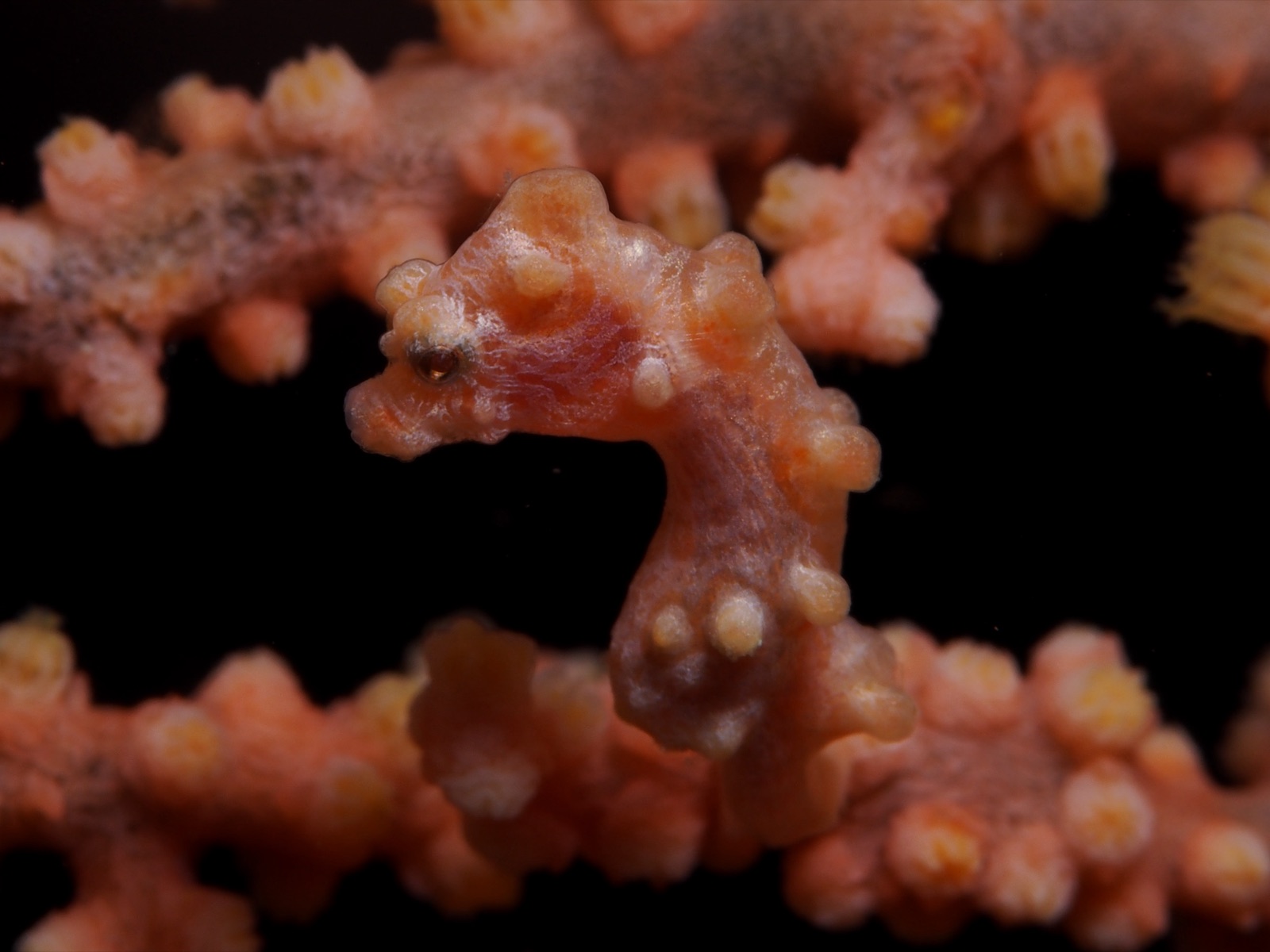
Seahorses ask divers to recalibrate. Upright posture, prehensile tail, independently swiveling eyes, and a brood pouch in which the male carries and births the young: nothing else on the reef works quite this way. Roughly fifty species make up the genus, from thumbnail pygmies to the big-belly seahorse of southern Australia, most of them ambush feeders sucking tiny crustaceans through tubular snouts. They are weak swimmers and strong holders: find one gripping a sponge, sea whip, or net fragment and it will likely be within meters of that spot next month. That site fidelity, plus a huge dried-animal trade, is why the entire genus has sat on CITES Appendix II since 2004. Move slowly, keep lights short, and let the animal keep its grip: a dislodged seahorse spends real energy getting home.
Nơi và thời điểm có thể gặp
"Thường trú" nghĩa là hầu hết các lần lặn tại điểm đó đều gặp được chúng; "theo mùa" nghĩa là chúng xuất hiện đáng tin cậy trong các tháng được liệt kê; bất kỳ điều gì ngoài ra là điểm thưởng, không phải kế hoạch.
| Điểm đến | Độ tin cậy | Các tháng | Ghi chú |
|---|---|---|---|
| BonaireBonaire | Resident: seen on most dives | Quanh năm | |
| Bali & Nusa PenidaIndonesia | Resident: seen on most dives | Quanh năm | |
| AnilaoPhilippines | Resident: seen on most dives | Quanh năm | |
| Lembeh StraitIndonesia | Resident: seen on most dives | Quanh năm | |
| Dumaguete, Dauin & Apo IslandPhilippines | Resident: seen on most dives | Quanh năm | |
| South AustraliaAustralia | Resident: seen on most dives | Quanh năm |
Tháng tốt nhất, nhìn tổng quan
Tìm hiểu về chúng
Môi trường sống: Seagrass beds, sponge and soft-coral gardens, mangrove edges, jetty piles, and rubble; anything grippable in gentle water.
Phạm vi phân bố: Temperate and tropical coasts worldwide, from Caribbean seagrass to Indo-Pacific muck and the cool bays of southern Australia.
Hành vi: Weak swimmers and strong holders: a prehensile tail anchors each animal to a home patch it may keep for months; the male incubates eggs in a brood pouch and gives birth to live young.
Chế độ ăn: Copepods, mysids, and other small crustaceans sucked through the tubular snout in enormous daily numbers.
Kích thước: thường vào khoảng 0.1 m; ghi nhận đến độ sâu 0.35 m (height; the genus spans 1.5 cm pygmies to the 35 cm big-belly seahorse).
Cách ứng xử khi ở gần loài này
Approach slowly on the animal's level, keep lights brief and angled, and never detach a seahorse from its holdfast; many sites cap photo time per group.
Bảo tồn
All Hippocampus species are on CITES Appendix II; several are threatened and many are Data Deficient, with dried-trade and bycatch pressure far exceeding aquarium collection.
Các điểm lặn đã ghi nhận có loài này
Các điểm được làm nổi bật là những điểm đã được ban biên tập ghi chép cho loài này; các con số là bản ghi xuất hiện từ GBIF được ghi nhận trong phạm vi khoảng 5 km của điểm lặn kể từ năm 1990.
Xem
Từ kênh chính thức

Wildlife of Monterey | New film in our auditorium

Live Aviary Cam | Monterey Bay Aquarium

Live Aviary Cam | Monterey Bay Aquarium
Video là các liên kết nhúng dẫn đến kênh của chính tác giả. Chúng tôi không lưu trữ gì và ghi công đầy đủ.