Marine Mammals
Sperm Whale
Physeter macrocephalus · Marine mammal, family Physeteridae
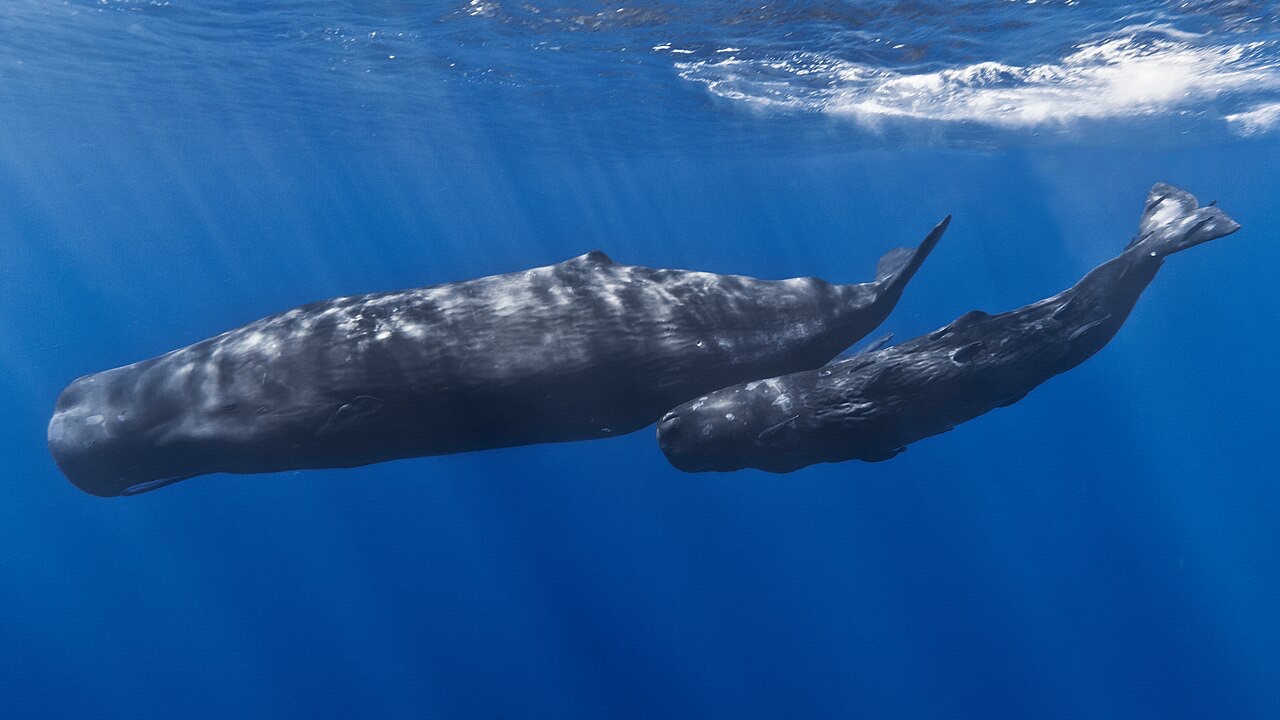
Swimming with sperm whales is less wildlife watching than audience with something geological. The head is a blunt gray cliff a third of the body's length, the click-train hits your sternum like a finger tapping, and the eye that rotates to find you is small, ancient, and unmistakably appraising. Dominica's resident families have made the island the world capital of these encounters, granted under a permit system the government formalized alongside a reserve for the whales in 2023. Most meetings are brief (a family logging at the surface, a calf curious, the adults indulgent) and end with the slow lift of flukes as a dive begins that will outlast your whole boat day.
Where and when to see one
"Resident" means most dives at that destination encounter them; "seasonal" means reliably present in the listed months; anything else is a bonus, not a plan.
| Destination | Reliability | Months | Notes |
|---|---|---|---|
| DominicaDominica | Resident: seen on most dives | Nov–Apr | |
| MauritiusMauritius | Resident: seen on most dives | Year-round | |
| The AzoresPortugal | Seasonal: reliable in season | May–Oct |
Best month, at a glance
| Month | Reliable destinations |
|---|---|
| January | Dominica · Mauritius |
| February | Dominica · Mauritius |
| March | Dominica · Mauritius |
| April | Dominica · Mauritius |
| May | Mauritius · The Azores |
| June | Mauritius · The Azores |
| July | Mauritius · The Azores |
| August | Mauritius · The Azores |
| September | Mauritius · The Azores |
| October | Mauritius · The Azores |
| November | Dominica · Mauritius |
| December | Dominica · Mauritius |
Understanding them
Habitat: Deep ocean basins and steep island drop-offs; hunts squid on hour-long dives past 1,000 m and rests or socializes at the surface between them
Range: All deep oceans; resident matrilineal groups favor steep-shored islands (Dominica's leeward coast is the best-studied), while lone males roam to high latitudes
Behavior: The ocean's loudest animal, clicking in coded patterns that identify clans and individuals. Families socialize at the surface between foraging dives, sometimes hanging vertically in sleep like a stand of monoliths, one of the most arresting sights in the sea. Encounters are strictly surface snorkels arranged around the whales' rhythm.
Diet: Deep-water squid above all, taken by echolocation in total darkness, plus large fish
Size: typically around 12.0 m; documented up to 18.0 m (body length; strongly dimorphic: mature males reach 16–18 m, females about 11 m).
How to behave around one
Dominica requires government permits and licensed operators for in-water encounters. Book only through them, enter on command, no scuba, no chasing, no touching, and leave socializing or resting groups undisturbed the moment behavior changes.
Conservation
Vulnerable: still recovering from two centuries of whaling that took it for the spermaceti oil in that vast head; ship strikes, entanglement, and noise are the modern pressures on coastal resident clans.
Charted sites known for them
Highlighted sites were charted for this species by our editors; numbers are GBIF occurrence records logged within about 5 km of a site since 1990.
Watch
From the official channels

Wildlife of Monterey | New film in our auditorium

Live Aviary Cam | Monterey Bay Aquarium

Live Aviary Cam | Monterey Bay Aquarium
Videos are embedded links to their creators' own channels. We host nothing and credit everything.