Reef Fish
Reef Stonefish
Synanceia verrucosa · Bony fish, family Synanceiidae (stonefishes), often treated within the scorpionfish lineage
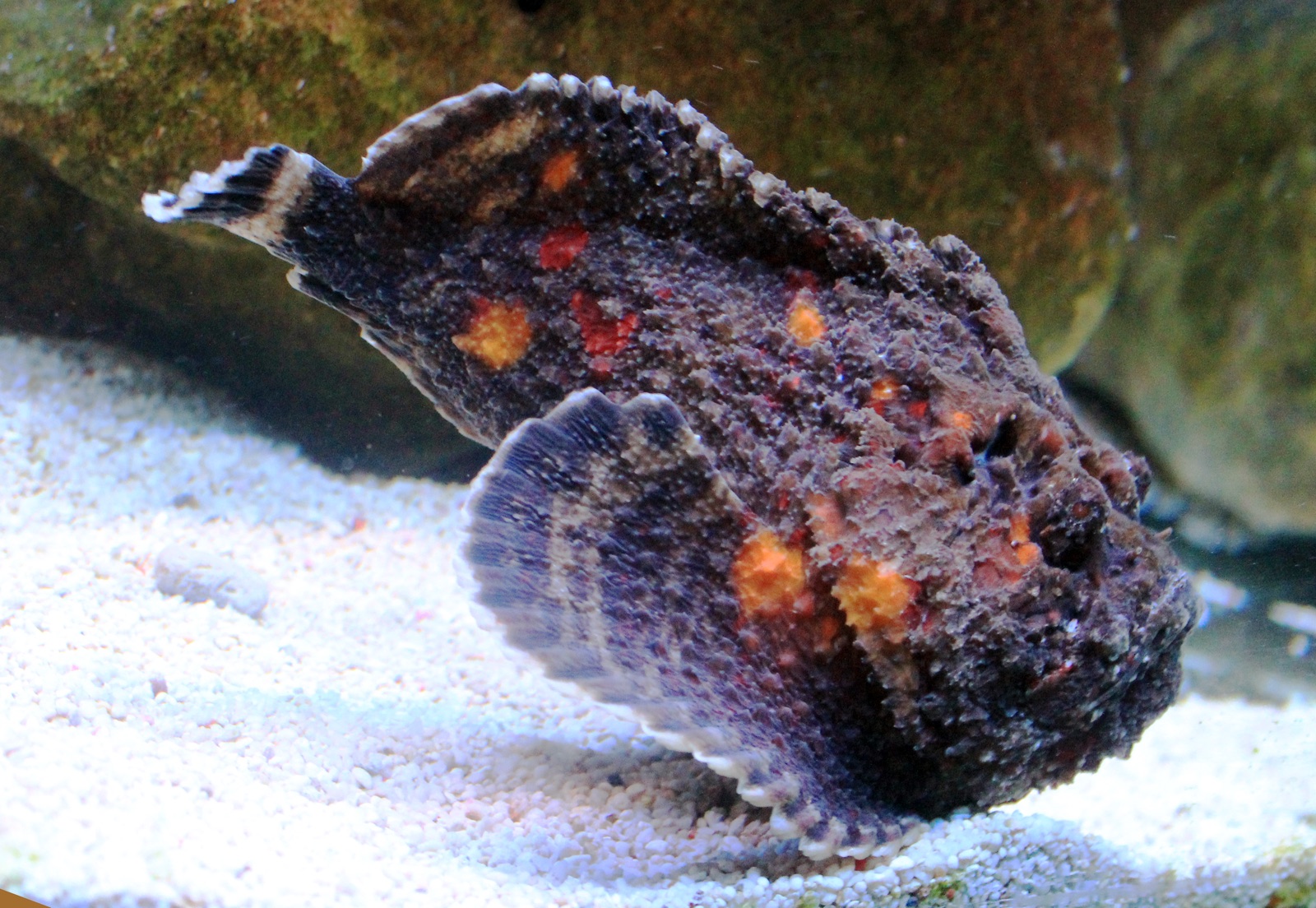
Nothing on the reef rewards good buoyancy like the reef stonefish, because the price of touching the bottom carelessly is written into its anatomy: thirteen dorsal spines, each seated over venom glands that inject under pressure when pressed. It is the most dangerous venomous fish a diver routinely shares water with: envenomation means immediate, severe pain and a trip to hospital, though deaths are very rare and an antivenom exists in Australia. The animal itself is a masterpiece of not being there, a warty, algae-crusted lump that buries into sand or molds against coral for weeks at a stretch, lunging only when prey passes. Divers almost never spot one unaided. Treat every unexamined rock as spoken for: stay off the bottom, never brace a hand blind, and save the close inspection for after the guide points.
Wo und wann man eines sieht
„Resident" bedeutet, dass die meisten Tauchgänge am jeweiligen Tauchziel eine Begegnung erwarten lassen; „saisonal" bedeutet, dass die Art in den genannten Monaten zuverlässig anzutreffen ist; alles andere ist ein Bonus, keine Planungsgrundlage.
| Ziel | Zuverlässigkeit | Monate | Hinweise |
|---|---|---|---|
| Bali & Nusa PenidaIndonesia | Resident: seen on most dives | Ganzjährig | |
| Cairns & the Ribbon ReefsAustralia | Resident: seen on most dives | Ganzjährig | |
| Sharm El Sheikh & Ras MohammedEgypt | Resident: seen on most dives | Ganzjährig | |
| Hurghada & El GounaEgypt | Resident: seen on most dives | Ganzjährig | |
| Lembeh StraitIndonesia | Resident: seen on most dives | Ganzjährig | |
| Similan Islands & Richelieu RockThailand | Occasional | Ganzjährig |
Bester Monat auf einen Blick
Sie verstehen
Lebensraum: Sand, rubble, and coral where it half-buries or molds against the bottom, including knee-deep shore entries and reef tops.
Verbreitung: Indo-Pacific and Red Sea, from East Africa to French Polynesia, north to southern Japan.
Verhalten: May hold one ambush spot for weeks, accumulating algae and silt until it reads as rock; relies so completely on camouflage that it rarely moves even for an approaching diver.
Ernährung: Fishes and crustaceans taken in a single explosive lunge from ambush.
Größe: typischerweise rund 0.3 m; dokumentiert bis zu 0.4 m (total length).
Wie man sich in ihrer Nähe verhält
Perfect buoyancy is the protection: stay off the bottom, never brace a hand where you have not looked, and wear solid-soled boots on shore entries.
Naturschutz
Widespread and not considered threatened; the management story is human safety education rather than protection.
Bekannte Tauchplätze dafür
Hervorgehobene Tauchplätze wurden von unseren Redakteuren für diese Art kartiert; die Zahlen sind GBIF-Vorkommensdatensätze, die seit 1990 im Umkreis von etwa 5 km um einen Tauchplatz protokolliert wurden.
Ansehen
Aus den offiziellen Kanälen

Wildlife of Monterey | New film in our auditorium

Live Aviary Cam | Monterey Bay Aquarium

Live Aviary Cam | Monterey Bay Aquarium
Videos sind eingebettete Links zu den Kanälen der jeweiligen Ersteller – wir hosten nichts und geben für alles die Quelle an.