Reef Fish
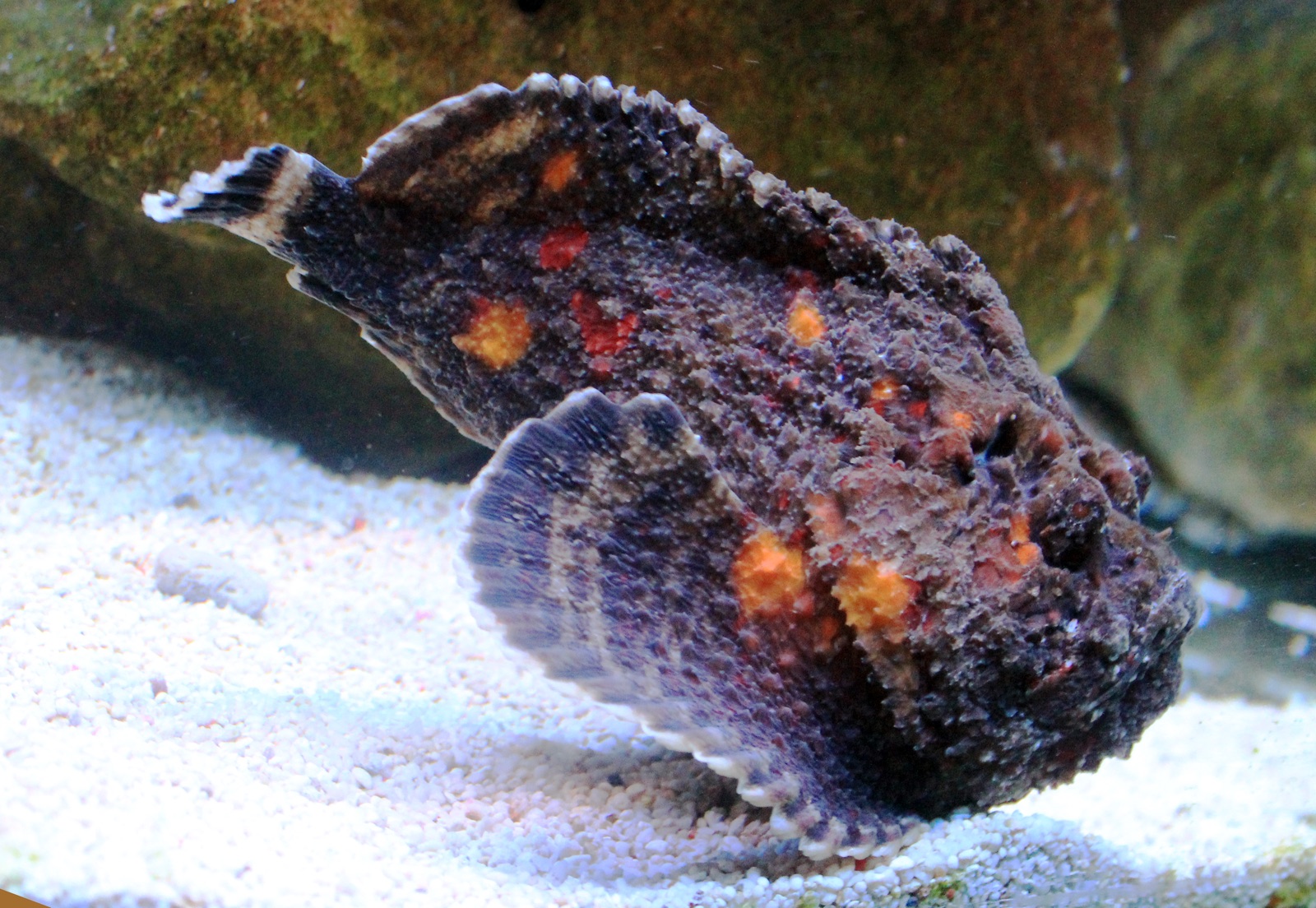
Reef Stonefish
Synanceia verrucosa · Bony fish, family Synanceiidae (stonefishes), often treated within the scorpionfish lineage
Nothing on the reef rewards good buoyancy like the reef stonefish, because the price of touching the bottom carelessly is written into its anatomy: thirteen dorsal spines, each seated over venom glands that inject under pressure when pressed. It is the most dangerous venomous fish a diver routinely shares water with: envenomation means immediate, severe pain and a trip to hospital, though deaths are very rare and an antivenom exists in Australia. The animal itself is a masterpiece of not being there, a warty, algae-crusted lump that buries into sand or molds against coral for weeks at a stretch, lunging only when prey passes. Divers almost never spot one unaided. Treat every unexamined rock as spoken for: stay off the bottom, never brace a hand blind, and save the close inspection for after the guide points.
Dove e quando avvistarne uno
"Residente" significa che la maggior parte delle immersioni in quella destinazione li incontra; "stagionale" significa che sono presenti in modo affidabile nei mesi indicati; qualsiasi altra cosa è un bonus, non un piano.
| Destinazione | Affidabilità | Mesi | Note |
|---|---|---|---|
| Bali & Nusa PenidaIndonesia | Resident: seen on most dives | Tutto l'anno | |
| Cairns & the Ribbon ReefsAustralia | Resident: seen on most dives | Tutto l'anno | |
| Sharm El Sheikh & Ras MohammedEgypt | Resident: seen on most dives | Tutto l'anno | |
| Hurghada & El GounaEgypt | Resident: seen on most dives | Tutto l'anno | |
| Lembeh StraitIndonesia | Resident: seen on most dives | Tutto l'anno | |
| Similan Islands & Richelieu RockThailand | Occasional | Tutto l'anno |
Il mese migliore, a colpo d'occhio
Capirle
Habitat: Sand, rubble, and coral where it half-buries or molds against the bottom, including knee-deep shore entries and reef tops.
Distribuzione: Indo-Pacific and Red Sea, from East Africa to French Polynesia, north to southern Japan.
Comportamento: May hold one ambush spot for weeks, accumulating algae and silt until it reads as rock; relies so completely on camouflage that it rarely moves even for an approaching diver.
Dieta: Fishes and crustaceans taken in a single explosive lunge from ambush.
Dimensioni: tipicamente intorno a 0.3 m; documentato fino a 0.4 m (total length).
Come comportarsi in sua presenza
Perfect buoyancy is the protection: stay off the bottom, never brace a hand where you have not looked, and wear solid-soled boots on shore entries.
Conservazione
Widespread and not considered threatened; the management story is human safety education rather than protection.
Siti mappati noti per avvistamenti
I siti evidenziati sono stati schedati per questa specie dai nostri redattori; i numeri sono record di occorrenza GBIF registrati entro circa 5 km dal sito a partire dal 1990.
Guarda
Dai canali ufficiali

Wildlife of Monterey | New film in our auditorium

Live Aviary Cam | Monterey Bay Aquarium

Live Aviary Cam | Monterey Bay Aquarium
I video sono link incorporati ai canali dei rispettivi autori. Non ospitiamo nulla e accreditiamo tutto.