Puntos de buceo, temporadas y vida marina — investigados, cartografiados, planificados.
Menú
Destinos Puntos de buceo Vida marina Pecios Noticias
Planifica un viaje Planificador de viajes Cuándo bucear Calculadora de costes Comparativas Calendario de fauna marina Temperatura del agua Liveaboards Operadores y resorts Parques marinos Cámaras hiperbáricas Mapa mundial
Regiones Australia, Nueva Zelanda y Asia OrientalCaribe y Atlántico occidentalEuropa, Atlántico y MediterráneoOcéano Índico y África OrientalIslas del Pacífico y MicronesiaMar Rojo y Oriente MedioSudeste Asiático y el Triángulo del CoralLas Américas y el Pacífico Oriental Países
Aprender y herramientas Todas las guías Certificaciones Guías de equipo Vídeos Consulta los datos Agentes de IA API
Acerca de Quiénes somos Metodología Aviso legal Contacto
Tu vista
★ Guardado

Tus destinos, sitios y especies favoritos — guardados en este navegador.

API GATEWAY

Acceso JSON gratuito de solo lectura a los datos en caché del atlas.

Modo oscuro

🧭 Vista guiada
¿Nuevo en el buceo? ¿Profundidades, corrientes, niveles de certificación? Explicamos cada término mientras navegas, en un lenguaje claro. Los mismos datos, con la ayuda integrada.

⚡ Vista experta
Ya conoces la diferencia entre una pared y un drift dive. Solo los datos — claros, rápidos y concisos. Esta es la vista predeterminada.

Idioma de la interfaz
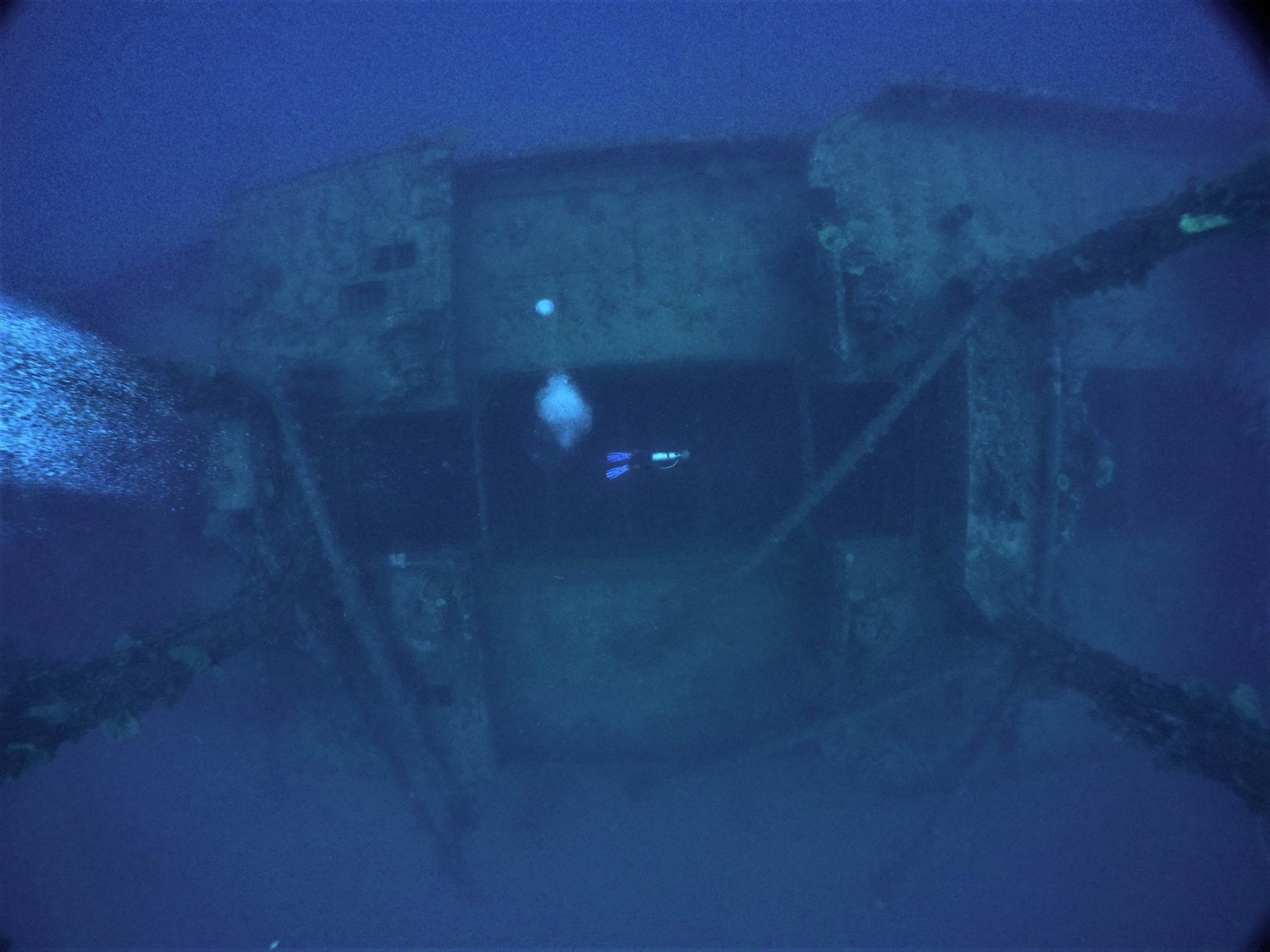
Aikoku Maru — illustrative image

Aikoku Maru

Japanese armed merchant cruiser and transport Hundido 1944 40–64 m Chuuk (Truk) Lagoon
Ilustración generada por IA
Tumba de guerra Aquí murieron personas que, en algunos casos, siguen a bordo. Bucea en este lugar como si visitaras un memorial: no toques, no te lleves nada, no perturbes nada. Hundreds of troops and crew died in the explosion; published figures vary.
Documentado
Profundidad hasta cubierta
40 m / 131 ft
Profundidad máxima
64 m / 210 ft
Construido / hundido
1940 / 1944
Longitud
152 m
Tonelaje
10,438 GRT
Orientación
Upright; Forward Third Destroyed
Nivel
Technical
Mejores meses
Dec–Apr

La historia

The Aikoku Maru was one of the war's hybrid ships: a fast, handsome OSK liner completed in 1940, armed and sent raiding in the Indian Ocean early in the war, later reduced to hauling troops and munitions as Japan's perimeter contracted. On 17 February 1944 she lay at Truk loaded with both. A dive bomber's hit reached her forward holds, and the resulting explosion was among the most violent of the raid — it obliterated the front third of the ship and, by many accounts, caught the attacking aircraft in the blast. She sank at once, taking hundreds of soldiers and sailors with her; no reliable count survives. What remains sits upright and deep: an amputated ship beginning abruptly amidships, superstructure looming out of dim water past forty meters. Survivor associations have placed memorials aboard, and of all Chuuk's wrecks she carries the strongest claim to be left in peace. Technical divers visit; everyone else should read about her instead.

Cómo se hundió: A bomb detonated her forward munitions cargo during Operation Hailstone, 17 February 1944.

Buceando aquí hoy

Condición: The surviving aft two-thirds is intact and imposing; the bow area is unrecognizable blast wreckage.

Penetración: Limited. Interior work at these depths is for experienced technical teams; most visits stay outside the superstructure, and the memorial spaces are not thoroughfares. Acceder a cualquier entorno de penetración exige formación específica — como mínimo una certificación en pecios, y formación técnica en pecios para penetración completa.

Certificación recomendada: Technical/trimix certification

Corriente: Mild · Visibilidad: 15–30 m

Vida marina: Black corals and hydroids at depth, big groupers under the counter, and trevally hunting along the broken forward edge.

Riesgos: Depth and decompression obligation govern everything; unexploded ordnance is scattered through the wreckage; light is low.

Protección y legislación

Chuuk lagoon monument protection; state dive permit/fee applies.

Among the most heavily weighted war graves in the lagoon — hundreds died here in a single moment. Memorial plaques aboard mark it; treat the entire wreck as consecrated ground.

Nothing is removed from this ship, ever.

Ver

Desde los canales oficiales

Todos los vídeos →

Los vídeos son enlaces incrustados a los canales propios de sus creadores — no alojamos nada y acreditamos todo.

Fuentes: CombinedFleet.com ↗Wikipedia ↗ · Datos verificados frente a las fuentes anteriores; los campos sin respaldo se marcan como aún no verificados.

Australia, Nueva Zelanda y Asia Oriental

Cairns & the Ribbon ReefsNingaloo ReefCoral Sea & Osprey ReefOkinawa & the Kerama IslandsPoor Knights IslandsTownsville & the YongalaGreen IslandIzu Peninsula

Caribe y Atlántico occidental

BonaireCozumelRiviera Maya & the CenotesBelize Barrier ReefGrand CaymanIsla Mujeres & CancúnRoatánTiger Beach & Grand Bahama

Europa, Atlántico y Mediterráneo

Malta & GozoSilfra & IcelandThe AzoresCanary IslandsLarnaca & the ZenobiaScapa FlowArctic NorwayMadeira

Océano Índico y África Oriental

North & South Malé AtollsAri AtollBaa Atoll & Hanifaru BayAliwal Shoal & UmkomaasMafia IslandMauritiusSeychellesSodwana Bay

Islas del Pacífico y Micronesia

PalauChuuk (Truk) LagoonFakaravaKona, HawaiʻiRangiroaTaveuni & Rainbow ReefBeqa Lagoon & Pacific HarbourEspiritu Santo

Mar Rojo y Oriente Medio

Sharm El Sheikh & Ras MohammedBrothers, Daedalus & St John'sDahabHurghada & El GounaMarsa Alam & the Deep SouthAqabaDaymaniyat IslandsMusandam Peninsula

Sudeste Asiático y el Triángulo del Coral

Bali & Nusa PenidaKomodoRaja AmpatSipadan & MabulAnilaoCoronKoh TaoLembeh Strait

Las Américas y el Pacífico Oriental

Galápagos IslandsCocos IslandFlorida KeysSea of Cortez & Cabo PulmoSocorro & the RevillagigedosBritish ColumbiaCalifornia Channel IslandsCosta Rica Pacific Coast