Tauchplätze, Saisons und Meereslebewesen – recherchiert, kartiert, geplant.
Menü
Reiseziele Tauchplätze Meeresleben Wracks News
Eine Reise planen Tauchtrip-Planer Wann tauchen Kostenrechner Vergleiche Meereslebewesen-Kalender Wassertemperatur Liveaboards Tauchbetriebe & Resorts Meeresschutzgebiete Druckkammern Weltkarte
Regionen Australien, Neuseeland & OstasienKaribik & WestatlantikEuropa, Atlantik & MittelmeerIndischer Ozean & OstafrikaPazifikinseln & MikronesienRotes Meer & Naher OstenSüdostasien & Korallen-DreieckAmerika & Östlicher Pazifik Länder
Lernen & Tools Alle Guides Zertifizierungen Ausrüstungsratgeber Videos Daten abfragen KI-Agenten API
Über uns Über uns Methodik Haftungsausschluss Kontakt
Deine Ansicht
★ Gespeichert

Deine gespeicherten Reiseziele, Tauchplätze und Tierarten — im Browser gespeichert.

API-GATEWAY

Kostenloser, schreibgeschützter JSON-Zugriff auf die gecachten Daten des Atlas.

Dunkelmodus

🧭 Geführte Ansicht
Neu beim Tauchen — Tiefen, Strömungen, Zertifizierungsstufen? Wir erklären jeden Begriff beim Stöbern in verständlicher Sprache. Dieselben Daten, mit integrierter Hilfe.

⚡ Expertenansicht
Du kennst den Unterschied zwischen einem Wall und einem Drift Dive. Nur die Daten – klar, schnell und kompakt. Das ist die Standardansicht.

Oberflächensprache
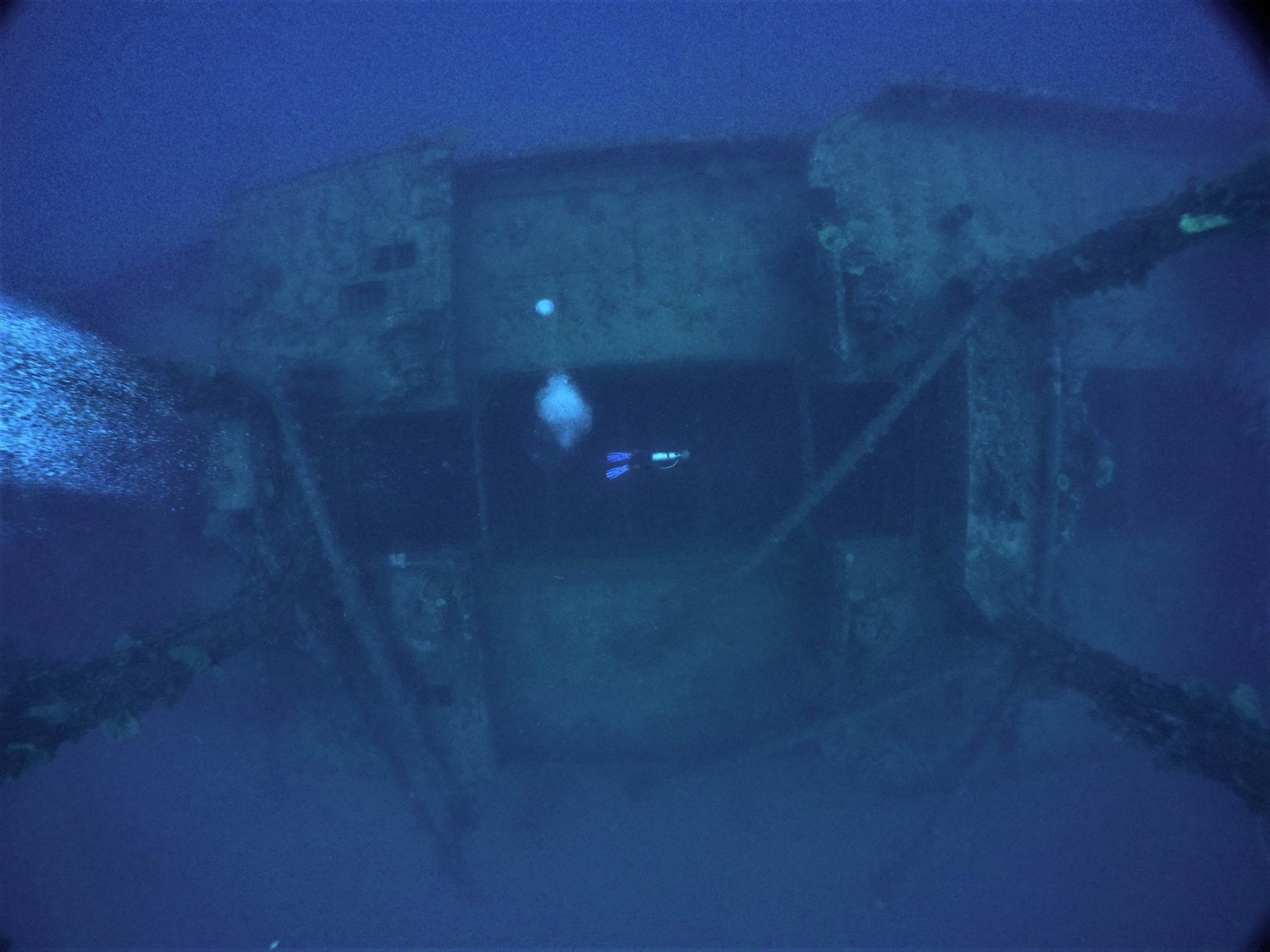
Aikoku Maru — illustrative image

Aikoku Maru

Japanese armed merchant cruiser and transport Gesunken 1944 40–64 m Chuuk (Truk) Lagoon
KI-generierte Illustration
Kriegsgrab Hier sind Menschen gestorben und liegen in manchen Fällen noch an Bord. Tauche dieses Wrack so, wie du ein Mahnmal besuchen würdest: nichts berühren, nichts mitnehmen, nichts stören. Hundreds of troops and crew died in the explosion; published figures vary.
Dokumentiert
Tiefe zum Wrackdeck
40 m / 131 ft
Maximale Tiefe
64 m / 210 ft
Gebaut / versenkt
1940 / 1944
Länge
152 m
Tonnage
10,438 GRT
Orientierung
Upright; Forward Third Destroyed
Level
Technical
Beste Monate
Dec–Apr

Die Geschichte dahinter

The Aikoku Maru was one of the war's hybrid ships: a fast, handsome OSK liner completed in 1940, armed and sent raiding in the Indian Ocean early in the war, later reduced to hauling troops and munitions as Japan's perimeter contracted. On 17 February 1944 she lay at Truk loaded with both. A dive bomber's hit reached her forward holds, and the resulting explosion was among the most violent of the raid — it obliterated the front third of the ship and, by many accounts, caught the attacking aircraft in the blast. She sank at once, taking hundreds of soldiers and sailors with her; no reliable count survives. What remains sits upright and deep: an amputated ship beginning abruptly amidships, superstructure looming out of dim water past forty meters. Survivor associations have placed memorials aboard, and of all Chuuk's wrecks she carries the strongest claim to be left in peace. Technical divers visit; everyone else should read about her instead.

Wie sie sank: A bomb detonated her forward munitions cargo during Operation Hailstone, 17 February 1944.

Heute dort tauchen

Bedingung: The surviving aft two-thirds is intact and imposing; the bow area is unrecognizable blast wreckage.

Wrackinnenraum-Tauchen: Limited. Interior work at these depths is for experienced technical teams; most visits stay outside the superstructure, and the memorial spaces are not thoroughfares. Das Betreten von Überkopf-Umgebungen erfordert eine spezifische Ausbildung – mindestens ein Wrack-Zertifikat, für die vollständige Penetration eine technische Wrack-Ausbildung.

Empfohlene Zertifizierung: Technical/trimix certification

Strömung: Mild · Sichtweite: 15–30 m

Meeresleben: Black corals and hydroids at depth, big groupers under the counter, and trevally hunting along the broken forward edge.

Gefahren: Depth and decompression obligation govern everything; unexploded ordnance is scattered through the wreckage; light is low.

Schutz & Recht

Chuuk lagoon monument protection; state dive permit/fee applies.

Among the most heavily weighted war graves in the lagoon — hundreds died here in a single moment. Memorial plaques aboard mark it; treat the entire wreck as consecrated ground.

Nothing is removed from this ship, ever.

Ansehen

Aus den offiziellen Kanälen

Alle Videos →

Videos sind eingebettete Links zu den Kanälen der jeweiligen Ersteller – wir hosten nichts und geben für alles die Quelle an.

Quellen: CombinedFleet.com ↗Wikipedia ↗ · Fakten wurden anhand der oben genannten Quellen verifiziert; Felder ohne Quellenbeleg sind als noch nicht verifiziert gekennzeichnet.

Australien, Neuseeland & Ostasien

Cairns & the Ribbon ReefsNingaloo ReefCoral Sea & Osprey ReefOkinawa & the Kerama IslandsPoor Knights IslandsTownsville & the YongalaGreen IslandIzu Peninsula

Karibik & Westatlantik

BonaireCozumelRiviera Maya & the CenotesBelize Barrier ReefGrand CaymanIsla Mujeres & CancúnRoatánTiger Beach & Grand Bahama

Europa, Atlantik & Mittelmeer

Malta & GozoSilfra & IcelandThe AzoresCanary IslandsLarnaca & the ZenobiaScapa FlowArctic NorwayMadeira

Indischer Ozean & Ostafrika

North & South Malé AtollsAri AtollBaa Atoll & Hanifaru BayAliwal Shoal & UmkomaasMafia IslandMauritiusSeychellesSodwana Bay

Pazifikinseln & Mikronesien

PalauChuuk (Truk) LagoonFakaravaKona, HawaiʻiRangiroaTaveuni & Rainbow ReefBeqa Lagoon & Pacific HarbourEspiritu Santo

Rotes Meer & Naher Osten

Sharm El Sheikh & Ras MohammedBrothers, Daedalus & St John'sDahabHurghada & El GounaMarsa Alam & the Deep SouthAqabaDaymaniyat IslandsMusandam Peninsula

Südostasien & Korallen-Dreieck

Bali & Nusa PenidaKomodoRaja AmpatSipadan & MabulAnilaoCoronKoh TaoLembeh Strait

Amerika & Östlicher Pazifik

Galápagos IslandsCocos IslandFlorida KeysSea of Cortez & Cabo PulmoSocorro & the RevillagigedosBritish ColumbiaCalifornia Channel IslandsCosta Rica Pacific Coast