Sites de plongée, saisons et vie marine — recherchés, cartographiés, planifiés.
Menu
Destinations Sites de plongée Vie marine Épaves Actualités
Planifier un voyage Planificateur de séjour Quand plonger Calculateur de coût Comparaisons Calendrier de la faune marine Température de l'eau Liveaboards Opérateurs & resorts Parcs marins Caissons hyperbares Carte du monde
Régions Australie, Nouvelle-Zélande & Asie de l'EstCaraïbes & Atlantique occidentalEurope, Atlantique & MéditerranéeOcéan Indien & Afrique de l'EstÎles du Pacifique & MicronésieMer Rouge & Moyen-OrientAsie du Sud-Est et Triangle de CorailLes Amériques et Pacifique Est Pays
Apprendre & Outils Tous les guides Certifications Guides d'équipement Vidéos Interroger les données Agents IA API
À propos À propos de nous Méthodologie Avertissement Contact
Votre vue
★ Enregistré

Vos destinations, sites et espèces favoris — enregistrés dans ce navigateur.

API GATEWAY

Accès JSON gratuit en lecture seule aux données en cache de l'atlas.

Mode sombre

🧭 Vue Guidée
Nouveau dans la plongée — profondeurs, courants, niveaux de certification ? Nous expliquons chaque terme au fil de votre navigation, en langage clair. Les mêmes données, avec l'aide intégrée.

⚡ Vue Expert
Vous connaissez déjà la différence entre un tombant et un drift. Juste les données — claires, rapides et compactes. C'est la vue par défaut.

Langue de l'interface
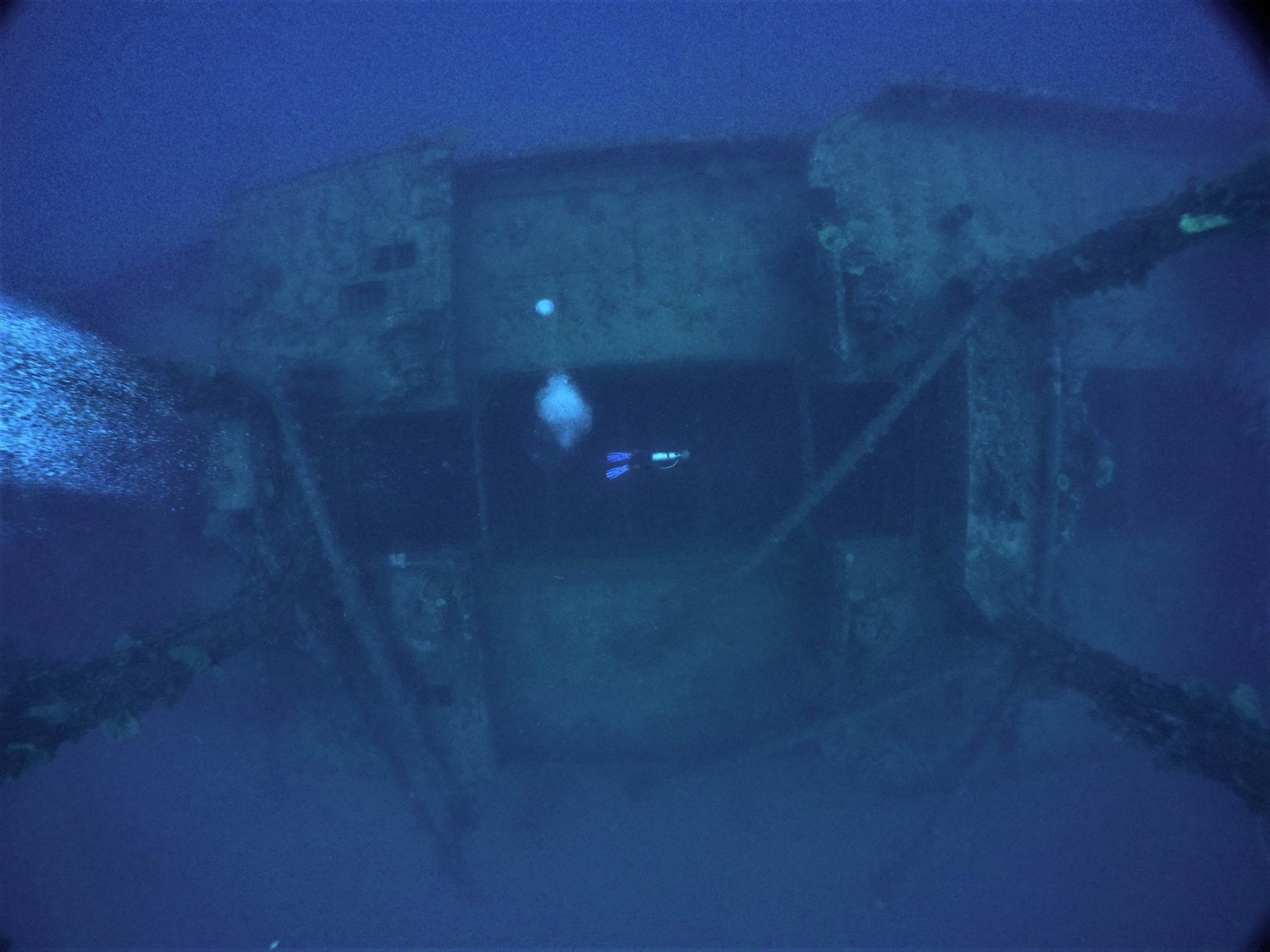
Aikoku Maru — illustrative image

Aikoku Maru

Japanese armed merchant cruiser and transport Coulé 1944 40–64 m Chuuk (Truk) Lagoon
Illustration générée par IA
Tombe de guerre Des personnes sont mortes ici et, dans certains cas, reposent encore à bord. Plongez-y comme vous visiteriez un mémorial : rien de touché, rien de prélevé, rien de dérangé. Hundreds of troops and crew died in the explosion; published figures vary.
Documenté
Profondeur jusqu'au pont
40 m / 131 ft
Profondeur maximale
64 m / 210 ft
Construit / coulé
1940 / 1944
Longueur
152 m
Tonnage
10,438 GRT
Orientation
Upright; Forward Third Destroyed
Niveau
Technical
Meilleurs mois
Dec–Apr

L'histoire

The Aikoku Maru was one of the war's hybrid ships: a fast, handsome OSK liner completed in 1940, armed and sent raiding in the Indian Ocean early in the war, later reduced to hauling troops and munitions as Japan's perimeter contracted. On 17 February 1944 she lay at Truk loaded with both. A dive bomber's hit reached her forward holds, and the resulting explosion was among the most violent of the raid — it obliterated the front third of the ship and, by many accounts, caught the attacking aircraft in the blast. She sank at once, taking hundreds of soldiers and sailors with her; no reliable count survives. What remains sits upright and deep: an amputated ship beginning abruptly amidships, superstructure looming out of dim water past forty meters. Survivor associations have placed memorials aboard, and of all Chuuk's wrecks she carries the strongest claim to be left in peace. Technical divers visit; everyone else should read about her instead.

Comment elle a coulé: A bomb detonated her forward munitions cargo during Operation Hailstone, 17 February 1944.

Plongée sur ce site aujourd'hui

Condition: The surviving aft two-thirds is intact and imposing; the bow area is unrecognizable blast wreckage.

Pénétration: Limited. Interior work at these depths is for experienced technical teams; most visits stay outside the superstructure, and the memorial spaces are not thoroughfares. Toute pénétration en environnement semi-fermé exige une formation spécifique — au minimum une certification épave, et une formation technique épave pour une pénétration complète.

Certification recommandée: Technical/trimix certification

Courant: Mild · Visibilité: 15–30 m

Vie marine: Black corals and hydroids at depth, big groupers under the counter, and trevally hunting along the broken forward edge.

Dangers: Depth and decompression obligation govern everything; unexploded ordnance is scattered through the wreckage; light is low.

Protection & réglementation

Chuuk lagoon monument protection; state dive permit/fee applies.

Among the most heavily weighted war graves in the lagoon — hundreds died here in a single moment. Memorial plaques aboard mark it; treat the entire wreck as consecrated ground.

Nothing is removed from this ship, ever.

Regarder

Depuis les canaux officiels

Toutes les vidéos →

Les vidéos sont des liens intégrés vers les chaînes de leurs créateurs — nous n'hébergeons rien et créditons tout.

Sources: CombinedFleet.com ↗Wikipedia ↗ · Informations vérifiées par rapport aux sources ci-dessus ; les champs sans référence sont marqués non encore vérifiés.

Australie, Nouvelle-Zélande & Asie de l'Est

Cairns & the Ribbon ReefsNingaloo ReefCoral Sea & Osprey ReefOkinawa & the Kerama IslandsPoor Knights IslandsTownsville & the YongalaGreen IslandIzu Peninsula

Caraïbes & Atlantique occidental

BonaireCozumelRiviera Maya & the CenotesBelize Barrier ReefGrand CaymanIsla Mujeres & CancúnRoatánTiger Beach & Grand Bahama

Europe, Atlantique & Méditerranée

Malta & GozoSilfra & IcelandThe AzoresCanary IslandsLarnaca & the ZenobiaScapa FlowArctic NorwayMadeira

Océan Indien & Afrique de l'Est

North & South Malé AtollsAri AtollBaa Atoll & Hanifaru BayAliwal Shoal & UmkomaasMafia IslandMauritiusSeychellesSodwana Bay

Îles du Pacifique & Micronésie

PalauChuuk (Truk) LagoonFakaravaKona, HawaiʻiRangiroaTaveuni & Rainbow ReefBeqa Lagoon & Pacific HarbourEspiritu Santo

Mer Rouge & Moyen-Orient

Sharm El Sheikh & Ras MohammedBrothers, Daedalus & St John'sDahabHurghada & El GounaMarsa Alam & the Deep SouthAqabaDaymaniyat IslandsMusandam Peninsula

Asie du Sud-Est et Triangle de Corail

Bali & Nusa PenidaKomodoRaja AmpatSipadan & MabulAnilaoCoronKoh TaoLembeh Strait

Les Amériques et Pacifique Est

Galápagos IslandsCocos IslandFlorida KeysSea of Cortez & Cabo PulmoSocorro & the RevillagigedosBritish ColumbiaCalifornia Channel IslandsCosta Rica Pacific Coast