Tauchplätze, Saisons und Meereslebewesen – recherchiert, kartiert, geplant.
Menü
Reiseziele Tauchplätze Meeresleben Wracks News
Eine Reise planen Tauchtrip-Planer Wann tauchen Kostenrechner Vergleiche Meereslebewesen-Kalender Wassertemperatur Liveaboards Tauchbetriebe & Resorts Meeresschutzgebiete Druckkammern Weltkarte
Regionen Australien, Neuseeland & OstasienKaribik & WestatlantikEuropa, Atlantik & MittelmeerIndischer Ozean & OstafrikaPazifikinseln & MikronesienRotes Meer & Naher OstenSüdostasien & Korallen-DreieckAmerika & Östlicher Pazifik Länder
Lernen & Tools Alle Guides Zertifizierungen Ausrüstungsratgeber Videos Daten abfragen KI-Agenten API
Über uns Über uns Methodik Haftungsausschluss Kontakt
Deine Ansicht
★ Gespeichert

Deine gespeicherten Reiseziele, Tauchplätze und Tierarten — im Browser gespeichert.

API-GATEWAY

Kostenloser, schreibgeschützter JSON-Zugriff auf die gecachten Daten des Atlas.

Dunkelmodus

🧭 Geführte Ansicht
Neu beim Tauchen — Tiefen, Strömungen, Zertifizierungsstufen? Wir erklären jeden Begriff beim Stöbern in verständlicher Sprache. Dieselben Daten, mit integrierter Hilfe.

⚡ Expertenansicht
Du kennst den Unterschied zwischen einem Wall und einem Drift Dive. Nur die Daten – klar, schnell und kompakt. Das ist die Standardansicht.

Oberflächensprache
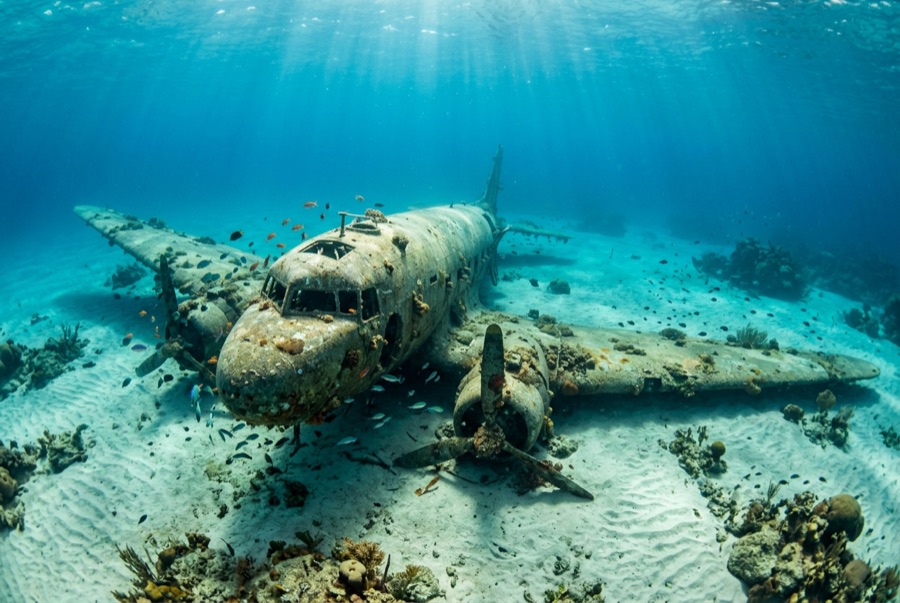
B-17F “Black Jack” — illustrative image

B-17F “Black Jack”

Boeing B-17F Flying Fortress heavy bomber (aircraft wreck) Gesunken 1943 44–48 m Milne Bay
KI-generierte Illustration
Hier wurden Leben verlorenNone — all ten crew survived the ditching. Lokale Tauchbetriebe bitten darum, das Wrack mit dem entsprechenden Respekt zu tauchen.
Dokumentiert
Tiefe zum Wrackdeck
44 m / 144 ft
Maximale Tiefe
48 m / 157 ft
Gebaut / versenkt
1942 / 1943
Länge
23 m
Orientierung
Upright On Sand
Level
Technical

Die Geschichte dahinter

Black Jack was an early Flying Fortress that fought the hard first year of the Southwest Pacific air war with the 43rd Bomb Group, her serial ending in 521 giving her a gambler's name. In the early hours of 11 July 1943, bound for Rabaul, she lost power in two engines amid storm cloud and turned back across the Solomon Sea. Out of altitude and options at dawn, her pilot put her down on the water just off the village of Boga Boga on Cape Vogel, in what is now Milne Bay Province. The ditching was textbook: all ten crew got out, and villagers paddled them ashore. The bomber sank in one piece onto a flat sand bottom at the base of the fringing reef, where divers led by Rod Pearce identified her in 1986. She sits upright and startlingly whole — guns in their mounts, cockpit glazing framing blue water — widely considered the finest divable aircraft wreck in the world, and guarded by both her depth and her remoteness.

Wie sie sank: Ditched at sea on 11 July 1943 after engine failures on a night mission toward Rabaul.

Heute dort tauchen

Bedingung: Exceptionally intact for a ditched aircraft — the airframe survived both the landing and eight decades of seawater with its lines unbroken.

Wrackinnenraum-Tauchen: None. The fuselage is far too confined and fragile to enter; everything worth seeing is visible from outside the airframe.

Empfohlene Zertifizierung: Technical or deep certification — the aircraft lies below sport-diving depth limits

Strömung: Mild · Sichtweite: 15–30 m

Meeresleben: Batfish circle the tail fin, sweetlips shelter beneath the wings, and the adjacent reef wall carries fans and barrel sponges.

Gefahren: Depth is the whole problem: short no-stop windows, narcosis, and a remote location far from recompression facilities.

Schutz & Recht

War relics in Papua New Guinea are protected by law, and the village of Boga Boga regards the aircraft as part of its story — access runs through local goodwill and fees.

Nothing has been taken from her since discovery, which is precisely why she matters; keep it that way.

Ansehen

Aus den offiziellen Kanälen

Alle Videos →

Videos sind eingebettete Links zu den Kanälen der jeweiligen Ersteller – wir hosten nichts und geben für alles die Quelle an.

Quellen: PacificWrecks.com ↗Wikipedia ↗ · Fakten wurden anhand der oben genannten Quellen verifiziert; Felder ohne Quellenbeleg sind als noch nicht verifiziert gekennzeichnet.

Australien, Neuseeland & Ostasien

Cairns & the Ribbon ReefsNingaloo ReefCoral Sea & Osprey ReefOkinawa & the Kerama IslandsPoor Knights IslandsTownsville & the YongalaGreen IslandIzu Peninsula

Karibik & Westatlantik

BonaireCozumelRiviera Maya & the CenotesBelize Barrier ReefGrand CaymanIsla Mujeres & CancúnRoatánTiger Beach & Grand Bahama

Europa, Atlantik & Mittelmeer

Malta & GozoSilfra & IcelandThe AzoresCanary IslandsLarnaca & the ZenobiaScapa FlowArctic NorwayMadeira

Indischer Ozean & Ostafrika

North & South Malé AtollsAri AtollBaa Atoll & Hanifaru BayAliwal Shoal & UmkomaasMafia IslandMauritiusSeychellesSodwana Bay

Pazifikinseln & Mikronesien

PalauChuuk (Truk) LagoonFakaravaKona, HawaiʻiRangiroaTaveuni & Rainbow ReefBeqa Lagoon & Pacific HarbourEspiritu Santo

Rotes Meer & Naher Osten

Sharm El Sheikh & Ras MohammedBrothers, Daedalus & St John'sDahabHurghada & El GounaMarsa Alam & the Deep SouthAqabaDaymaniyat IslandsMusandam Peninsula

Südostasien & Korallen-Dreieck

Bali & Nusa PenidaKomodoRaja AmpatSipadan & MabulAnilaoCoronKoh TaoLembeh Strait

Amerika & Östlicher Pazifik

Galápagos IslandsCocos IslandFlorida KeysSea of Cortez & Cabo PulmoSocorro & the RevillagigedosBritish ColumbiaCalifornia Channel IslandsCosta Rica Pacific Coast