Pontos de mergulho, épocas e vida marinha — pesquisados, mapeados, planeados.
Menu
Destinos Pontos de Mergulho Vida Marinha Naufrágios Notícias
Planejar uma viagem Planejador de viagem Quando mergulhar Calculadora de custos Comparações Calendário de vida marinha Temperatura da água Liveaboards Operadores & resorts Parques marinhos Câmaras hiperbáricas Mapa mundial
Regiões Austrália, Nova Zelândia e Ásia OrientalCaribe e Atlântico OcidentalEuropa, Atlântico & MediterrâneoOceano Índico e África OrientalIlhas do Pacífico & MicronésiaMar Vermelho & Médio OrienteSudeste Asiático e Triângulo de CoralAs Américas e o Pacífico Oriental Países
Aprender e Ferramentas Todos os guias Certificações Guias de equipamento Vídeos Consulte os Dados Agentes de IA API
Sobre Sobre nós Metodologia Aviso legal Contato
A sua vista
★ Guardado

Os seus destinos, sítios de mergulho e espécies favoritos — guardados neste browser.

API GATEWAY

Acesso JSON gratuito e só de leitura aos dados em cache do atlas.

Modo escuro

🧭 Vista Guiada
Novo no mergulho — profundidades, correntes, níveis de certificação? Explicamos cada termo enquanto navega, em linguagem simples. Os mesmos dados, com a ajuda integrada.

⚡ Vista de Especialista
Já sabe a diferença entre uma parede e um drift dive. Apenas os dados — claros, rápidos e compactos. Esta é a vista predefinida.

Idioma da interface
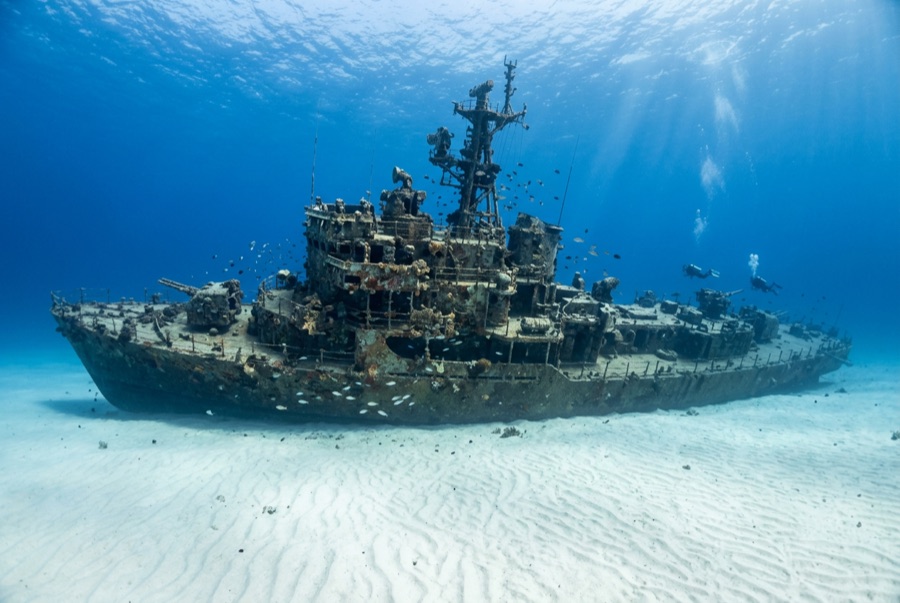
C-53 Felipe Xicoténcatl — illustrative image

C-53 Felipe Xicoténcatl

Admirable-class minesweeper (ex-USS Scuffle), Mexican Navy gunboat Afundado 1999 15–24 m Cozumel
Ilustração gerada por IA
Houve vidas perdidas aquiNone (planned scuttling). Os operadores locais pedem que o naufrágio seja mergulhado com o respeito correspondente.
Documentado
Profundidade até o convés
15 m / 49 ft
Profundidade máxima
24 m / 79 ft
Construído / afundado
1944 / 1999
Comprimento
56 m
Orientação
Upright
Nível
Intermediate
Melhores meses
Dec–May

A história

Cozumel is drift-diving country, its wrecks few, so the island made its own. This hull began as USS Scuffle, an Admirable-class minesweeper built in 1944 that swept Pacific waters late in the Second World War; transferred to the Mexican Navy in the early 1960s, she patrolled the Gulf and Caribbean for three more decades as the Felipe Xicoténcatl, C-53, named for a hero of the Mexican-American War. Retired in the 1990s, she was cleaned, opened and scuttled in 1999 on a sand flat near Chankanaab park on the island's leeward side — deliberately placed out of the racing current that sweeps the main reef line, so divers can actually stop and look at her. She sits upright at about 24 meters, compact and complete: bow gun mount, funnel, and a superstructure whose prepared corridors make her one of the Caribbean's most used wreck-training platforms. Inside, glassy sweepers pulse through the passageways and the celebrated splendid toadfish — Cozumel's own endemic, striped like nothing else in the sea — grunts from beneath the hull plates. She pairs neatly with Chankanaab's shallows for a relaxed second dive.

Como afundou: Deliberately scuttled as an artificial reef and dive-training site off Chankanaab, 1999.

A mergulhar nela hoje

Condição: Upright and intact, superstructure complete; four decades of navy service show in the worn steel now softened by sponges

Penetração: Limited. Cleared corridors with exit points run through the superstructure and are toured constantly on guided and training dives; silt and rust flakes still demand control. Entrar em qualquer ambiente fechado requer formação específica — no mínimo uma certificação de mergulho em naufrágios, e formação técnica em naufrágios para penetração total.

Certificação recomendada: Advanced Open Water

Corrente: Mild · Visibilidade: 20–40 m

Vida marinha: Splendid toadfish under the hull, glassy sweepers and squirrelfish inside, green morays in the machinery, barracuda above the mast, and angelfish along the rails.

Perigos: Light current on exposed days and rusted edges at the access cuts

Proteção & legislação

Within the Cozumel Reefs National Marine Park — park bracelet and no-touch rules apply

Assista

Dos canais oficiais

Todos os vídeos →

Os vídeos são links incorporados dos próprios canais dos criadores — não hospedamos nada e creditamos tudo.

Fontes: Government of Mexico ↗Wikipedia ↗ · Factos verificados em relação às fontes acima; os campos sem suporte estão assinalados como não verificado ainda.

Austrália, Nova Zelândia e Ásia Oriental

Cairns & the Ribbon ReefsNingaloo ReefCoral Sea & Osprey ReefOkinawa & the Kerama IslandsPoor Knights IslandsTownsville & the YongalaGreen IslandIzu Peninsula

Caribe e Atlântico Ocidental

BonaireCozumelRiviera Maya & the CenotesBelize Barrier ReefGrand CaymanIsla Mujeres & CancúnRoatánTiger Beach & Grand Bahama

Europa, Atlântico & Mediterrâneo

Malta & GozoSilfra & IcelandThe AzoresCanary IslandsLarnaca & the ZenobiaScapa FlowArctic NorwayMadeira

Oceano Índico e África Oriental

North & South Malé AtollsAri AtollBaa Atoll & Hanifaru BayAliwal Shoal & UmkomaasMafia IslandMauritiusSeychellesSodwana Bay

Ilhas do Pacífico & Micronésia

PalauChuuk (Truk) LagoonFakaravaKona, HawaiʻiRangiroaTaveuni & Rainbow ReefBeqa Lagoon & Pacific HarbourEspiritu Santo

Mar Vermelho & Médio Oriente

Sharm El Sheikh & Ras MohammedBrothers, Daedalus & St John'sDahabHurghada & El GounaMarsa Alam & the Deep SouthAqabaDaymaniyat IslandsMusandam Peninsula

Sudeste Asiático e Triângulo de Coral

Bali & Nusa PenidaKomodoRaja AmpatSipadan & MabulAnilaoCoronKoh TaoLembeh Strait

As Américas e o Pacífico Oriental

Galápagos IslandsCocos IslandFlorida KeysSea of Cortez & Cabo PulmoSocorro & the RevillagigedosBritish ColumbiaCalifornia Channel IslandsCosta Rica Pacific Coast