Pontos de mergulho, épocas e vida marinha — pesquisados, mapeados, planeados.
Menu
Destinos Pontos de Mergulho Vida Marinha Naufrágios Notícias
Planejar uma viagem Planejador de viagem Quando mergulhar Calculadora de custos Comparações Calendário de vida marinha Temperatura da água Liveaboards Operadores & resorts Parques marinhos Câmaras hiperbáricas Mapa mundial
Regiões Austrália, Nova Zelândia e Ásia OrientalCaribe e Atlântico OcidentalEuropa, Atlântico & MediterrâneoOceano Índico e África OrientalIlhas do Pacífico & MicronésiaMar Vermelho & Médio OrienteSudeste Asiático e Triângulo de CoralAs Américas e o Pacífico Oriental Países
Aprender e Ferramentas Todos os guias Certificações Guias de equipamento Vídeos Consulte os Dados Agentes de IA API
Sobre Sobre nós Metodologia Aviso legal Contato
A sua vista
★ Guardado

Os seus destinos, sítios de mergulho e espécies favoritos — guardados neste browser.

API GATEWAY

Acesso JSON gratuito e só de leitura aos dados em cache do atlas.

Modo escuro

🧭 Vista Guiada
Novo no mergulho — profundidades, correntes, níveis de certificação? Explicamos cada termo enquanto navega, em linguagem simples. Os mesmos dados, com a ajuda integrada.

⚡ Vista de Especialista
Já sabe a diferença entre uma parede e um drift dive. Apenas os dados — claros, rápidos e compactos. Esta é a vista predefinida.

Idioma da interface
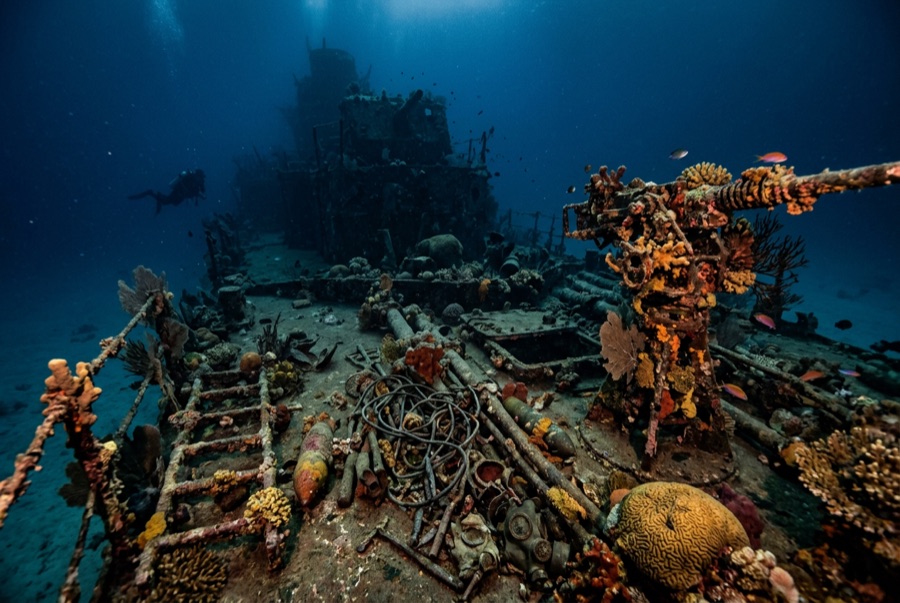
Hirokawa Maru (Bonegi I) — illustrative image

Hirokawa Maru (Bonegi I)

Japanese army transport ship Afundado 1942 3–55 m Solomon Islands
Ilustração gerada por IA
Documentado
Profundidade até o convés
3 m / 10 ft
Profundidade máxima
55 m / 180 ft
Construído / afundado
? / 1942
Tonelagem
6,872 GRT
Orientação
Bow Inshore At The Beach, Stern Running Down The Slope
Nível
Intermediate
Melhores meses
May–Oct

A história

By November 1942 the fight for Guadalcanal had become a contest of supply, and Japan was losing it. In the aftermath of the naval battles of 12–15 November, Rear Admiral Tanaka's last four surviving transports abandoned any hope of unloading offshore and simply drove themselves onto the beaches west of the American lines to disgorge troops and rice directly. The Hirokawa Maru went ashore near the mouth of the Bonegi River on 15 November and was wrecked where she lay through the day by aircraft, field artillery, and destroyer gunfire before most of her cargo could be landed. Her bow has sat in the surf line ever since — snorkelers float over it — while the rest of the hull runs down the dark volcanic sand into deep water. Known to divers simply as Bonegi I, with her consort Kinugawa Maru (Bonegi II) beached minutes away, she is Guadalcanal's classic shore dive and a blunt monument to the campaign's arithmetic.

Como afundou: Deliberately run ashore at Guadalcanal on 15 November 1942 to land troops and supplies, then destroyed by US aircraft, artillery, and naval gunfire.

A mergulhar nela hoje

Condição: Progressively broken from decades of surf at the shallow end; the deeper structure holds together better in still water.

Penetração: Limited. Open breaks in the hull allow short pass-throughs in the shallow and mid sections; the deep stern is dark, silty, and for experienced divers only. Entrar em qualquer ambiente fechado requer formação específica — no mínimo uma certificação de mergulho em naufrágios, e formação técnica em naufrágios para penetração total.

Certificação recomendada: Open Water for the shallows; Advanced Open Water beyond the mid-hull

Corrente: Mild · Visibilidade: 8–20 m

Vida marinha: Corals and clams armor the shallow wreckage, anthias and damsels swarm the framework, and eagle rays and reef sharks appear off the deep end.

Perigos: Surge and surf at entry, sharp plating in the shallows, and a seductive slope that keeps offering another five meters of depth.

Proteção & legislação

Lives were lost aboard and around her during the beaching and bombardment; she is dived respectfully. Solomon Islands wartime relics are protected — nothing may be recovered.

Wartime relics are protected under Solomon Islands law; take photographs only.

Assista

Dos canais oficiais

Todos os vídeos →

Os vídeos são links incorporados dos próprios canais dos criadores — não hospedamos nada e creditamos tudo.

Fontes: U.S. Navy ↗PacificWrecks.com ↗ · Factos verificados em relação às fontes acima; os campos sem suporte estão assinalados como não verificado ainda.

Austrália, Nova Zelândia e Ásia Oriental

Cairns & the Ribbon ReefsNingaloo ReefCoral Sea & Osprey ReefOkinawa & the Kerama IslandsPoor Knights IslandsTownsville & the YongalaGreen IslandIzu Peninsula

Caribe e Atlântico Ocidental

BonaireCozumelRiviera Maya & the CenotesBelize Barrier ReefGrand CaymanIsla Mujeres & CancúnRoatánTiger Beach & Grand Bahama

Europa, Atlântico & Mediterrâneo

Malta & GozoSilfra & IcelandThe AzoresCanary IslandsLarnaca & the ZenobiaScapa FlowArctic NorwayMadeira

Oceano Índico e África Oriental

North & South Malé AtollsAri AtollBaa Atoll & Hanifaru BayAliwal Shoal & UmkomaasMafia IslandMauritiusSeychellesSodwana Bay

Ilhas do Pacífico & Micronésia

PalauChuuk (Truk) LagoonFakaravaKona, HawaiʻiRangiroaTaveuni & Rainbow ReefBeqa Lagoon & Pacific HarbourEspiritu Santo

Mar Vermelho & Médio Oriente

Sharm El Sheikh & Ras MohammedBrothers, Daedalus & St John'sDahabHurghada & El GounaMarsa Alam & the Deep SouthAqabaDaymaniyat IslandsMusandam Peninsula

Sudeste Asiático e Triângulo de Coral

Bali & Nusa PenidaKomodoRaja AmpatSipadan & MabulAnilaoCoronKoh TaoLembeh Strait

As Américas e o Pacífico Oriental

Galápagos IslandsCocos IslandFlorida KeysSea of Cortez & Cabo PulmoSocorro & the RevillagigedosBritish ColumbiaCalifornia Channel IslandsCosta Rica Pacific Coast