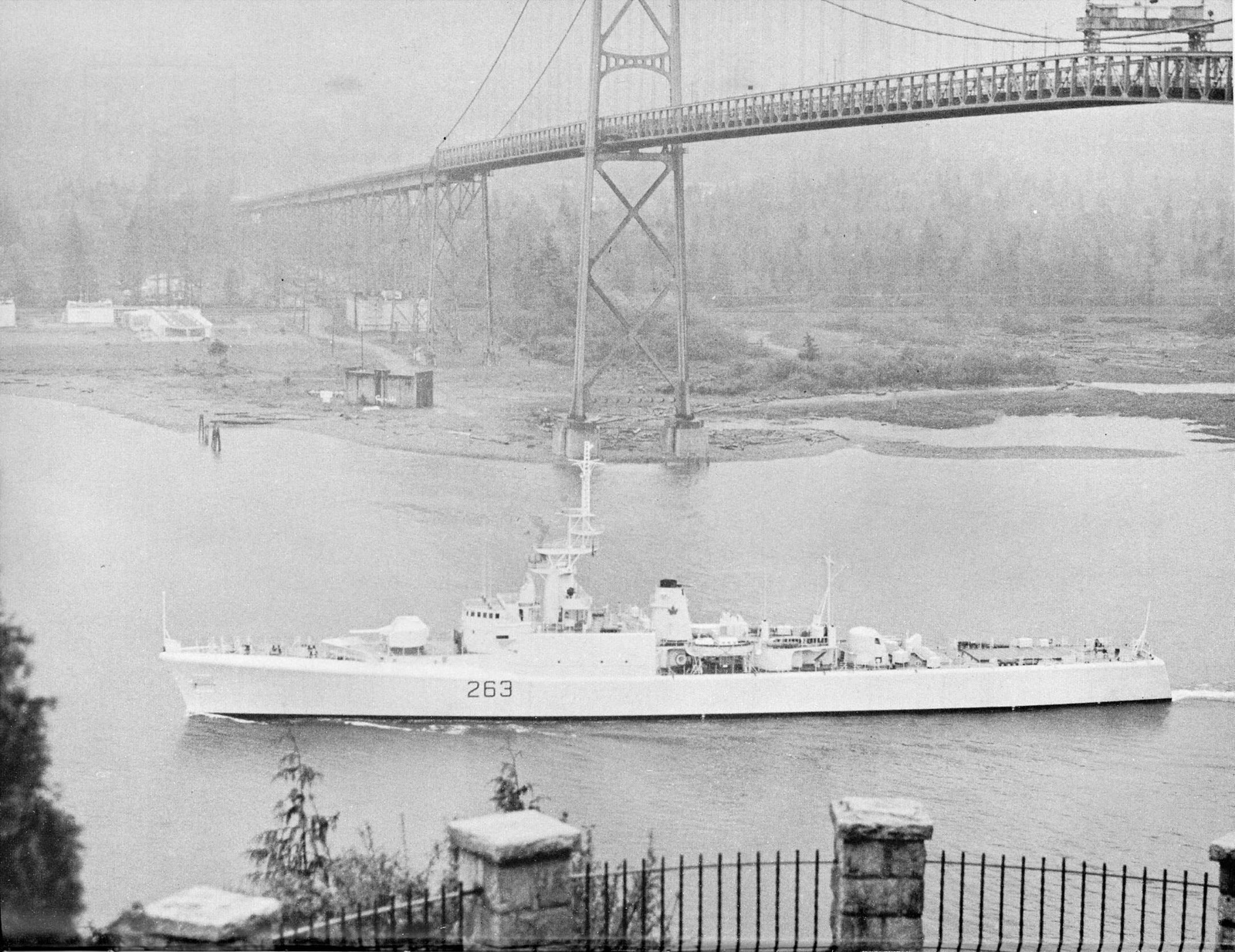
HMCS Yukon
Die Geschichte dahinter
The Yukon spent three decades patrolling the Pacific for the Royal Canadian Navy before San Diego bought her for the bottom of Wreck Alley, the cluster of intentional sinkings off Mission Beach. Volunteers spent months cutting access holes and stripping hazards for a celebratory public scuttling in July 2000, and the ocean skipped the ceremony. The night before the event, swells worked through her prepared openings, and spectators arrived to find the destroyer already gone, sunk unmanned in the dark. She also ignored the plan on the way down, landing on her port side rather than upright in about 32 meters of green Californian water. That accident defines the dive: every passageway runs sideways, which disorients even experienced wreck divers, and the Yukon has been the site of multiple fatalities. Operators are blunt that her interior is for properly trained teams only. Outside, she has become a spectacular cold-water reef, furred bow to stern in white plumose anemones, patrolled by sheephead and calico bass, with octopus and lingcod in the gun mounts. In California wreck diving she is the centerpiece, respected in both senses of the word.
Wie sie sank: Prepared for reefing off San Diego; flooded in swells and sank unmanned overnight on 14 July 2000, hours before her scheduled scuttling.
Heute dort tauchen
Bedingung: Intact on her port side; hull sound, with fittings and lighter structures slowly shedding
Wrackinnenraum-Tauchen: Full With Training. Cut access holes exist throughout, but the sideways attitude, cold water, surge and silt have contributed to diver deaths here. Interior travel is for wreck-trained, well-equipped teams with lines and lights. Das Betreten von Überkopf-Umgebungen erfordert eine spezifische Ausbildung – mindestens ein Wrack-Zertifikat, für die vollständige Penetration eine technische Wrack-Ausbildung.
Empfohlene Zertifizierung: Advanced Open Water with cold-water experience; wreck training for any entry
Strömung: Mild · Sichtweite: 5–15 m
Meeresleben: A full coat of white Metridium anemones, California sheephead, calico bass, lingcod, painted greenlings, and giant Pacific octopus denned in the machinery.
Gefahren: Cold water, surge, disorienting sideways interior, and a record of fatalities inside: stay outside without overhead training
Ansehen
Aus den offiziellen Kanälen

Deep-Sea Coral Fireworks

Camera 2: 2026 American Samoa ROV + Mapping Exploration (EX2606)
Videos sind eingebettete Links zu den Kanälen der jeweiligen Ersteller – wir hosten nichts und geben für alles die Quelle an.