Kimon M
القصة
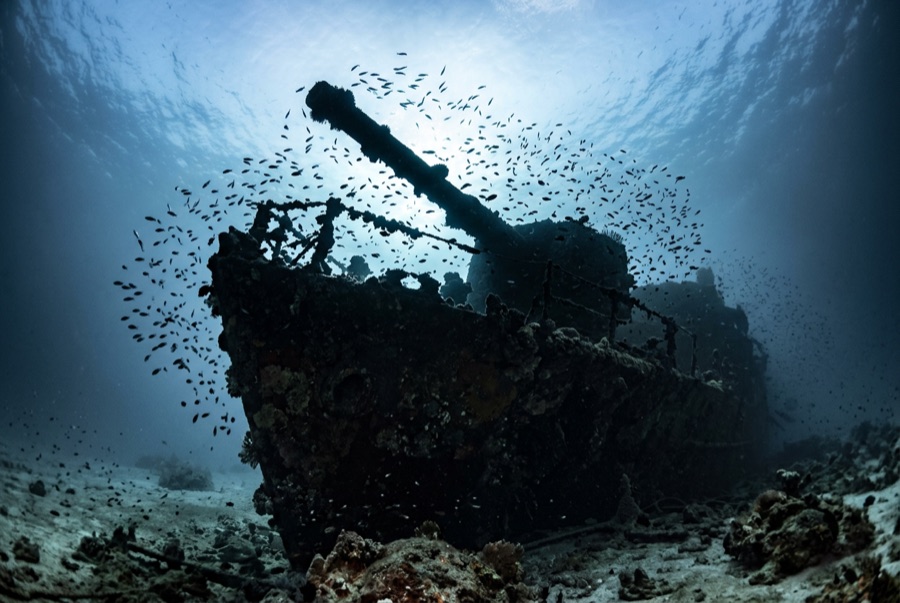
Every ship on Abu Nuhas earned a nickname from its cargo, and the Kimon M drew the humblest: the Lentil Wreck. A German-built freighter of 1952 vintage sailing under later Greek ownership, she loaded some four and a half thousand tons of lentils at Iskenderun in Turkey, bound for Bombay. On 12 December 1978, running the Strait of Gubal at full sea speed, she piled onto the reef's northeast corner, the same low coral shelf that had already claimed the Carnatic a century earlier and would take the Giannis D and Chrisoula K within a few years. The crew was lifted off safely. The ship sat high on the reef until salvors removed her engines; storms then pushed the hull over the edge, where it settled on its starboard side down the slope. The cargo fermented away long ago, leaving open holds, a photogenic stern, and the quietest corner of the Red Sea's busiest wreck reef.
كيف غرقت: Ran onto the northeast corner of Sha'ab Abu Nuhas at full speed, 12 December 1978.
الغوص فيها اليوم
الحالة: The stern half is coherent and rewarding; the bow region is flattened wreckage fused into the reef where she first struck.
الغوص في الأماكن الضيقة (Penetration): Limited. The aft holds and shaft area allow short, bright pass-throughs for trained divers; the crushed forward section is best admired from outside. الدخول إلى أي بيئة مغلقة يستلزم تدريباً متخصصاً: شهادة الحطام كحدٍّ أدنى، والتدريب التقني على الحطام للاختراق الكامل.
الشهادة الموصى بها: Advanced Open Water
التيار: Mild · الرؤية: 10–25 m
الحياة البحرية: Glassfish and sweepers in the stern spaces, morays in the toppled framework, anthias over the hull, and groupers holding the shaded holds.
المخاطر: Surge near the reef crest, sharp collapsed plating forward, and boat traffic above a popular anchorage.
الحماية والتشريعات
Egyptian rules protect all the Abu Nuhas wrecks: remove nothing.
شاهد
من القنوات الرسمية

Deep-Sea Coral Fireworks

Camera 2: 2026 American Samoa ROV + Mapping Exploration (EX2606)
مقاطع الفيديو روابط مُضمَّنة لقنوات أصحابها. لا نستضيف شيئًا ونُشير إلى المصدر في كل الأحوال.