Sites de plongée, saisons et vie marine — recherchés, cartographiés, planifiés.
Menu
Destinations Sites de plongée Vie marine Épaves Actualités
Planifier un voyage Planificateur de séjour Quand plonger Calculateur de coût Comparaisons Calendrier de la faune marine Température de l'eau Liveaboards Opérateurs & resorts Parcs marins Caissons hyperbares Carte du monde
Régions Australie, Nouvelle-Zélande & Asie de l'EstCaraïbes & Atlantique occidentalEurope, Atlantique & MéditerranéeOcéan Indien & Afrique de l'EstÎles du Pacifique & MicronésieMer Rouge & Moyen-OrientAsie du Sud-Est et Triangle de CorailLes Amériques et Pacifique Est Pays
Apprendre & Outils Tous les guides Certifications Guides d'équipement Vidéos Interroger les données Agents IA API
À propos À propos de nous Méthodologie Avertissement Contact
Votre vue
★ Enregistré

Vos destinations, sites et espèces favoris — enregistrés dans ce navigateur.

API GATEWAY

Accès JSON gratuit en lecture seule aux données en cache de l'atlas.

Mode sombre

🧭 Vue Guidée
Nouveau dans la plongée — profondeurs, courants, niveaux de certification ? Nous expliquons chaque terme au fil de votre navigation, en langage clair. Les mêmes données, avec l'aide intégrée.

⚡ Vue Expert
Vous connaissez déjà la différence entre un tombant et un drift. Juste les données — claires, rapides et compactes. C'est la vue par défaut.

Langue de l'interface
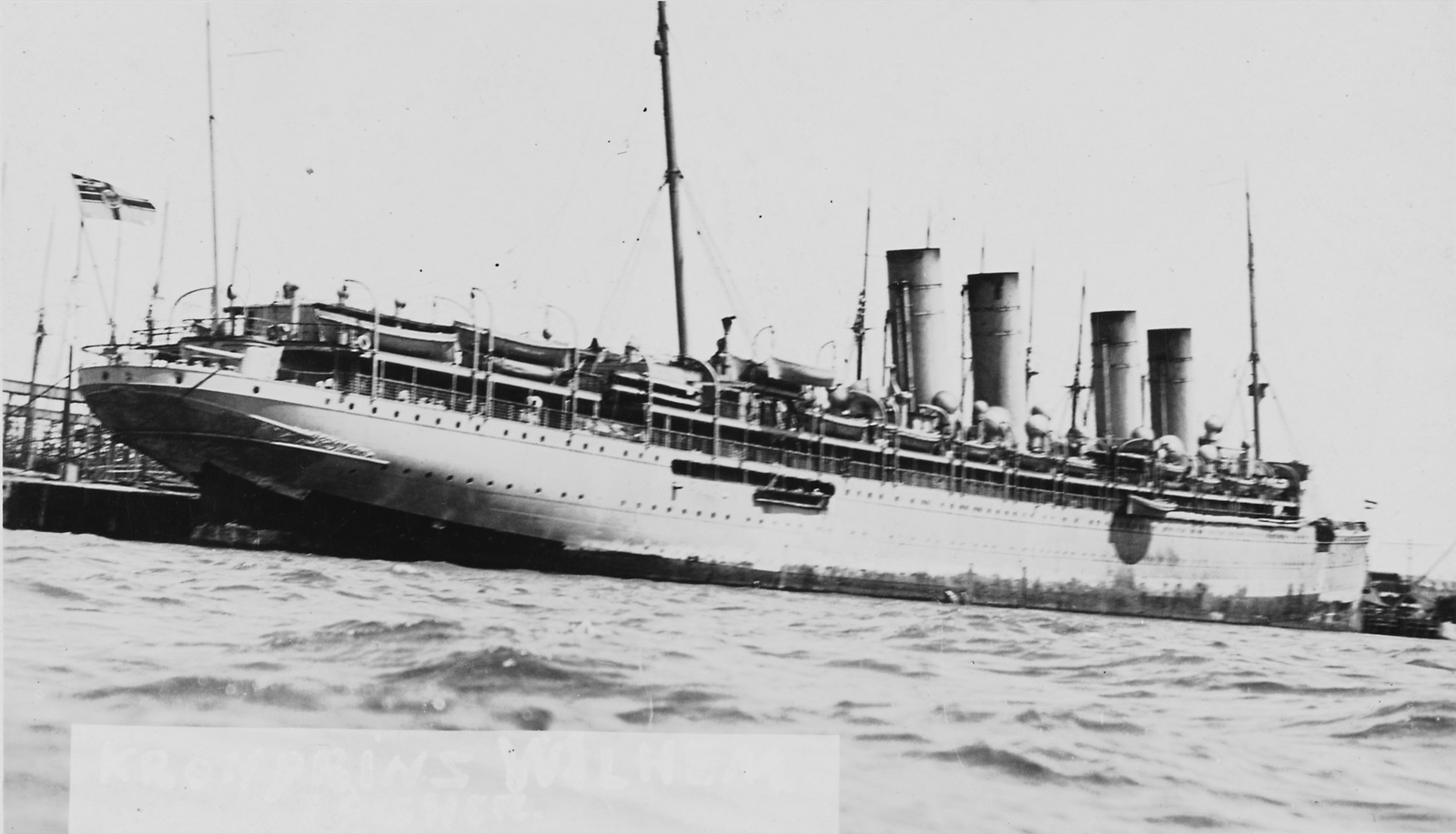
SMS Kronprinz Wilhelm — illustrative image

SMS Kronprinz Wilhelm

König-class dreadnought battleship, German Imperial Navy Coulé 1919 20–38 m Scapa Flow
Illustration générée par IA
Des vies ont été perdues iciNone aboard her in the scuttling; nine German sailors were killed across the fleet that day. Les opérateurs locaux demandent que l'épave soit plongée avec le respect qui s'impose.
Bien documenté
Profondeur jusqu'au pont
20 m / 66 ft
Profondeur maximale
38 m / 125 ft
Construit / coulé
1914 / 1919
Longueur
175 m
Orientation
Capsized, Nearly Inverted
Niveau
Advanced
Meilleurs mois
Apr–Oct

L'histoire

The Kronprinz fought at Jutland in 1916, took her place in the North Sea standoffs that followed, and was renamed Kronprinz Wilhelm in 1918 to honor the crown prince — just in time to surrender. Interned at Scapa Flow with the rest of the High Seas Fleet while the Versailles negotiations dragged on, she was one of the 52 ships that went down on 21 June 1919 when Admiral Ludwig von Reuter, believing the armistice was expiring and determined to keep his fleet out of British hands, signaled the order to scuttle. The salvage empire of Ernest Cox lifted most of the fleet for scrap in the 1920s and 30s; the Kronprinz Wilhelm was among the seven warships too deep or too awkward to raise, and so became one of diving's great time capsules. She lies almost fully capsized in about 38 meters, her vast hull the first thing divers meet, with 12-inch gun turrets hanging beneath at the seabed and casemate guns, rudders and torpedo tubes readable along the wreck. Of the three surviving battleships she is often rated the most navigable introduction.

Comment elle a coulé: Scuttled with the interned German High Seas Fleet on Admiral von Reuter's order, 21 June 1919.

Plongée sur ce site aujourd'hui

Condition: Coherent capsized hull a century on; internal collapse advancing, with salvage scars from early blasting

Pénétration: Limited. Openings beneath the upturned hull lead into dark, silt-laden, collapsing spaces — technical wreck teams only, and even they treat her cautiously. Toute pénétration en environnement semi-fermé exige une formation spécifique — au minimum une certification épave, et une formation technique épave pour une pénétration complète.

Certification recommandée: Advanced Open Water with deep and drysuit experience

Courant: Mild · Visibilité: 4–12 m

Vie marine: Plumose anemones and dead-man's-fingers coat the shaded steel, ballan wrasse and saithe patrol the hull, lobsters and edible crabs den in the plating, and dense brittlestars carpet the seabed.

Dangers: Cold dark water, depth, disorienting inverted topography, and entanglement in old salvage debris

Protection & réglementation

Scheduled monument under UK law — diving is permitted on a strict look-but-do-not-touch basis; removal of anything is an offense

A century of relic-hunting ended with legal protection; nothing may be lifted, moved or recovered.

Regarder

Depuis les canaux officiels

Toutes les vidéos →

Les vidéos sont des liens intégrés vers les chaînes de leurs créateurs — nous n'hébergeons rien et créditons tout.

Sources: Historic Environment Scotland ↗Wikipedia ↗ · Informations vérifiées par rapport aux sources ci-dessus ; les champs sans référence sont marqués non encore vérifiés.

Australie, Nouvelle-Zélande & Asie de l'Est

Cairns & the Ribbon ReefsNingaloo ReefCoral Sea & Osprey ReefOkinawa & the Kerama IslandsPoor Knights IslandsTownsville & the YongalaGreen IslandIzu Peninsula

Caraïbes & Atlantique occidental

BonaireCozumelRiviera Maya & the CenotesBelize Barrier ReefGrand CaymanIsla Mujeres & CancúnRoatánTiger Beach & Grand Bahama

Europe, Atlantique & Méditerranée

Malta & GozoSilfra & IcelandThe AzoresCanary IslandsLarnaca & the ZenobiaScapa FlowArctic NorwayMadeira

Océan Indien & Afrique de l'Est

North & South Malé AtollsAri AtollBaa Atoll & Hanifaru BayAliwal Shoal & UmkomaasMafia IslandMauritiusSeychellesSodwana Bay

Îles du Pacifique & Micronésie

PalauChuuk (Truk) LagoonFakaravaKona, HawaiʻiRangiroaTaveuni & Rainbow ReefBeqa Lagoon & Pacific HarbourEspiritu Santo

Mer Rouge & Moyen-Orient

Sharm El Sheikh & Ras MohammedBrothers, Daedalus & St John'sDahabHurghada & El GounaMarsa Alam & the Deep SouthAqabaDaymaniyat IslandsMusandam Peninsula

Asie du Sud-Est et Triangle de Corail

Bali & Nusa PenidaKomodoRaja AmpatSipadan & MabulAnilaoCoronKoh TaoLembeh Strait

Les Amériques et Pacifique Est

Galápagos IslandsCocos IslandFlorida KeysSea of Cortez & Cabo PulmoSocorro & the RevillagigedosBritish ColumbiaCalifornia Channel IslandsCosta Rica Pacific Coast