Tauchplätze, Saisons und Meereslebewesen – recherchiert, kartiert, geplant.
Menü
Reiseziele Tauchplätze Meeresleben Wracks News
Eine Reise planen Tauchtrip-Planer Wann tauchen Kostenrechner Vergleiche Meereslebewesen-Kalender Wassertemperatur Liveaboards Tauchbetriebe & Resorts Meeresschutzgebiete Druckkammern Weltkarte
Regionen Australien, Neuseeland & OstasienKaribik & WestatlantikEuropa, Atlantik & MittelmeerIndischer Ozean & OstafrikaPazifikinseln & MikronesienRotes Meer & Naher OstenSüdostasien & Korallen-DreieckAmerika & Östlicher Pazifik Länder
Lernen & Tools Alle Guides Zertifizierungen Ausrüstungsratgeber Videos Daten abfragen KI-Agenten API
Über uns Über uns Methodik Haftungsausschluss Kontakt
Deine Ansicht
★ Gespeichert

Deine gespeicherten Reiseziele, Tauchplätze und Tierarten — im Browser gespeichert.

API-GATEWAY

Kostenloser, schreibgeschützter JSON-Zugriff auf die gecachten Daten des Atlas.

Dunkelmodus

🧭 Geführte Ansicht
Neu beim Tauchen — Tiefen, Strömungen, Zertifizierungsstufen? Wir erklären jeden Begriff beim Stöbern in verständlicher Sprache. Dieselben Daten, mit integrierter Hilfe.

⚡ Expertenansicht
Du kennst den Unterschied zwischen einem Wall und einem Drift Dive. Nur die Daten – klar, schnell und kompakt. Das ist die Standardansicht.

Oberflächensprache
RMS Rhone — illustrative image

RMS Rhone

Royal Mail Steam Packet Company iron-hulled steam packet Gesunken 1867 6–26 m British Virgin Islands
KI-generierte Illustration
Hier wurden Leben verlorenMore than 120 of roughly 145 aboard died; only about two dozen survived. Lokale Tauchbetriebe bitten darum, das Wrack mit dem entsprechenden Respekt zu tauchen.
Gut dokumentiert
Tiefe zum Wrackdeck
6 m / 20 ft
Maximale Tiefe
26 m / 85 ft
Gebaut / versenkt
1865 / 1867
Länge
94 m
Tonnage
2,738 GRT
Orientierung
Bow Section On Starboard Side; Stern Broken And Scattered
Level
Intermediate
Beste Monate
Dec–May

Die Geschichte dahinter

The Rhone was the pride of the Royal Mail line, a fast iron steamer barely two years old when the San Narciso hurricane caught her at anchor in the Virgin Islands in October 1867. Her captain tried to run for open water between the storm's two halves; the second blast drove her onto Black Rock Point at Salt Island, where cold seawater reaching her boilers tore the ship in two. Most of those aboard were lost, many of them passengers lashed into their bunks against the storm, and the islanders of Salt Island buried the dead. A century later the wreck starred as the underwater set for the 1977 film The Deep, and in 1980 the territory made her the centerpiece of its first marine national park. Today she is the Caribbean's most celebrated wreck dive: the bow section lies on its starboard side, remarkably intact, its foremast and crow's nest still attached, while the shallower stern scatters into a debris field of propeller, aft mast, and the famous brass porthole divers rub for luck.

Wie sie sank: Driven onto Black Rock Point, Salt Island, by the San Narciso hurricane of 29 October 1867; broke in two and sank.

Heute dort tauchen

Bedingung: Bow section largely intact after 150 years; stern flattened, with propeller, driveshaft and boilers plainly recognizable

Wrackinnenraum-Tauchen: Limited. The open bow section offers a wide, light-filled swim-through along the intact hull that guides run routinely; no enclosed penetration remains. Das Betreten von Überkopf-Umgebungen erfordert eine spezifische Ausbildung – mindestens ein Wrack-Zertifikat, für die vollständige Penetration eine technische Wrack-Ausbildung.

Empfohlene Zertifizierung: Advanced Open Water for the bow; the stern section suits newly certified divers

Strömung: Mild · Sichtweite: 15–30 m

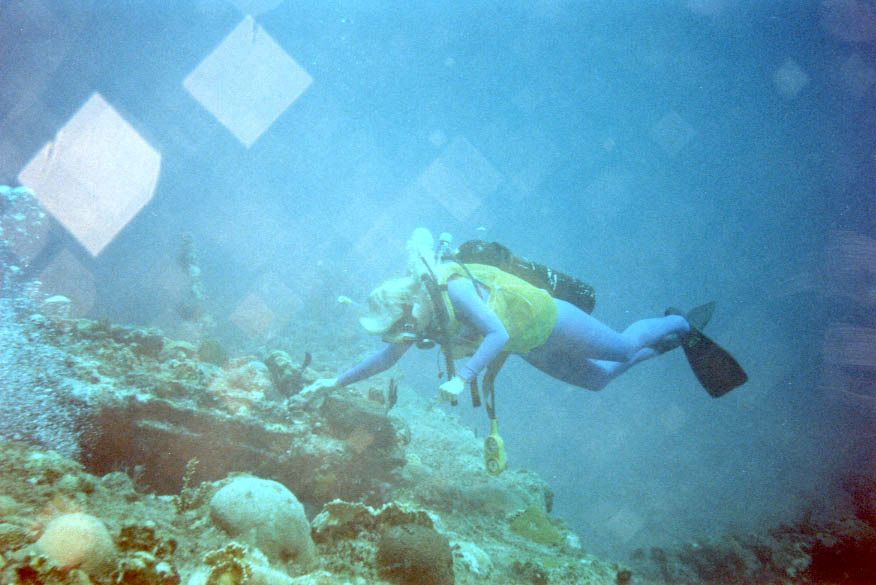
Meeresleben: Resident green turtles, tarpon hanging in the shade of the bow, yellowtail snapper, squirrelfish in the hull recesses, lobster and octopus in the debris, and an old barracuda that patrols the stern.

Gefahren: Boat traffic on busy days, mild current in the channel, fire coral on the wreckage

Schutz & Recht

Centerpiece of the Wreck of the Rhone Marine Park, the BVI's first marine national park — moorings only, no anchoring, nothing may be removed

Every artifact, down to the silver teaspoon set in the coral and the lucky porthole, is protected by park law — touch lightly and take nothing.

Ansehen

Aus den offiziellen Kanälen

Alle Videos →

Videos sind eingebettete Links zu den Kanälen der jeweiligen Ersteller – wir hosten nichts und geben für alles die Quelle an.

Quellen: BVI Tourist Board ↗Wikipedia ↗ · Fakten wurden anhand der oben genannten Quellen verifiziert; Felder ohne Quellenbeleg sind als noch nicht verifiziert gekennzeichnet.

Australien, Neuseeland & Ostasien

Cairns & the Ribbon ReefsNingaloo ReefCoral Sea & Osprey ReefOkinawa & the Kerama IslandsPoor Knights IslandsTownsville & the YongalaGreen IslandIzu Peninsula

Karibik & Westatlantik

BonaireCozumelRiviera Maya & the CenotesBelize Barrier ReefGrand CaymanIsla Mujeres & CancúnRoatánTiger Beach & Grand Bahama

Europa, Atlantik & Mittelmeer

Malta & GozoSilfra & IcelandThe AzoresCanary IslandsLarnaca & the ZenobiaScapa FlowArctic NorwayMadeira

Indischer Ozean & Ostafrika

North & South Malé AtollsAri AtollBaa Atoll & Hanifaru BayAliwal Shoal & UmkomaasMafia IslandMauritiusSeychellesSodwana Bay

Pazifikinseln & Mikronesien

PalauChuuk (Truk) LagoonFakaravaKona, HawaiʻiRangiroaTaveuni & Rainbow ReefBeqa Lagoon & Pacific HarbourEspiritu Santo

Rotes Meer & Naher Osten

Sharm El Sheikh & Ras MohammedBrothers, Daedalus & St John'sDahabHurghada & El GounaMarsa Alam & the Deep SouthAqabaDaymaniyat IslandsMusandam Peninsula

Südostasien & Korallen-Dreieck

Bali & Nusa PenidaKomodoRaja AmpatSipadan & MabulAnilaoCoronKoh TaoLembeh Strait

Amerika & Östlicher Pazifik

Galápagos IslandsCocos IslandFlorida KeysSea of Cortez & Cabo PulmoSocorro & the RevillagigedosBritish ColumbiaCalifornia Channel IslandsCosta Rica Pacific Coast