Dive sites, seasons and marine life — researched, mapped, planned.
Menu
Destinations Dive Sites Marine Life Wrecks News
Plan a trip Trip planner When to dive Cost calculator Comparisons Marine-life calendar Water temperature Liveaboards Operators & resorts Marine parks Hyperbaric chambers World map
Regions Australia, New Zealand & East AsiaCaribbean & Western AtlanticEurope, Atlantic & MediterraneanIndian Ocean & East AfricaPacific Islands & MicronesiaRed Sea & Middle EastSoutheast Asia & Coral TriangleThe Americas & Eastern Pacific Countries
Learn & Tools All guides Certifications Gear guides Videos Ask the Data AI Agents API
About About us Methodology Disclaimer Contact
Your view
★ Saved

Your starred destinations, sites and species — stored in this browser.

API GATEWAY

Free read-only JSON access to the atlas's cached data.

Dark mode

🧭 Guided View
New to diving — depths, currents, certification levels? We explain every term as you browse, in plain English. Same data, with the help built in.

⚡ Expert View
You already know the difference between a wall and a drift. Just the data — clean, fast and compact. This is the default view.

Interface language
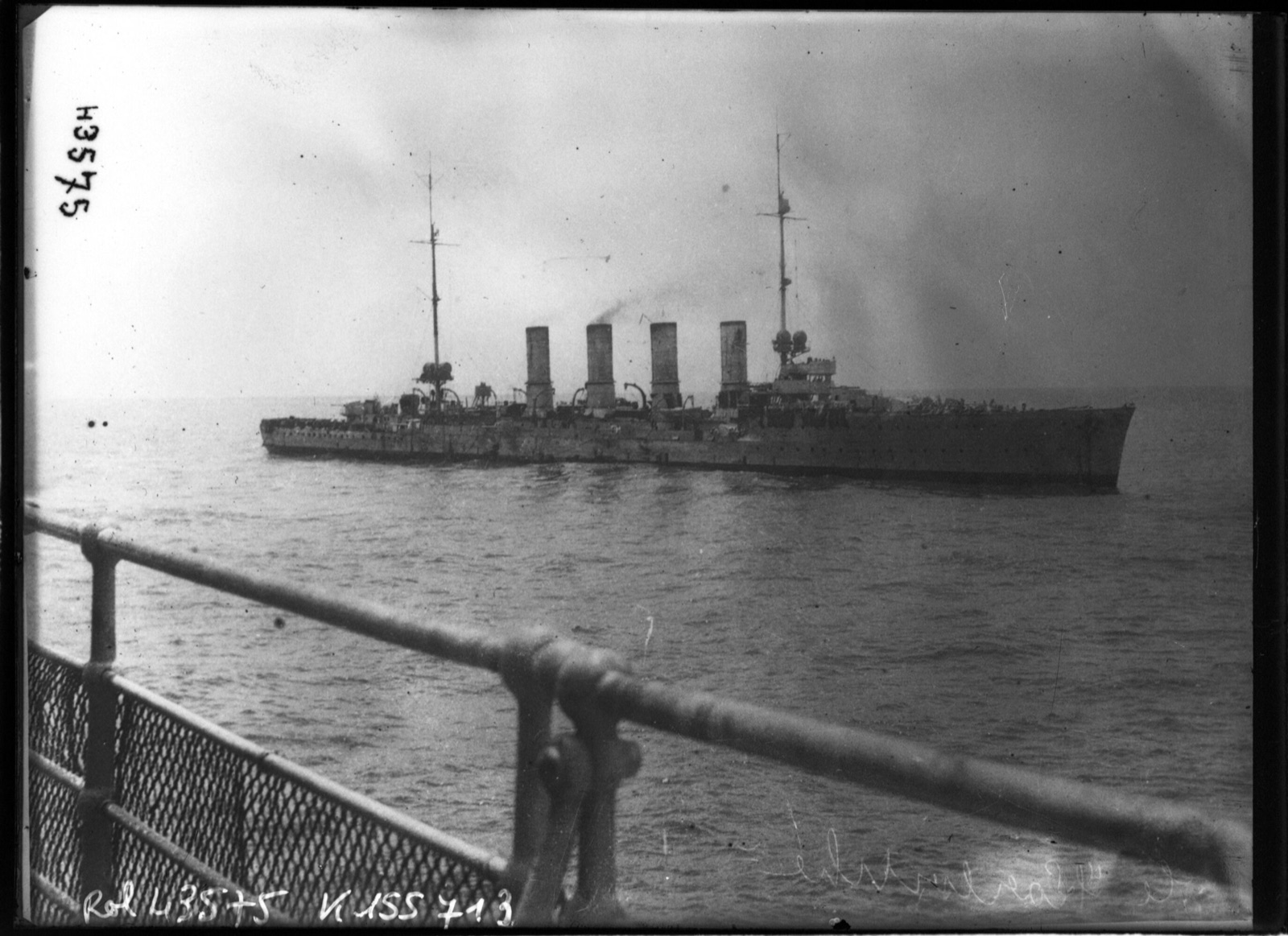
SMS Karlsruhe — illustrative image

SMS Karlsruhe

Königsberg-class light cruiser, German Imperial Navy Sunk 1919 14–26 m Scapa Flow
AI-generated illustration
Lives were lost hereNone aboard her in the scuttling. Local operators ask that the wreck be dived with corresponding respect.
Well documented
Depth to deck
14 m / 46 ft
Maximum depth
26 m / 85 ft
Built / sunk
1916 / 1919
Length
151 m
Orientation
Starboard Side, Heavily Collapsed
Level
Intermediate
Best months
Apr–Oct

The story

The second cruiser to carry the name — her predecessor was lost in the Atlantic in 1914 — this Karlsruhe was completed in 1916 and reached the fleet in time for the war's late sweeps, seeing far less action than the name she inherited. Interned with the High Seas Fleet, she went down with it on 21 June 1919 in Scapa Flow's great act of self-destruction. Among the seven ships the salvors left behind she drew the shallowest berth, settling on her starboard side in roughly 26 meters, and eight decades of blasting, hardhat salvage and Orkney weather have opened her up more than any of her sisters. What sounds like damage works in divers' favor: the Karlsruhe is Scapa's most legible wreck, a cutaway diagram of a light cruiser where armored deck, boilers, shell rooms and steering gear all lie exposed to a torch beam, with her bow guns still present and her capstans and anchor gear photogenic under the anemones. Skippers often schedule her as the first dive of a Scapa week — the gentlest depth in the German fleet and the clearest lesson in what these ships were.

How she sank: Scuttled with the interned German High Seas Fleet on Admiral von Reuter's order, 21 June 1919.

Diving her today

Condition: The most broken-down of the seven — collapsed and salvage-scarred, but rich in readable detail

Penetration: Limited. So much structure is open that most 'penetration' is really weaving through exposed frames; true enclosed spaces remain silty and unstable. Entering any overhead environment requires specific training — a wreck certification at minimum, technical wreck training for full penetration.

Recommended certification: Advanced Open Water with drysuit experience

Current: Mild · Visibility: 4–12 m

Marine life: Plumose anemones and sea squirts on every edge, ballan and cuckoo wrasse, congers in the boilers, scorpionfish on the plates, and squat lobsters throughout.

Hazards: Sharp collapsed plating, cold water, and silt inside the remaining cavities

Protection & law

Scheduled monument under UK law — nothing may be disturbed or removed

Watch

From the official channels

All videos →

Videos are embedded links to their creators' own channels — we host nothing and credit everything.

Sources: Historic Environment Scotland ↗scapaflowwrecks.com ↗ · Facts verified against the sources above; fields without support are labeled not yet verified.

Australia, New Zealand & East Asia

Cairns & the Ribbon ReefsNingaloo ReefCoral Sea & Osprey ReefOkinawa & the Kerama IslandsPoor Knights IslandsTownsville & the YongalaGreen IslandIzu Peninsula

Caribbean & Western Atlantic

BonaireCozumelRiviera Maya & the CenotesBelize Barrier ReefGrand CaymanIsla Mujeres & CancúnRoatánTiger Beach & Grand Bahama

Europe, Atlantic & Mediterranean

Malta & GozoSilfra & IcelandThe AzoresCanary IslandsLarnaca & the ZenobiaScapa FlowArctic NorwayMadeira

Indian Ocean & East Africa

North & South Malé AtollsAri AtollBaa Atoll & Hanifaru BayAliwal Shoal & UmkomaasMafia IslandMauritiusSeychellesSodwana Bay

Pacific Islands & Micronesia

PalauChuuk (Truk) LagoonFakaravaKona, HawaiʻiRangiroaTaveuni & Rainbow ReefBeqa Lagoon & Pacific HarbourEspiritu Santo

Red Sea & Middle East

Sharm El Sheikh & Ras MohammedBrothers, Daedalus & St John'sDahabHurghada & El GounaMarsa Alam & the Deep SouthAqabaDaymaniyat IslandsMusandam Peninsula

Southeast Asia & Coral Triangle

Bali & Nusa PenidaKomodoRaja AmpatSipadan & MabulAnilaoCoronKoh TaoLembeh Strait

The Americas & Eastern Pacific

Galápagos IslandsCocos IslandFlorida KeysSea of Cortez & Cabo PulmoSocorro & the RevillagigedosBritish ColumbiaCalifornia Channel IslandsCosta Rica Pacific Coast