Puntos de buceo, temporadas y vida marina — investigados, cartografiados, planificados.
Menú
Destinos Puntos de buceo Vida marina Pecios Noticias
Planifica un viaje Planificador de viajes Cuándo bucear Calculadora de costes Comparativas Calendario de fauna marina Temperatura del agua Liveaboards Operadores y resorts Parques marinos Cámaras hiperbáricas Mapa mundial
Regiones Australia, Nueva Zelanda y Asia OrientalCaribe y Atlántico occidentalEuropa, Atlántico y MediterráneoOcéano Índico y África OrientalIslas del Pacífico y MicronesiaMar Rojo y Oriente MedioSudeste Asiático y el Triángulo del CoralLas Américas y el Pacífico Oriental Países
Aprender y herramientas Todas las guías Certificaciones Guías de equipo Vídeos Consulta los datos Agentes de IA API
Acerca de Quiénes somos Metodología Aviso legal Contacto
Tu vista
★ Guardado

Tus destinos, sitios y especies favoritos — guardados en este navegador.

API GATEWAY

Acceso JSON gratuito de solo lectura a los datos en caché del atlas.

Modo oscuro

🧭 Vista guiada
¿Nuevo en el buceo? ¿Profundidades, corrientes, niveles de certificación? Explicamos cada término mientras navegas, en un lenguaje claro. Los mismos datos, con la ayuda integrada.

⚡ Vista experta
Ya conoces la diferencia entre una pared y un drift dive. Solo los datos — claros, rápidos y concisos. Esta es la vista predeterminada.

Idioma de la interfaz
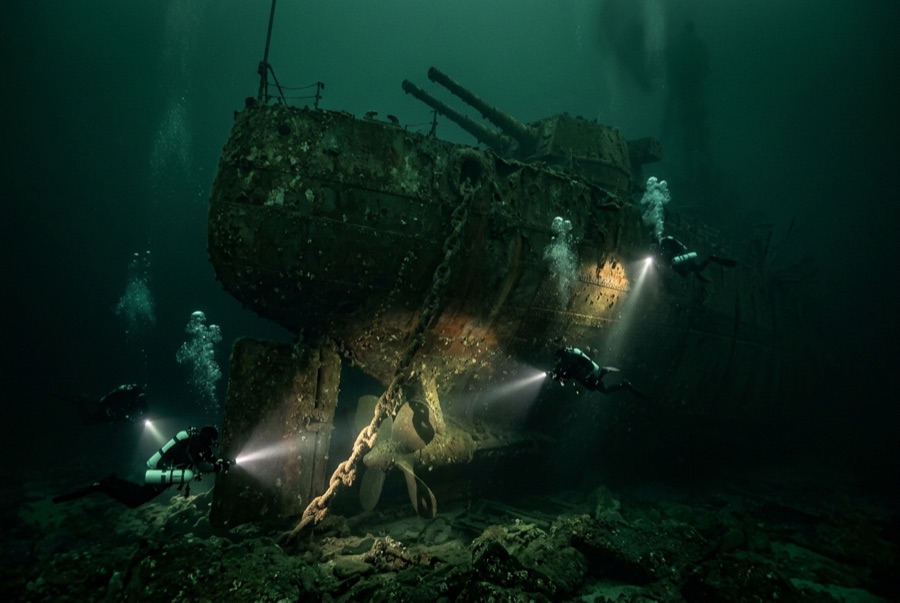
SMS Markgraf — illustrative image

SMS Markgraf

König-class dreadnought battleship, German Imperial Navy Hundido 1919 24–45 m Scapa Flow
Ilustración generada por IA
Aquí se perdieron vidasHer captain and another crewman were shot dead by British guards during the scuttling — among nine Germans killed across the fleet that day. Los operadores locales piden que el pecio se bucee con el respeto correspondiente.
Bien documentado
Profundidad hasta cubierta
24 m / 79 ft
Profundidad máxima
45 m / 148 ft
Construido / hundido
1913 / 1919
Longitud
175 m
Orientación
Capsized, Nearly Inverted
Nivel
Technical
Mejores meses
Apr–Oct

La historia

Markgraf stood in the thick of Jutland in 1916, trading salvos with the British battle line and taking hits that killed members of her crew, then endured the hungry, mutinous final years of the German fleet before sailing into internment at Scapa Flow. On 21 June 1919 she answered von Reuter's scuttling signal, and her sinking carried the day's sharpest tragedy: as British guard boats tried to force crews back aboard, her commanding officer, Walter Schumann, was shot and killed — one of the last men to die in the First World War's naval conflict, months after the armistice. The Markgraf sank into the deepest water of the seven survivors and lies today almost completely upside down in about 45 meters, the most demanding and, many say, the most rewarding of Scapa's battleships. Her hull sides drop like cliff faces, rudders and shafts crown the upturned stern, and along the seabed the casemate guns and armored belt emerge from the gloom. Divers treat her with particular respect, both for her depth and for the men who died with her.

Cómo se hundió: Scuttled with the interned German High Seas Fleet on Admiral von Reuter's order, 21 June 1919.

Buceando aquí hoy

Condición: Largely intact inverted hull, the least salvage-damaged of the battleships, with slow internal collapse

Penetración: Limited. Interior access is deep technical territory — dark, silted and structurally suspect; most visiting divers never leave the hull exterior. Acceder a cualquier entorno de penetración exige formación específica — como mínimo una certificación en pecios, y formación técnica en pecios para penetración completa.

Certificación recomendada: Deep or technical qualification; the hull top alone suits experienced advanced divers

Corriente: Mild · Visibilidad: 4–12 m

Vida marina: Anemone-crusted plating, shoals of saithe and pollack along the hull sides, wolf-eel-like butterfish in crevices, congers and lobsters in the wreckage, brittlestar beds on the floor.

Riesgos: Depth beyond recreational limits at the seabed, cold and dark, overhead structure, and old netting

Protección y legislación

Scheduled monument under UK law — look, do not touch, remove nothing

Ver

Desde los canales oficiales

Todos los vídeos →

Los vídeos son enlaces incrustados a los canales propios de sus creadores — no alojamos nada y acreditamos todo.

Fuentes: Historic Environment Scotland ↗Wikipedia ↗ · Datos verificados frente a las fuentes anteriores; los campos sin respaldo se marcan como aún no verificados.

Australia, Nueva Zelanda y Asia Oriental

Cairns & the Ribbon ReefsNingaloo ReefCoral Sea & Osprey ReefOkinawa & the Kerama IslandsPoor Knights IslandsTownsville & the YongalaGreen IslandIzu Peninsula

Caribe y Atlántico occidental

BonaireCozumelRiviera Maya & the CenotesBelize Barrier ReefGrand CaymanIsla Mujeres & CancúnRoatánTiger Beach & Grand Bahama

Europa, Atlántico y Mediterráneo

Malta & GozoSilfra & IcelandThe AzoresCanary IslandsLarnaca & the ZenobiaScapa FlowArctic NorwayMadeira

Océano Índico y África Oriental

North & South Malé AtollsAri AtollBaa Atoll & Hanifaru BayAliwal Shoal & UmkomaasMafia IslandMauritiusSeychellesSodwana Bay

Islas del Pacífico y Micronesia

PalauChuuk (Truk) LagoonFakaravaKona, HawaiʻiRangiroaTaveuni & Rainbow ReefBeqa Lagoon & Pacific HarbourEspiritu Santo

Mar Rojo y Oriente Medio

Sharm El Sheikh & Ras MohammedBrothers, Daedalus & St John'sDahabHurghada & El GounaMarsa Alam & the Deep SouthAqabaDaymaniyat IslandsMusandam Peninsula

Sudeste Asiático y el Triángulo del Coral

Bali & Nusa PenidaKomodoRaja AmpatSipadan & MabulAnilaoCoronKoh TaoLembeh Strait

Las Américas y el Pacífico Oriental

Galápagos IslandsCocos IslandFlorida KeysSea of Cortez & Cabo PulmoSocorro & the RevillagigedosBritish ColumbiaCalifornia Channel IslandsCosta Rica Pacific Coast