Puntos de buceo, temporadas y vida marina — investigados, cartografiados, planificados.
Menú
Destinos Puntos de buceo Vida marina Pecios Noticias
Planifica un viaje Planificador de viajes Cuándo bucear Calculadora de costes Comparativas Calendario de fauna marina Temperatura del agua Liveaboards Operadores y resorts Parques marinos Cámaras hiperbáricas Mapa mundial
Regiones Australia, Nueva Zelanda y Asia OrientalCaribe y Atlántico occidentalEuropa, Atlántico y MediterráneoOcéano Índico y África OrientalIslas del Pacífico y MicronesiaMar Rojo y Oriente MedioSudeste Asiático y el Triángulo del CoralLas Américas y el Pacífico Oriental Países
Aprender y herramientas Todas las guías Certificaciones Guías de equipo Vídeos Consulta los datos Agentes de IA API
Acerca de Quiénes somos Metodología Aviso legal Contacto
Tu vista
★ Guardado

Tus destinos, sitios y especies favoritos — guardados en este navegador.

API GATEWAY

Acceso JSON gratuito de solo lectura a los datos en caché del atlas.

Modo oscuro

🧭 Vista guiada
¿Nuevo en el buceo? ¿Profundidades, corrientes, niveles de certificación? Explicamos cada término mientras navegas, en un lenguaje claro. Los mismos datos, con la ayuda integrada.

⚡ Vista experta
Ya conoces la diferencia entre una pared y un drift dive. Solo los datos — claros, rápidos y concisos. Esta es la vista predeterminada.

Idioma de la interfaz
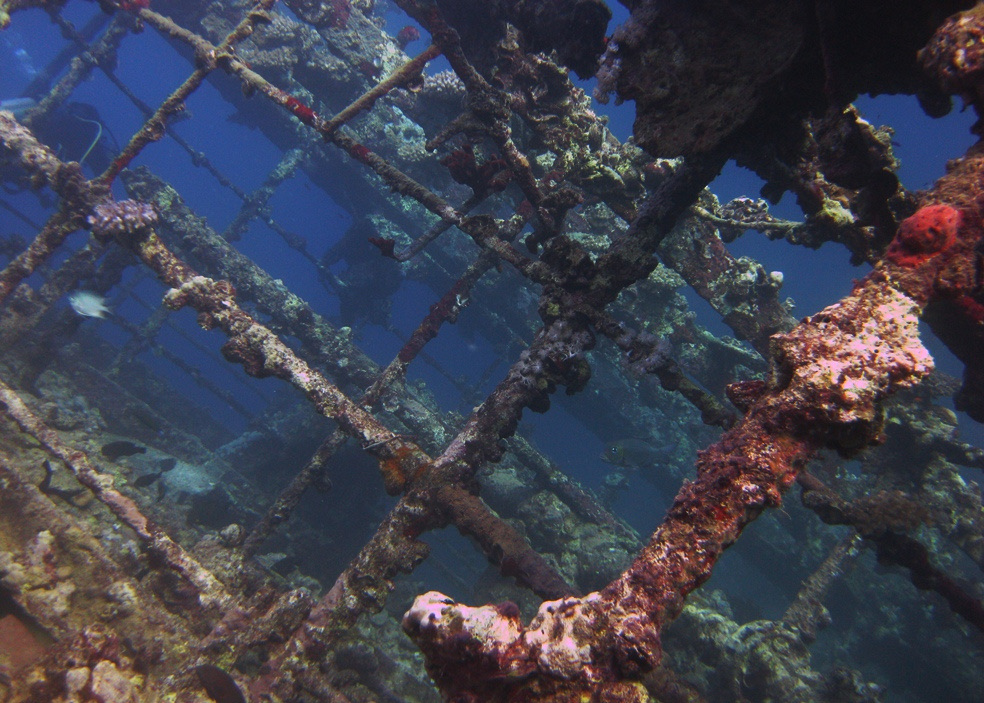
Umbria — illustrative image

Umbria

Italian cargo and passenger steamer Hundido 1940 5–38 m Port Sudan & Sanganeb
Ilustración generada por IA
Aquí se perdieron vidasNone. Los operadores locales piden que el pecio se bucee con el respeto correspondiente.
Bien documentado
Profundidad hasta cubierta
5 m / 16 ft
Profundidad máxima
38 m / 125 ft
Construido / hundido
1912 / 1940
Longitud
153 m
Tonelaje
10,076 GRT
Orientación
On Her Port Side, Davits Reaching Toward The Surface
Nivel
Intermediate
Mejores meses
Oct–May

La historia

Few wrecks owe their existence to a radio broadcast. The Umbria, Hamburg-built in 1912 and sailing for Italy by 1940, arrived off Port Sudan that June carrying around 360,000 aerial bombs, detonators, cement, and general cargo for Italian East Africa — while Britain, whose harbor she lay in, was days from being at war with Rome. A Royal Navy party boarded and held her at anchor on Wingate Reef. When Captain Lorenzo Muiesan learned from the radio on 10 June that Italy had declared war, he quietly ordered the sea valves opened and staged a boat drill; by the time the boarding party understood, she was going down beyond saving, her cargo denied to the enemy without a shot. She settled on her port side in shallow, sheltered water, and eighty years later she is often named among the finest wrecks on earth: intact holds, bottled wine, three Fiat cars, and those endless racks of bombs.

Cómo se hundió: Scuttled by her own captain at Wingate Reef on 10 June 1940, the day Italy entered the Second World War.

Buceando aquí hoy

Condición: Astonishingly whole — scuttling is gentle compared with wrecking — though a century of seawater sits over a cargo of explosives that should be assumed unstable.

Penetración: Full With Training. Engine room, bakery, and holds are classic guided penetrations for trained wreck divers; the angles mislead, so run lines and follow a briefing. Acceder a cualquier entorno de penetración exige formación específica — como mínimo una certificación en pecios, y formación técnica en pecios para penetración completa.

Certificación recomendada: Advanced Open Water; wreck training for the interior

Corriente: Mild · Visibilidad: 15–25 m

Vida marina: Snappers and batfish school in the holds, sweepers pack the corridors, and the sheltered hull carries a thick fur of hard and soft coral.

Riesgos: The bombs are real ordnance: never touch, bump, or lift anything in the holds. Silt inside; small-boat traffic from Port Sudan above.

Protección y legislación

Sudanese authorities control access through Port Sudan operators; conditions ashore can change travel feasibility, so check current guidance before booking.

Nothing leaves this wreck — least of all souvenirs from a magazine of 1940s munitions.

Ver

Desde los canales oficiales

Todos los vídeos →

Los vídeos son enlaces incrustados a los canales propios de sus creadores — no alojamos nada y acreditamos todo.

Fuentes: Divernet ↗ · Datos verificados frente a las fuentes anteriores; los campos sin respaldo se marcan como aún no verificados.

Australia, Nueva Zelanda y Asia Oriental

Cairns & the Ribbon ReefsNingaloo ReefCoral Sea & Osprey ReefOkinawa & the Kerama IslandsPoor Knights IslandsTownsville & the YongalaGreen IslandIzu Peninsula

Caribe y Atlántico occidental

BonaireCozumelRiviera Maya & the CenotesBelize Barrier ReefGrand CaymanIsla Mujeres & CancúnRoatánTiger Beach & Grand Bahama

Europa, Atlántico y Mediterráneo

Malta & GozoSilfra & IcelandThe AzoresCanary IslandsLarnaca & the ZenobiaScapa FlowArctic NorwayMadeira

Océano Índico y África Oriental

North & South Malé AtollsAri AtollBaa Atoll & Hanifaru BayAliwal Shoal & UmkomaasMafia IslandMauritiusSeychellesSodwana Bay

Islas del Pacífico y Micronesia

PalauChuuk (Truk) LagoonFakaravaKona, HawaiʻiRangiroaTaveuni & Rainbow ReefBeqa Lagoon & Pacific HarbourEspiritu Santo

Mar Rojo y Oriente Medio

Sharm El Sheikh & Ras MohammedBrothers, Daedalus & St John'sDahabHurghada & El GounaMarsa Alam & the Deep SouthAqabaDaymaniyat IslandsMusandam Peninsula

Sudeste Asiático y el Triángulo del Coral

Bali & Nusa PenidaKomodoRaja AmpatSipadan & MabulAnilaoCoronKoh TaoLembeh Strait

Las Américas y el Pacífico Oriental

Galápagos IslandsCocos IslandFlorida KeysSea of Cortez & Cabo PulmoSocorro & the RevillagigedosBritish ColumbiaCalifornia Channel IslandsCosta Rica Pacific Coast