Sites de plongée, saisons et vie marine — recherchés, cartographiés, planifiés.
Menu
Destinations Sites de plongée Vie marine Épaves Actualités
Planifier un voyage Planificateur de séjour Quand plonger Calculateur de coût Comparaisons Calendrier de la faune marine Température de l'eau Liveaboards Opérateurs & resorts Parcs marins Caissons hyperbares Carte du monde
Régions Australie, Nouvelle-Zélande & Asie de l'EstCaraïbes & Atlantique occidentalEurope, Atlantique & MéditerranéeOcéan Indien & Afrique de l'EstÎles du Pacifique & MicronésieMer Rouge & Moyen-OrientAsie du Sud-Est et Triangle de CorailLes Amériques et Pacifique Est Pays
Apprendre & Outils Tous les guides Certifications Guides d'équipement Vidéos Interroger les données Agents IA API
À propos À propos de nous Méthodologie Avertissement Contact
Votre vue
★ Enregistré

Vos destinations, sites et espèces favoris — enregistrés dans ce navigateur.

API GATEWAY

Accès JSON gratuit en lecture seule aux données en cache de l'atlas.

Mode sombre

🧭 Vue Guidée
Nouveau dans la plongée — profondeurs, courants, niveaux de certification ? Nous expliquons chaque terme au fil de votre navigation, en langage clair. Les mêmes données, avec l'aide intégrée.

⚡ Vue Expert
Vous connaissez déjà la différence entre un tombant et un drift. Juste les données — claires, rapides et compactes. C'est la vue par défaut.

Langue de l'interface
Umbria — illustrative image

Umbria

Italian cargo and passenger steamer Coulé 1940 5–38 m Port Sudan & Sanganeb
Illustration générée par IA
Des vies ont été perdues iciNone. Les opérateurs locaux demandent que l'épave soit plongée avec le respect qui s'impose.
Bien documenté
Profondeur jusqu'au pont
5 m / 16 ft
Profondeur maximale
38 m / 125 ft
Construit / coulé
1912 / 1940
Longueur
153 m
Tonnage
10,076 GRT
Orientation
On Her Port Side, Davits Reaching Toward The Surface
Niveau
Intermediate
Meilleurs mois
Oct–May

L'histoire

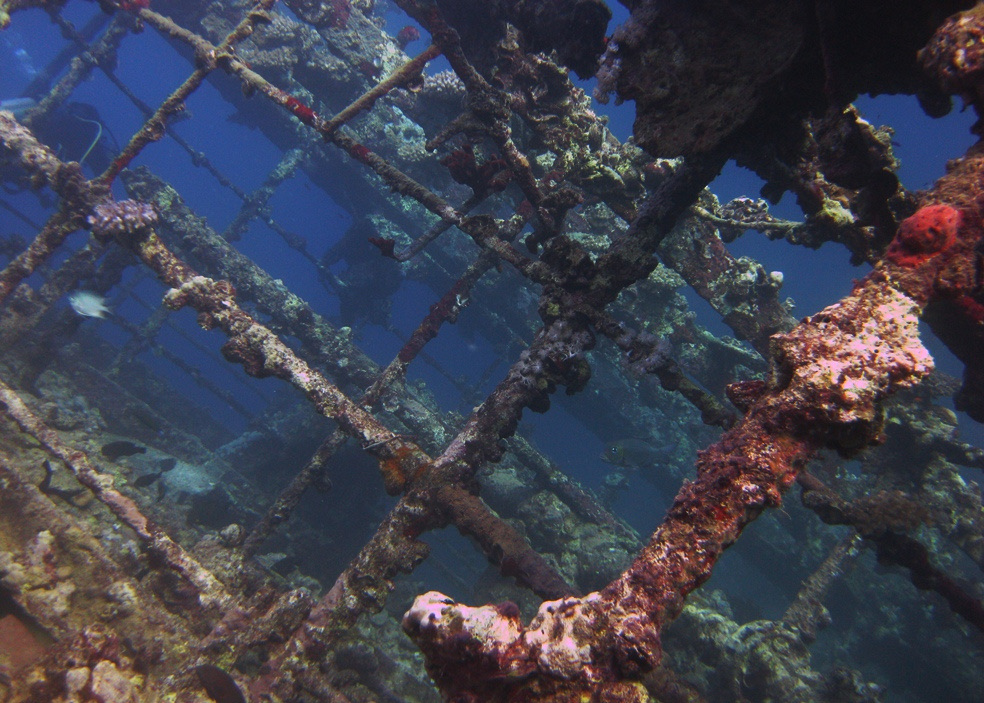
Few wrecks owe their existence to a radio broadcast. The Umbria, Hamburg-built in 1912 and sailing for Italy by 1940, arrived off Port Sudan that June carrying around 360,000 aerial bombs, detonators, cement, and general cargo for Italian East Africa — while Britain, whose harbor she lay in, was days from being at war with Rome. A Royal Navy party boarded and held her at anchor on Wingate Reef. When Captain Lorenzo Muiesan learned from the radio on 10 June that Italy had declared war, he quietly ordered the sea valves opened and staged a boat drill; by the time the boarding party understood, she was going down beyond saving, her cargo denied to the enemy without a shot. She settled on her port side in shallow, sheltered water, and eighty years later she is often named among the finest wrecks on earth: intact holds, bottled wine, three Fiat cars, and those endless racks of bombs.

Comment elle a coulé: Scuttled by her own captain at Wingate Reef on 10 June 1940, the day Italy entered the Second World War.

Plongée sur ce site aujourd'hui

Condition: Astonishingly whole — scuttling is gentle compared with wrecking — though a century of seawater sits over a cargo of explosives that should be assumed unstable.

Pénétration: Full With Training. Engine room, bakery, and holds are classic guided penetrations for trained wreck divers; the angles mislead, so run lines and follow a briefing. Toute pénétration en environnement semi-fermé exige une formation spécifique — au minimum une certification épave, et une formation technique épave pour une pénétration complète.

Certification recommandée: Advanced Open Water; wreck training for the interior

Courant: Mild · Visibilité: 15–25 m

Vie marine: Snappers and batfish school in the holds, sweepers pack the corridors, and the sheltered hull carries a thick fur of hard and soft coral.

Dangers: The bombs are real ordnance: never touch, bump, or lift anything in the holds. Silt inside; small-boat traffic from Port Sudan above.

Protection & réglementation

Sudanese authorities control access through Port Sudan operators; conditions ashore can change travel feasibility, so check current guidance before booking.

Nothing leaves this wreck — least of all souvenirs from a magazine of 1940s munitions.

Regarder

Depuis les canaux officiels

Toutes les vidéos →

Les vidéos sont des liens intégrés vers les chaînes de leurs créateurs — nous n'hébergeons rien et créditons tout.

Sources: Divernet ↗ · Informations vérifiées par rapport aux sources ci-dessus ; les champs sans référence sont marqués non encore vérifiés.

Australie, Nouvelle-Zélande & Asie de l'Est

Cairns & the Ribbon ReefsNingaloo ReefCoral Sea & Osprey ReefOkinawa & the Kerama IslandsPoor Knights IslandsTownsville & the YongalaGreen IslandIzu Peninsula

Caraïbes & Atlantique occidental

BonaireCozumelRiviera Maya & the CenotesBelize Barrier ReefGrand CaymanIsla Mujeres & CancúnRoatánTiger Beach & Grand Bahama

Europe, Atlantique & Méditerranée

Malta & GozoSilfra & IcelandThe AzoresCanary IslandsLarnaca & the ZenobiaScapa FlowArctic NorwayMadeira

Océan Indien & Afrique de l'Est

North & South Malé AtollsAri AtollBaa Atoll & Hanifaru BayAliwal Shoal & UmkomaasMafia IslandMauritiusSeychellesSodwana Bay

Îles du Pacifique & Micronésie

PalauChuuk (Truk) LagoonFakaravaKona, HawaiʻiRangiroaTaveuni & Rainbow ReefBeqa Lagoon & Pacific HarbourEspiritu Santo

Mer Rouge & Moyen-Orient

Sharm El Sheikh & Ras MohammedBrothers, Daedalus & St John'sDahabHurghada & El GounaMarsa Alam & the Deep SouthAqabaDaymaniyat IslandsMusandam Peninsula

Asie du Sud-Est et Triangle de Corail

Bali & Nusa PenidaKomodoRaja AmpatSipadan & MabulAnilaoCoronKoh TaoLembeh Strait

Les Amériques et Pacifique Est

Galápagos IslandsCocos IslandFlorida KeysSea of Cortez & Cabo PulmoSocorro & the RevillagigedosBritish ColumbiaCalifornia Channel IslandsCosta Rica Pacific Coast