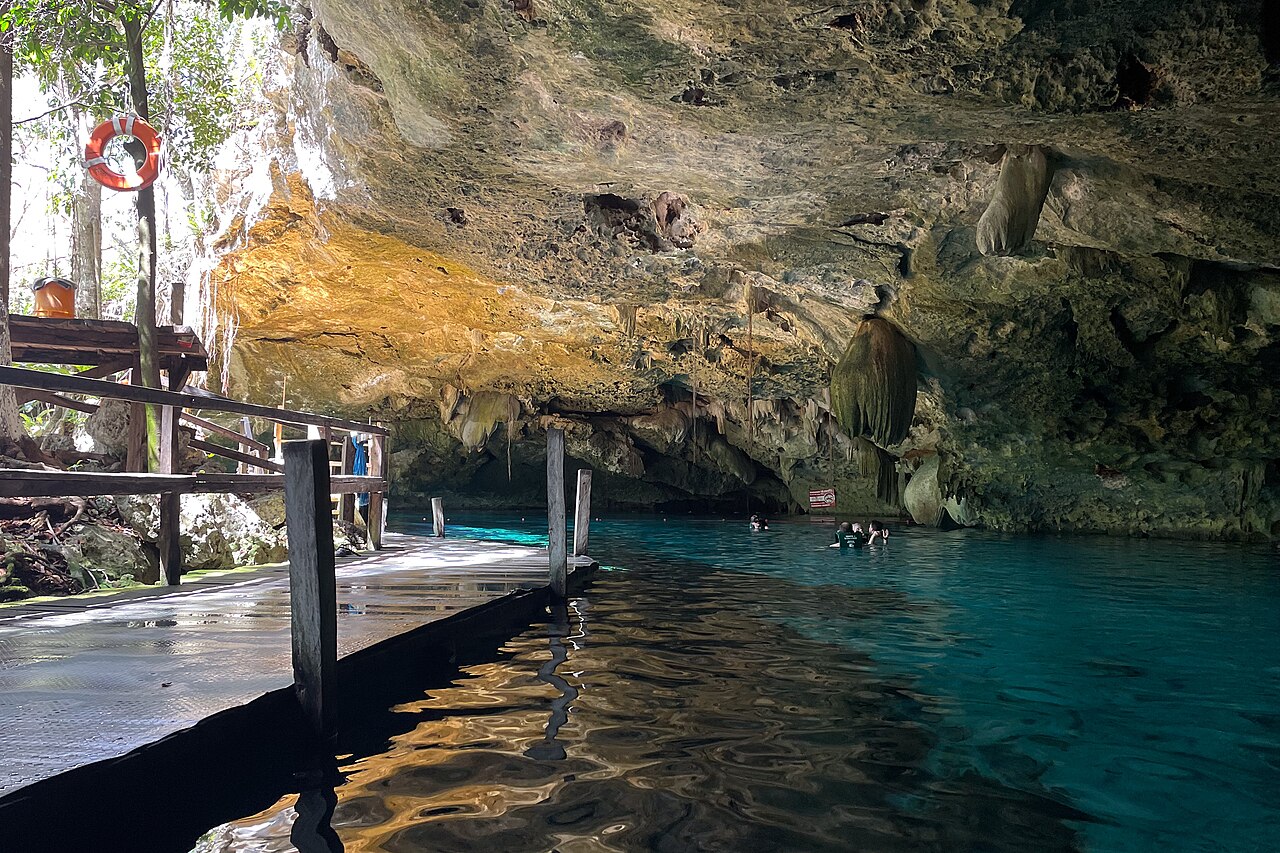
Cenote Dos Ojos
Level 1 - Starter (Barbie Line): CREER cenote level (guided cavern diving) [1] [2] (CREER describes Level 1 cenotes as shallow, with few depth changes, wide passages and constant natural light.). Level 2 - Intermediate (Bat Cave Line): CREER cenote level (guided cavern diving) [1] [2] (CREER describes Level 2 as shallow but with smaller passages, limited natural light and a halocline.). These categories are the named scheme's own; they describe the training a site calls for.
Twin cenotes ('two eyes') that form one of the main cavern-tour entrances to Sistema Sac Actun, with two separate guided cavern routes: the Barbie Line (CREER Level 1) and the Bat Cave Line (Level 2).
Dos Ojos takes its name from two roughly circular cenotes lying close together. Operators describe two contrasting cavern routes that start and finish in the first 'eye': the Barbie Line, and the Bat Cave Line, which CREER rates one level harder. The main route runs along the opening of the second eye with plenty of daylight and large columns and stalactites, and the shallow depth gives long bottom times.
Dos Ojos was surveyed for decades as its own cave system. QRSS recorded a dry link to Sac Actun in 2012 and an underwater connection in 2018, after which Dos Ojos became part of Sistema Sac Actun. QRSS noted in January 2025 that survey was still adding passage in remote parts of the Dos Ojos area.
The cenote is reached by a dirt road from the coastal highway, and entry is controlled by the landowners.
The environment
Shallow, highly decorated cavern passages in clear fresh water with abundant daylight near the entrances; cave lines continue far into the Sac Actun network.
Conditions
Typical conditions only: operators describe very clear water and shallow depths. Visibility can fall where silt is disturbed.
Typical ranges from published sources, not current conditions.
Facilities
A 4 km dirt road leads from the highway to parking areas and the cavern and cave entrances, according to Pro Dive International.
Other entrances to Sistema Sac Actun
Cenote Dreamgate
Cenote Naval
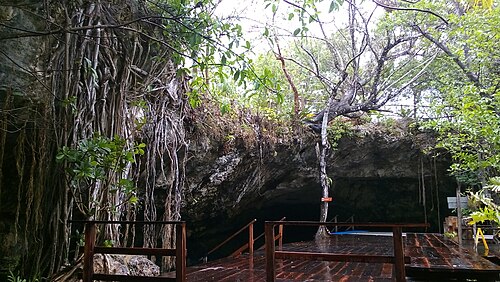
Cenote Nohoch Nah Chich
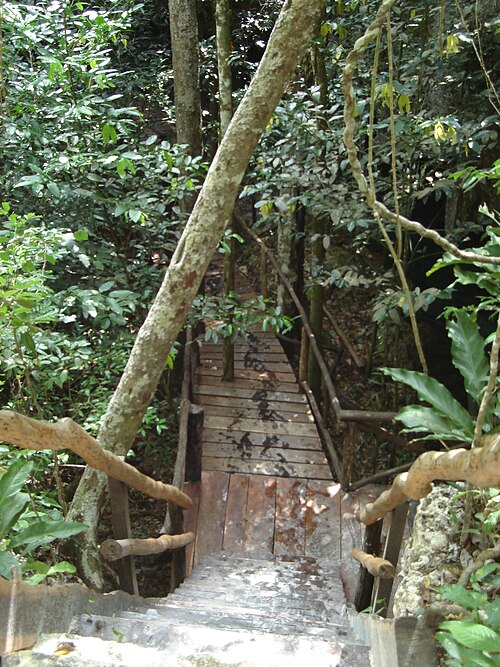
Cenote Pet Cemetery
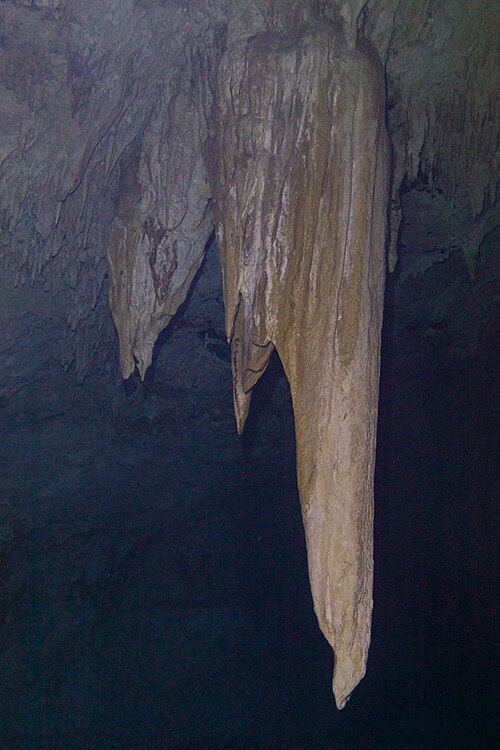
Cenote The Pit
For orientation, not navigation. Hollow dots are approximate.
Every fact on this page, with its source (10)
| Fact | Status | Source |
|---|---|---|
| CREER rates the Dos Ojos Barbie Line as Level 1 (Starter) and the Dos Ojos Bat Cave Line as Level 2 (Intermediate), with cavern diving open on both.Ratings page undated, viewed 2026-10-14; same levels in the 2022 manual summary. | Verified | [1] [2] |
| CREER Level 1 requires a minimum age of 15, open-water certification with recent diving experience, and advanced open-water certification for depths beyond 18 m; Level 2 adds a previous dive in a Level 1 cenote; both allow at most 4 divers per guide. | Verified | [2] |
| QRSS recorded a dry connection between Dos Ojos and Sac Actun in December 2012 and an underwater connection in its May 2018 update. | Verified | [4] |
| QRSS reported in January 2025 that Sac Actun was growing in remote parts of the Dos Ojos area. | Verified | [4] |
| Pro Dive International places the Dos Ojos entrance about 1 km south of Xel-Ha and about 48 km from Playa del Carmen, reached by a 4 km dirt road.Operator description. | Reported | [5] |
| Pro Dive International describes two cavern dives that start and end in the first 'eye', shallow depths and decoration with large columns and stalactites. | Reported | [5] |
| Under the Jungle lists the Dos Ojos Barbie Line and Bat Cave among its guided cavern sites.2026 price list. | Reported | [6] |
| CREER's ratings page lists cavern diving on the Dos Ojos Barbie Line and Bat Cave Line as open.Page undated; viewed 2026-10-14. | Verified | [1] |
| Pro Dive International describes a 4 km dirt road from the highway to parking lots and the cavern and cave entrances. | Reported | [5] |
| CREER says single-tank cavern diving is allowed only at designated cavern sites under a qualified local guide.CREER guidance dated 2025-06-20. | Verified | [3] |
Verified: stated by an official or primary source we opened. Reported: from a secondary source only. Sources conflict: the note gives both versions. May be out of date: the newest source we found is old.
Written in our own words from the sources above. Report a correction