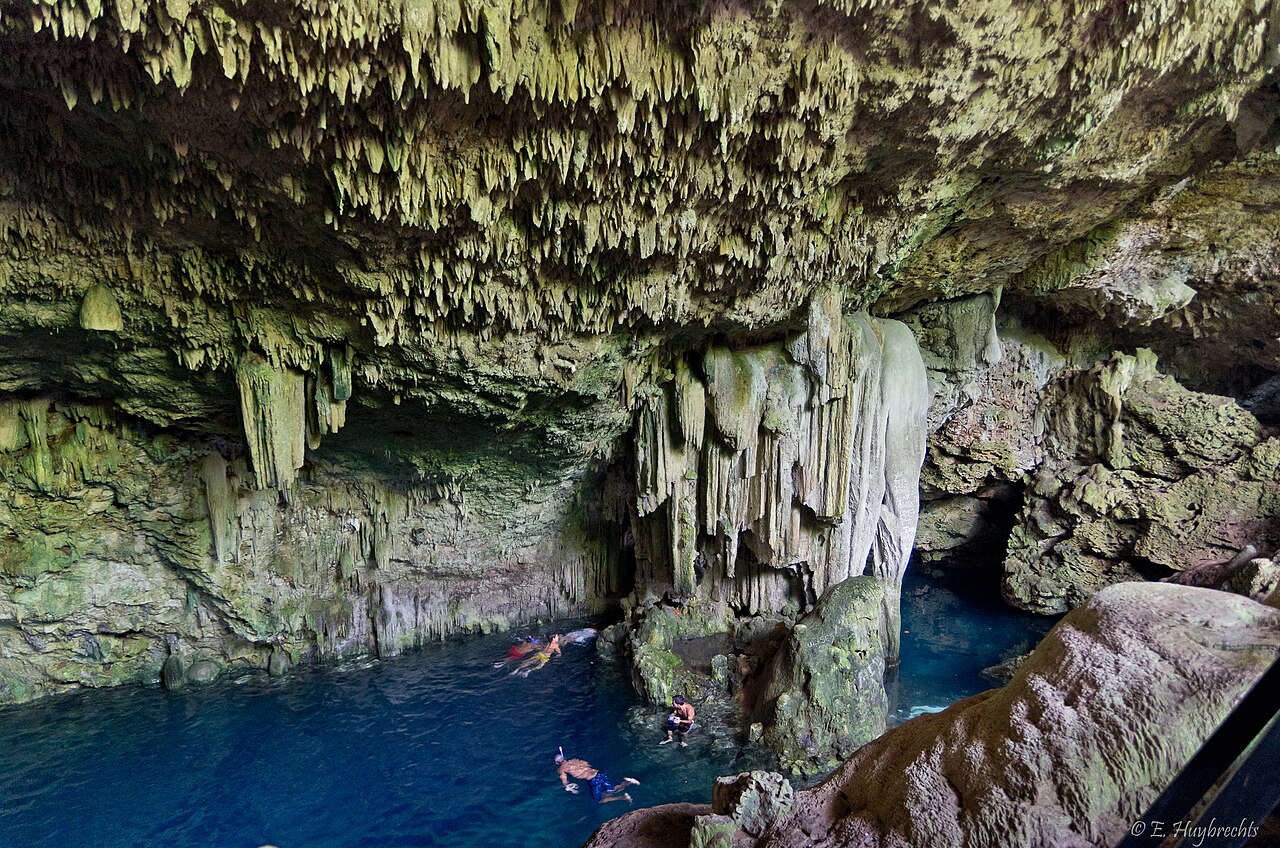
Cueva de Saturno
A fresh-water cenote cave near Varadero, popular for swimming and snorkelling among stalactites, with two submerged galleries reaching about 20 m that are explored by scuba divers.
Cueva de Saturno is a cenote cave in Carbonera on the airport road west of Varadero. A large opening in the ground leads down to a clear fresh-water pool decorated with stalactites and stalagmites, where visitors swim and snorkel.
A local guide site reports two galleries reaching about 20 m that scuba divers explore, along with fish and blind shrimp. The site has a snack bar and is a frequent stop on Varadero excursions. No official dive-access rules or cave-diving operators were confirmed for this edition.
The environment
Clear fresh water in a cenote chamber with stalactites and stalagmites; two submerged galleries.
Conditions
Fresh water; busy with tour groups at midday according to the guide site. No temperature or visibility figures were found.
Typical ranges from published sources, not current conditions.
Facilities
Snack bar on site.
For orientation, not navigation. Hollow dots are approximate.
Every fact on this page, with its source (8)
| Fact | Status | Source |
|---|---|---|
| Two galleries reach about 20 m depth.Secondary sources only. | Reported | [1] [2] |
| The cave is about 20 km west of Varadero on the airport road in Carbonera, Matanzas. | Reported | [1] |
| The cenote holds clear fresh water with stalactites and stalagmites, fish and blind shrimp. | Reported | [1] |
| Admission is USD 5.Undated guide page; may be out of date. | May be out of date | [1] |
| Open 8 am to 6 pm daily.Undated guide page. | May be out of date | [1] |
| There is a snack bar on site. | Reported | [1] |
| Area coordinates are those of Carbonera, Matanzas, in GeoNames.Settlement-level. | Reported | [3] [1] |
| The site operates as a visitor attraction with an admission charge and opening hours; no rules for scuba or cave diving are published.Undated guide site; access status left as unknown. | Reported | [1] |
Verified: stated by an official or primary source we opened. Reported: from a secondary source only. Sources conflict: the note gives both versions. May be out of date: the newest source we found is old.
Written in our own words from the sources above. Report a correction