Découvrez où plonger, quand partir et ce que vous pourriez voir.

Découvrez où plonger, quand partir et ce que vous pourriez voir.
★
Menu
Destinations Sites de plongée Vie marine Épaves Actualités
Planifier un voyage Planificateur de séjour Quand plonger Calculateur de coût Comparaisons Calendrier de la faune marine Température de l'eau Liveaboards Opérateurs & resorts Parcs marins Caissons hyperbares Carte du monde
Plongée souterraine Toute la plongée souterraine Destinations et sites de plongée Systèmes de grottes et cartes Formation et qualifications Centres de plongée et guides Équipement et technologie Sécurité et recherche sur les incidents Sciences, histoire et conservation Ressources et mises à jour
Régions Australie, Nouvelle-Zélande & Asie de l'EstCaraïbes & Atlantique occidentalEurope, Atlantique & MéditerranéeOcéan Indien & Afrique de l'EstÎles du Pacifique & MicronésieMer Rouge & Moyen-OrientAsie du Sud-Est et Triangle de CorailLes Amériques et Pacifique Est Pays
Apprendre & Outils Tous les guides Certifications Guides d'équipement Vidéos Interroger les données Agents IA API
À propos À propos de nous Méthodologie Avertissement Contact
Votre vue
★ Enregistré

Vos destinations, sites et espèces favoris, enregistrés dans ce navigateur.

API GATEWAY

Accès JSON gratuit en lecture seule aux données en cache de l'atlas.

Mode sombre

Vue Guidée
Nouveau en plongée ? Profondeurs, courants, niveaux de certification ? Nous expliquons chaque terme au fil de votre navigation, en langage clair. Les mêmes données, avec l'aide intégrée.

Vue Expert
Vous connaissez déjà la différence entre un tombant et un drift dive. Juste les données : claires, rapides et compactes. C'est la vue par défaut.

Langue de l'interface
Divje jezero

Divje jezero

Système de sources160 m profondSlovenia, Idrija
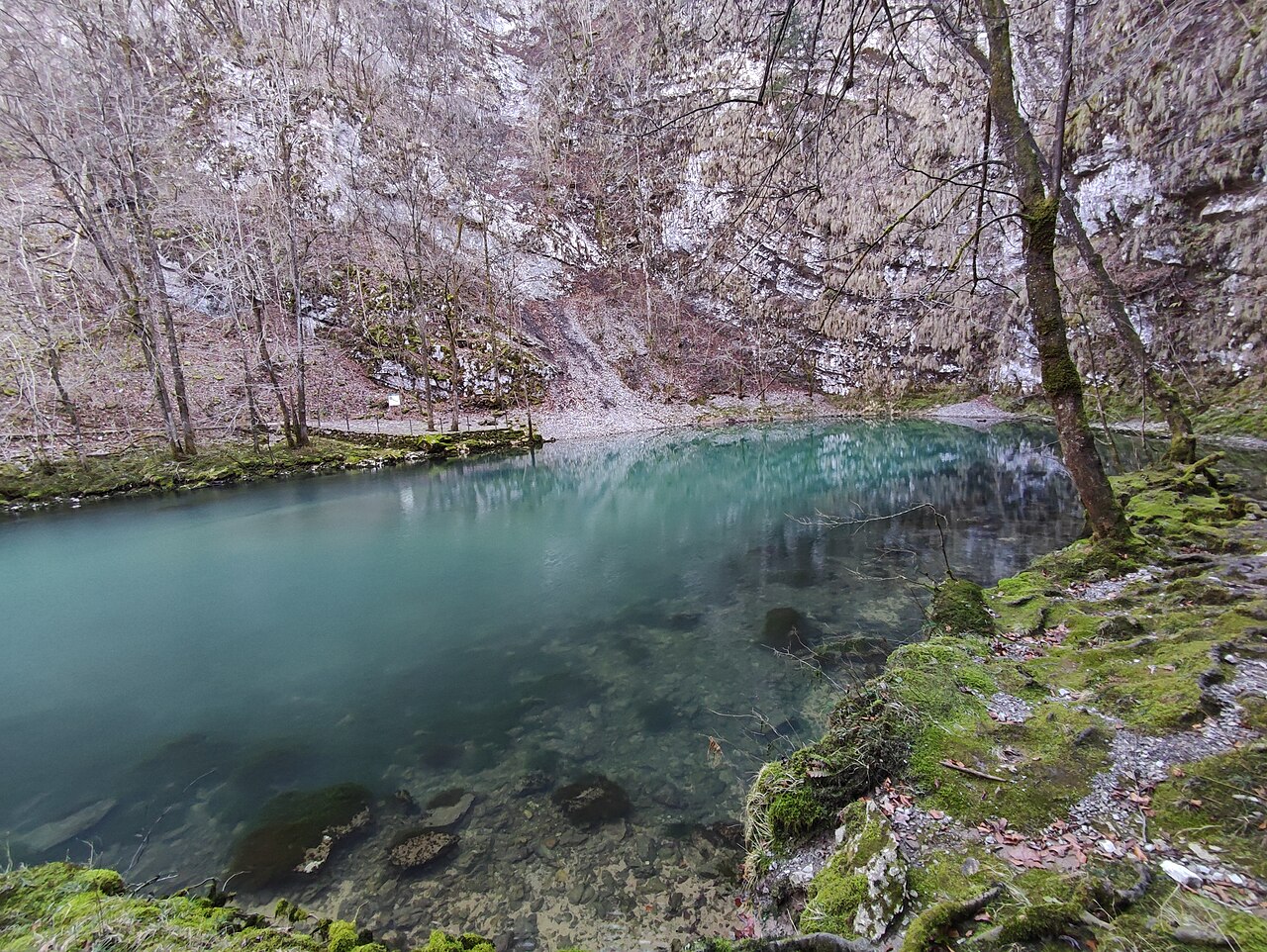
Photo: Ajznponar · CC0
Fermé à la plongée The FFS fiche states that, after fatal accidents in recent years, dives in the spring are prohibited; the lake itself is a protected natural site with free public access. The authority and date of the ban are not given. Les règles d'accès changent : confirmez auprès du propriétaire ou de l'autorité gestionnaire avant de partir.
Documenté Aussi connu sous le nom de: Wild Lake, Lac sauvage, Divje jezero (Idrija), Divjak
Longueur explorée
Non publié
Profondeur documentée
160 m (525 ft)
Entrées répertoriées
1
Température de l'eau
6–7 °C
Levés et exploration
D.Z.R.J.S. (Ljubljana cave exploration society, as named on the FFS fiche)

Depth reached by Luigi Casati, about 450 m from the entrance, as reported on the FFS fiche (date of the dive not given).

A karst spring lake in a steep rock amphitheatre in the Idrijca valley near Idrija whose flooded shaft has been explored to 160 m. After several fatal accidents, diving in the spring is reported to be prohibited.

Divje jezero, the 'Wild Lake', is a deep spring pool about 60 by 30 m set in a dark, cliff-walled cirque in the Idrijca valley south of Idrija. The FFS fiche describes it as a protected natural site that remains freely accessible to visitors.

At the bottom of a cobble slope cluttered with tree trunks, the flooded gallery begins at about 15 m. The conduit, of tectonic origin, descends through a chaotic gallery to about 60 m, where a terminal shaft bends into an inclined tube that divers have followed to 160 m.

Slovenian divers explored the cave in stages from 1957, reaching 38 m in 1969, 50 m in 1972 and 83 m in 1981. Tomo Vrhovec passed 100 m in 1995 and reached about 135 m in 2000; Olivier Isler reached 122 m in 1996; and the Italian diver Luigi Casati reached 160 m about 450 m from the entrance, with eight hours of decompression in very cold water. Three divers have died in the spring according to a report quoted on the fiche.

The fiche states that, following these fatal accidents, dives in the spring are now prohibited. Water temperature is given as about 6 to 7 °C, and divers have reported poor visibility.

Eau, courant et crues

A powerful spring draining depressions on the higher massifs to the south; the FFS fiche mentions a reported hydrological link with the Postojna region.

Pourquoi c'est important

One of Slovenia's best-known deep karst springs and a site of deep exploration dives since 1957.

Conditions

Very cold water; poor visibility reported by explorers (about 3 m on one 1996 dive).

Fourchettes indicatives issues de sources publiées, pas les conditions actuelles.

Historique du relevé topographique et de l'exploration

1957B. Rupnik and M. Straus make the first dive and find a flooded gallery at the bottom of the lake. [1]
1981P. Krivic and A. Praprotnik reach 200 m from the entrance at 83 m depth. [1]
1996-02Olivier Isler reaches 122 m depth, 335 m from the entrance. [1]
2000Tomo Vrhovec reaches about 135 m. [1]

Entrées et sites de plongée

One entrance, the spring lake.
Sources: [1] plongeesout.ffspeleo.fr ↗ · vérifié 2026-10-14
Chaque information de cette page, avec sa source (6)
InformationStatutSource
Luigi Casati reached 160 m depth about 450 m from the entrance.Quoted report on the fiche; dive date not given. Signalé [1]
The lake measures about 60 x 30 m and the gallery starts at 15 m at the base of a cobble slope. Vérifié [1]
Exploration reached 38 m (1969), 50 m (1972), 83 m (1981), 112 m (1995), 122 m (1996) and about 135 m (2000). Vérifié [1]
Water temperature is given as 7 °C on the fiche and 6 °C in a quoted report. Vérifié [1]
Following fatal accidents, dives in the spring are prohibited; the site is protected but freely accessible.Fiche undated; the legal basis and current status were not confirmed with Slovenian authorities. Peut être obsolète [1]
Diving is prohibited according to the fiche. Peut être obsolète [1]

Vérifié : indiqué par une source officielle ou primaire que nous avons consultée. Signalé : issu d'une source secondaire uniquement. Sources contradictoires : la note présente les deux versions. Peut être obsolète : la source la plus récente que nous avons trouvée est ancienne.

Rédigé dans nos propres mots à partir des sources ci-dessus. Signaler une correction

Australie, Nouvelle-Zélande & Asie de l'Est

Cairns & the Ribbon ReefsNingaloo ReefCoral Sea & Osprey ReefOkinawa & the Kerama IslandsPoor Knights IslandsTownsville & the YongalaGreen IslandIzu Peninsula

Caraïbes & Atlantique occidental

BonaireCozumelRiviera Maya & the CenotesBelize Barrier ReefGrand CaymanIsla Mujeres & CancúnRoatánTiger Beach & Grand Bahama

Europe, Atlantique & Méditerranée

Malta & GozoSilfra & IcelandThe AzoresCanary IslandsLarnaca & the ZenobiaScapa FlowArctic NorwayMadeira

Océan Indien & Afrique de l'Est

North & South Malé AtollsAri AtollBaa Atoll & Hanifaru BayAliwal Shoal & UmkomaasMafia IslandMauritiusSeychellesSodwana Bay

Îles du Pacifique & Micronésie

PalauChuuk (Truk) LagoonFakaravaKona, HawaiʻiRangiroaTaveuni & Rainbow ReefBeqa Lagoon & Pacific HarbourEspiritu Santo

Mer Rouge & Moyen-Orient

Sharm El Sheikh & Ras MohammedBrothers, Daedalus & St John'sDahabHurghada & El GounaMarsa Alam & the Deep SouthAqabaDaymaniyat IslandsMusandam Peninsula

Asie du Sud-Est et Triangle de Corail

Bali & Nusa PenidaKomodoRaja AmpatSipadan & MabulAnilaoCoronKoh TaoLembeh Strait

Les Amériques et Pacifique Est

Galápagos IslandsCocos IslandFlorida KeysSea of Cortez & Cabo PulmoSocorro & the RevillagigedosBritish ColumbiaCalifornia Channel IslandsCosta Rica Pacific Coast