Scopri dove immergerti, quando andare e cosa potresti vedere.

Scopri dove immergerti, quando andare e cosa potresti vedere.
★
Menu
Destinazioni Siti di immersione Vita marina Relitti Notizie
Pianifica un viaggio Pianificatore di viaggi Quando immergersi Calcolatore dei costi Confronti Calendario della fauna marina Temperatura dell'acqua Liveaboard Operatori & resort Parchi marini Camere iperbariche Mappa del mondo
Immersioni in grotta Tutta la speleologia subacquea Destinazioni e siti di immersione Sistemi di grotte e mappe Formazione e qualifiche Diving center e guide Attrezzatura e tecnologia Sicurezza e ricerca sugli incidenti Scienza, storia e conservazione Risorse e aggiornamenti
Regioni Australia, Nuova Zelanda e Asia OrientaleCaraibi e Atlantico occidentaleEuropa, Atlantico e MediterraneoOceano Indiano e Africa OrientaleIsole del Pacifico & MicronesiaMar Rosso & Medio OrienteAsia meridionale e Triangolo dei CoralliLe Americhe e il Pacifico orientale Paesi
Impara e strumenti Tutte le guide Brevetti Guide all'attrezzatura Video Interroga i dati AI Agent API
Informazioni Chi siamo Metodologia Disclaimer Contatti
La tua vista
★ Salvato

Le tue destinazioni, siti e specie preferiti, salvati in questo browser.

API GATEWAY

Accesso JSON gratuito in sola lettura ai dati in cache dell'atlante.

Modalità scura

Visualizzazione Guidata
Sei alle prime armi con le immersioni? Profondità, correnti, livelli di certificazione? Spieghiamo ogni termine mentre navighi, in modo semplice e chiaro. Gli stessi dati, con tutto il supporto integrato.

Visualizzazione Esperta
Conosci già la differenza tra una parete e una drift dive. Solo i dati: chiari, rapidi e sintetici. Questa è la visualizzazione predefinita.

Lingua dell'interfaccia
Divje jezero

Divje jezero

Sistema di sorgenti160 m profondoSlovenia, Idrija
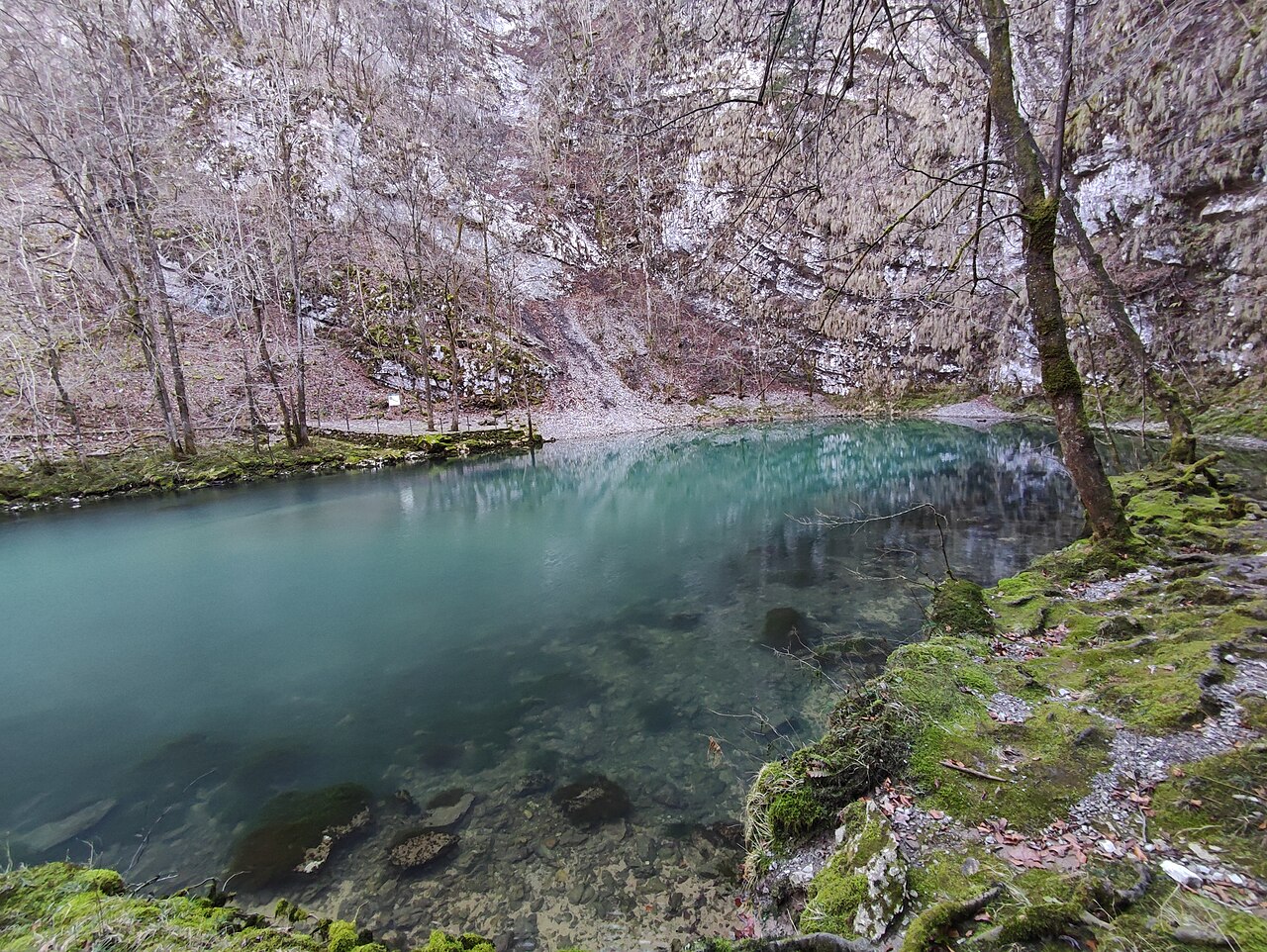
Foto: Ajznponar · CC0
Chiuso alle immersioni The FFS fiche states that, after fatal accidents in recent years, dives in the spring are prohibited; the lake itself is a protected natural site with free public access. The authority and date of the ban are not given. Le regole di accesso cambiano: conferma con il proprietario del terreno o l'autorità di gestione prima di partire.
Documentato Conosciuto anche come: Wild Lake, Lac sauvage, Divje jezero (Idrija), Divjak
Sviluppo rilevato
Non pubblicato
Profondità documentata
160 m (525 ft)
Accessi elencati
1
Temperatura dell'acqua
6–7 °C
Rilievo ed esplorazione
D.Z.R.J.S. (Ljubljana cave exploration society, as named on the FFS fiche)

Depth reached by Luigi Casati, about 450 m from the entrance, as reported on the FFS fiche (date of the dive not given).

A karst spring lake in a steep rock amphitheatre in the Idrijca valley near Idrija whose flooded shaft has been explored to 160 m. After several fatal accidents, diving in the spring is reported to be prohibited.

Divje jezero, the 'Wild Lake', is a deep spring pool about 60 by 30 m set in a dark, cliff-walled cirque in the Idrijca valley south of Idrija. The FFS fiche describes it as a protected natural site that remains freely accessible to visitors.

At the bottom of a cobble slope cluttered with tree trunks, the flooded gallery begins at about 15 m. The conduit, of tectonic origin, descends through a chaotic gallery to about 60 m, where a terminal shaft bends into an inclined tube that divers have followed to 160 m.

Slovenian divers explored the cave in stages from 1957, reaching 38 m in 1969, 50 m in 1972 and 83 m in 1981. Tomo Vrhovec passed 100 m in 1995 and reached about 135 m in 2000; Olivier Isler reached 122 m in 1996; and the Italian diver Luigi Casati reached 160 m about 450 m from the entrance, with eight hours of decompression in very cold water. Three divers have died in the spring according to a report quoted on the fiche.

The fiche states that, following these fatal accidents, dives in the spring are now prohibited. Water temperature is given as about 6 to 7 °C, and divers have reported poor visibility.

Acqua, corrente e allagamenti

A powerful spring draining depressions on the higher massifs to the south; the FFS fiche mentions a reported hydrological link with the Postojna region.

Perché è importante

One of Slovenia's best-known deep karst springs and a site of deep exploration dives since 1957.

Condizioni

Very cold water; poor visibility reported by explorers (about 3 m on one 1996 dive).

Intervalli tipici da fonti pubblicate, non condizioni attuali.

Storia del rilievo e dell'esplorazione

1957B. Rupnik and M. Straus make the first dive and find a flooded gallery at the bottom of the lake. [1]
1981P. Krivic and A. Praprotnik reach 200 m from the entrance at 83 m depth. [1]
1996-02Olivier Isler reaches 122 m depth, 335 m from the entrance. [1]
2000Tomo Vrhovec reaches about 135 m. [1]

Accessi e siti di immersione

One entrance, the spring lake.
Fonti: [1] plongeesout.ffspeleo.fr ↗ · verificato 2026-10-14
Ogni informazione in questa pagina, con la relativa fonte (6)
InformazioneStatoFonte
Luigi Casati reached 160 m depth about 450 m from the entrance.Quoted report on the fiche; dive date not given. Segnalato [1]
The lake measures about 60 x 30 m and the gallery starts at 15 m at the base of a cobble slope. Verificato [1]
Exploration reached 38 m (1969), 50 m (1972), 83 m (1981), 112 m (1995), 122 m (1996) and about 135 m (2000). Verificato [1]
Water temperature is given as 7 °C on the fiche and 6 °C in a quoted report. Verificato [1]
Following fatal accidents, dives in the spring are prohibited; the site is protected but freely accessible.Fiche undated; the legal basis and current status were not confirmed with Slovenian authorities. Potrebbe essere non aggiornato [1]
Diving is prohibited according to the fiche. Potrebbe essere non aggiornato [1]

Verificato: dichiarato da una fonte ufficiale o primaria che abbiamo consultato. Segnalato: da una fonte secondaria soltanto. Le fonti sono in contrasto: la nota riporta entrambe le versioni. Potrebbe essere non aggiornato: la fonte più recente che abbiamo trovato è datata.

Scritto con parole nostre dalle fonti indicate sopra. Segnala una correzione

Australia, Nuova Zelanda e Asia Orientale

Cairns & the Ribbon ReefsNingaloo ReefCoral Sea & Osprey ReefOkinawa & the Kerama IslandsPoor Knights IslandsTownsville & the YongalaGreen IslandIzu Peninsula

Caraibi e Atlantico occidentale

BonaireCozumelRiviera Maya & the CenotesBelize Barrier ReefGrand CaymanIsla Mujeres & CancúnRoatánTiger Beach & Grand Bahama

Europa, Atlantico e Mediterraneo

Malta & GozoSilfra & IcelandThe AzoresCanary IslandsLarnaca & the ZenobiaScapa FlowArctic NorwayMadeira

Oceano Indiano e Africa Orientale

North & South Malé AtollsAri AtollBaa Atoll & Hanifaru BayAliwal Shoal & UmkomaasMafia IslandMauritiusSeychellesSodwana Bay

Isole del Pacifico & Micronesia

PalauChuuk (Truk) LagoonFakaravaKona, HawaiʻiRangiroaTaveuni & Rainbow ReefBeqa Lagoon & Pacific HarbourEspiritu Santo

Mar Rosso & Medio Oriente

Sharm El Sheikh & Ras MohammedBrothers, Daedalus & St John'sDahabHurghada & El GounaMarsa Alam & the Deep SouthAqabaDaymaniyat IslandsMusandam Peninsula

Asia meridionale e Triangolo dei Coralli

Bali & Nusa PenidaKomodoRaja AmpatSipadan & MabulAnilaoCoronKoh TaoLembeh Strait

Le Americhe e il Pacifico orientale

Galápagos IslandsCocos IslandFlorida KeysSea of Cortez & Cabo PulmoSocorro & the RevillagigedosBritish ColumbiaCalifornia Channel IslandsCosta Rica Pacific Coast