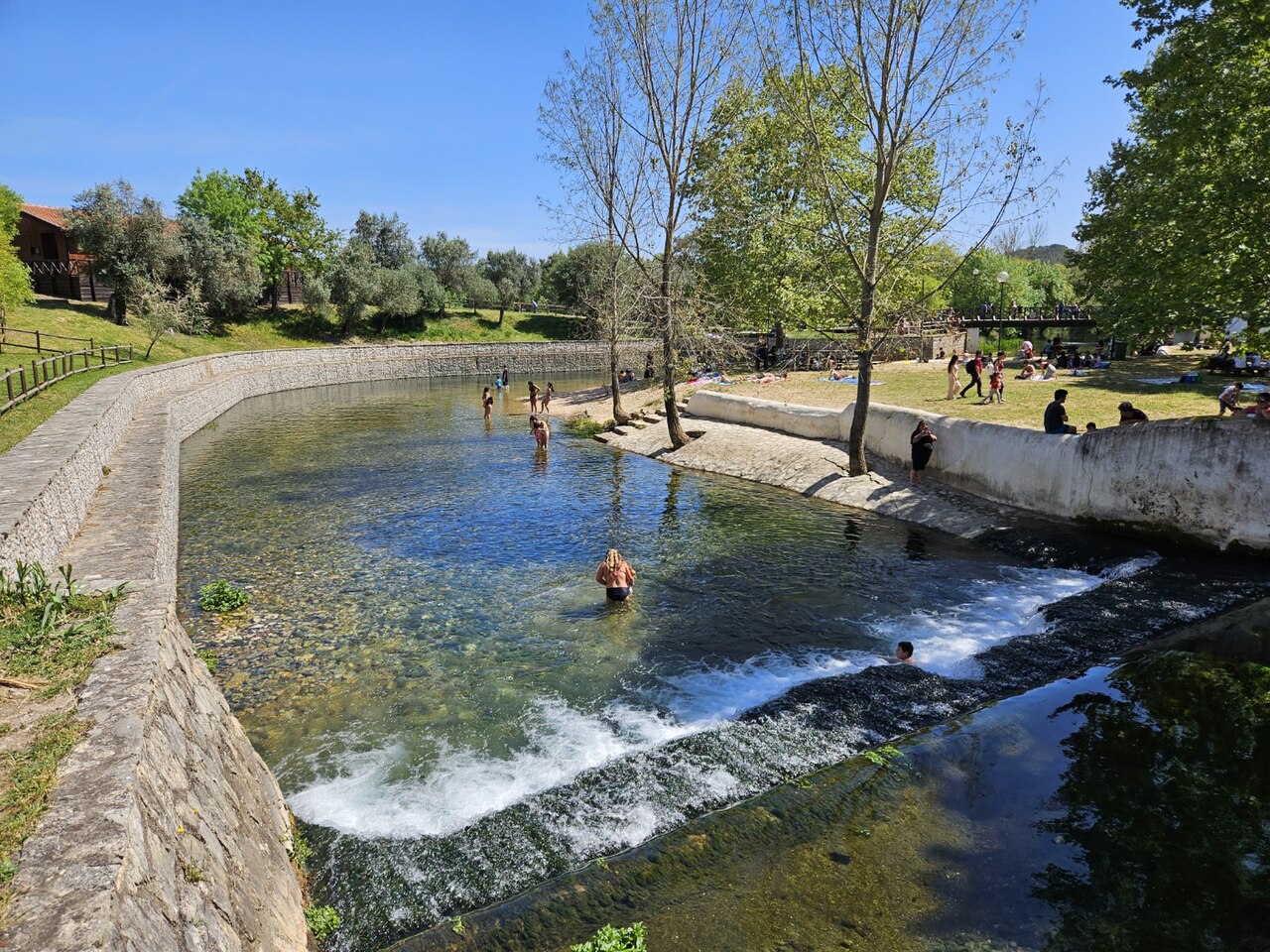
Olhos de Água do Alviela
1,370 m surveyed during the CNPS-FFESSM expedition; total cave length not stated. Reached during the CNPS-FFESSM expedition, more than 700 m from the entrance.
The main karst spring of the river Alviela at the foot of the Monsanto syncline in central Portugal, once tapped for Lisbon's water supply. A French-Portuguese expedition surveyed 1,370 m and reached 125 m depth.
The Olhos de Água do Alviela rise at the foot of the Monsanto syncline and drain most of the Planalto de Santo António karst plateau, with part of the water thought to come from the Mira-Minde polje to the north-east. In the early twentieth century the spring was captured and linked by aqueduct to Lisbon, though it was later replaced by other sources.
The flooded cave descends as a sizeable gallery, 4 to 8 m across in places, with side branches. Patrick Jolivet reached about 580 m and 98 m depth in 1988. A national cave-diving commission (CNPS) expedition of the FFESSM, organised with Portuguese cavers who handled accommodation, re-lining and authorisations, re-equipped the line, surveyed 1,370 m including about 200 m of new passage, and stopped at 125 m depth more than 700 m from the entrance.
The account notes a water temperature of about 17 °C and a depigmented crayfish seen 140 m into a side passage.
水、水流、洪水
The spring drains the Planalto de Santo António; tracing work cited by the expedition indicates that part of the water comes from the Mira-Minde polje.
なぜ重要か
A major Portuguese karst spring, historically part of Lisbon's water supply, and the deepest documented cave dive in the sources found for Portugal.
コンディション
Visibility on some dives in side passages dropped to 0.5-1.5 m on the return.
公表資料からの一般的な範囲であり、現在のコンディションではありません。
測量と探査の歴史
| 1988 | Patrick Jolivet reaches about 580 m from the entrance at -98 m. [1] |
| 2002 | A CNPS-FFESSM expedition with Portuguese cavers re-lines and surveys 1,370 m and reaches -125 m. [1] |
入口とダイブサイト
One entrance, the spring pool; the expedition rigged a tyrolean to move equipment to the pool edge and a rope deviation for the last pitch.
このシステムの個別のエントランスはまだ登録されていません。
このページのすべての情報とその出典 (7)
| 情報 | ステータス | 出典 |
|---|---|---|
| The expedition's deepest dive stopped at -125 m more than 700 m from the entrance. | 確認済み | [1] |
| The expedition produced 1,370 m of survey and about 200 m of new passage with a maximum depth of -125 m. | 確認済み | [1] |
| Patrick Jolivet's 1988 terminus was at about 580 m and -98 m. | 確認済み | [1] |
| The expedition is filed on the FFS site as the 2002 FFESSM account; the text says the CNPS adopted the project in September 2002.Exact expedition dates are not stated in the account. | 報告済み | [1] |
| The account mentions water at about 17 °C. | 確認済み | [1] |
| The spring drains most of the Planalto de Santo António, with part of the water coming from the Mira-Minde polje; it was captured for Lisbon's water supply by an aqueduct built early in the twentieth century. | 確認済み | [1] |
| Portuguese partners handled accommodation, re-equipping the cave and the authorisations for the expedition. | 情報が古い可能性があります | [1] |
確認済み:直接開いた公式または一次情報源による記載。報告ベース:二次情報源のみによるもの。情報が競合:注釈に両方のバージョンを記載。最新情報でない可能性あり:確認できた最新の情報源が古い。
上記のソースをもとに、独自の言葉でまとめています。 修正を報告する