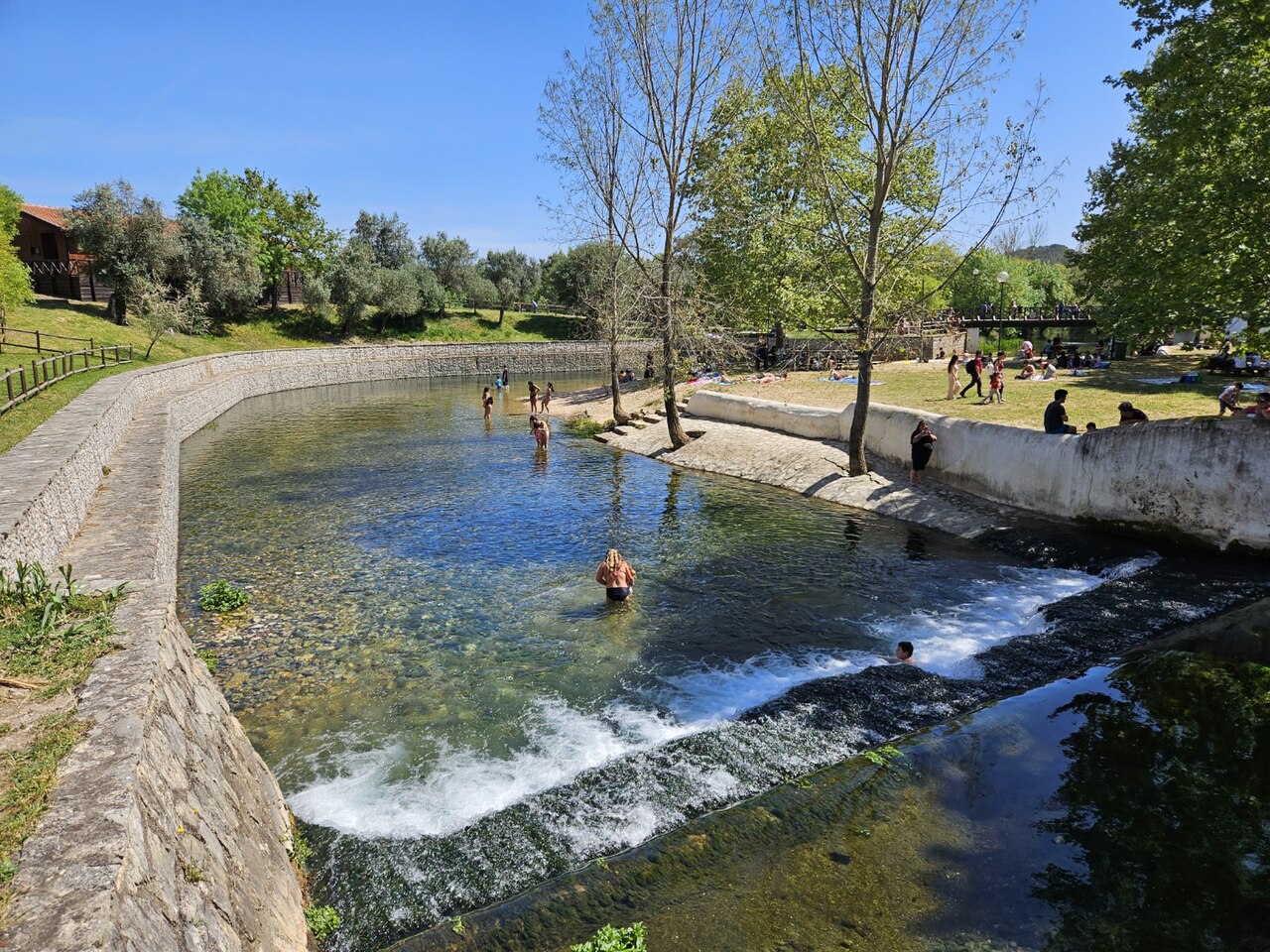
Olhos de Água do Alviela
1,370 m surveyed during the CNPS-FFESSM expedition; total cave length not stated. Reached during the CNPS-FFESSM expedition, more than 700 m from the entrance.
The main karst spring of the river Alviela at the foot of the Monsanto syncline in central Portugal, once tapped for Lisbon's water supply. A French-Portuguese expedition surveyed 1,370 m and reached 125 m depth.
The Olhos de Água do Alviela rise at the foot of the Monsanto syncline and drain most of the Planalto de Santo António karst plateau, with part of the water thought to come from the Mira-Minde polje to the north-east. In the early twentieth century the spring was captured and linked by aqueduct to Lisbon, though it was later replaced by other sources.
The flooded cave descends as a sizeable gallery, 4 to 8 m across in places, with side branches. Patrick Jolivet reached about 580 m and 98 m depth in 1988. A national cave-diving commission (CNPS) expedition of the FFESSM, organised with Portuguese cavers who handled accommodation, re-lining and authorisations, re-equipped the line, surveyed 1,370 m including about 200 m of new passage, and stopped at 125 m depth more than 700 m from the entrance.
The account notes a water temperature of about 17 °C and a depigmented crayfish seen 140 m into a side passage.
水况、水流与洪水
The spring drains the Planalto de Santo António; tracing work cited by the expedition indicates that part of the water comes from the Mira-Minde polje.
为何重要
A major Portuguese karst spring, historically part of Lisbon's water supply, and the deepest documented cave dive in the sources found for Portugal.
环境条件
Visibility on some dives in side passages dropped to 0.5-1.5 m on the return.
典型范围来自已发表资料,不代表当前实际状况。
测量与探索历史
| 1988 | Patrick Jolivet reaches about 580 m from the entrance at -98 m. [1] |
| 2002 | A CNPS-FFESSM expedition with Portuguese cavers re-lines and surveys 1,370 m and reaches -125 m. [1] |
入口与潜点
One entrance, the spring pool; the expedition rigged a tyrolean to move equipment to the pool edge and a rope deviation for the last pitch.
该系统暂无单独入口的相关信息。
本页所有信息及其来源 (7)
| 信息条目 | 状态 | 来源 |
|---|---|---|
| The expedition's deepest dive stopped at -125 m more than 700 m from the entrance. | 已核实 | [1] |
| The expedition produced 1,370 m of survey and about 200 m of new passage with a maximum depth of -125 m. | 已核实 | [1] |
| Patrick Jolivet's 1988 terminus was at about 580 m and -98 m. | 已核实 | [1] |
| The expedition is filed on the FFS site as the 2002 FFESSM account; the text says the CNPS adopted the project in September 2002.Exact expedition dates are not stated in the account. | 已报告 | [1] |
| The account mentions water at about 17 °C. | 已核实 | [1] |
| The spring drains most of the Planalto de Santo António, with part of the water coming from the Mira-Minde polje; it was captured for Lisbon's water supply by an aqueduct built early in the twentieth century. | 已核实 | [1] |
| Portuguese partners handled accommodation, re-equipping the cave and the authorisations for the expedition. | 信息可能已过时 | [1] |
已核实:来自我们直接查阅的官方或主要来源。已报告:仅来自二手来源。来源存在冲突:注释中列出两种版本。可能已过时:我们找到的最新来源已有一定年代。
由我们根据上述来源以自己的文字整理撰写。 提交更正