A mergulhar em Costa Rica
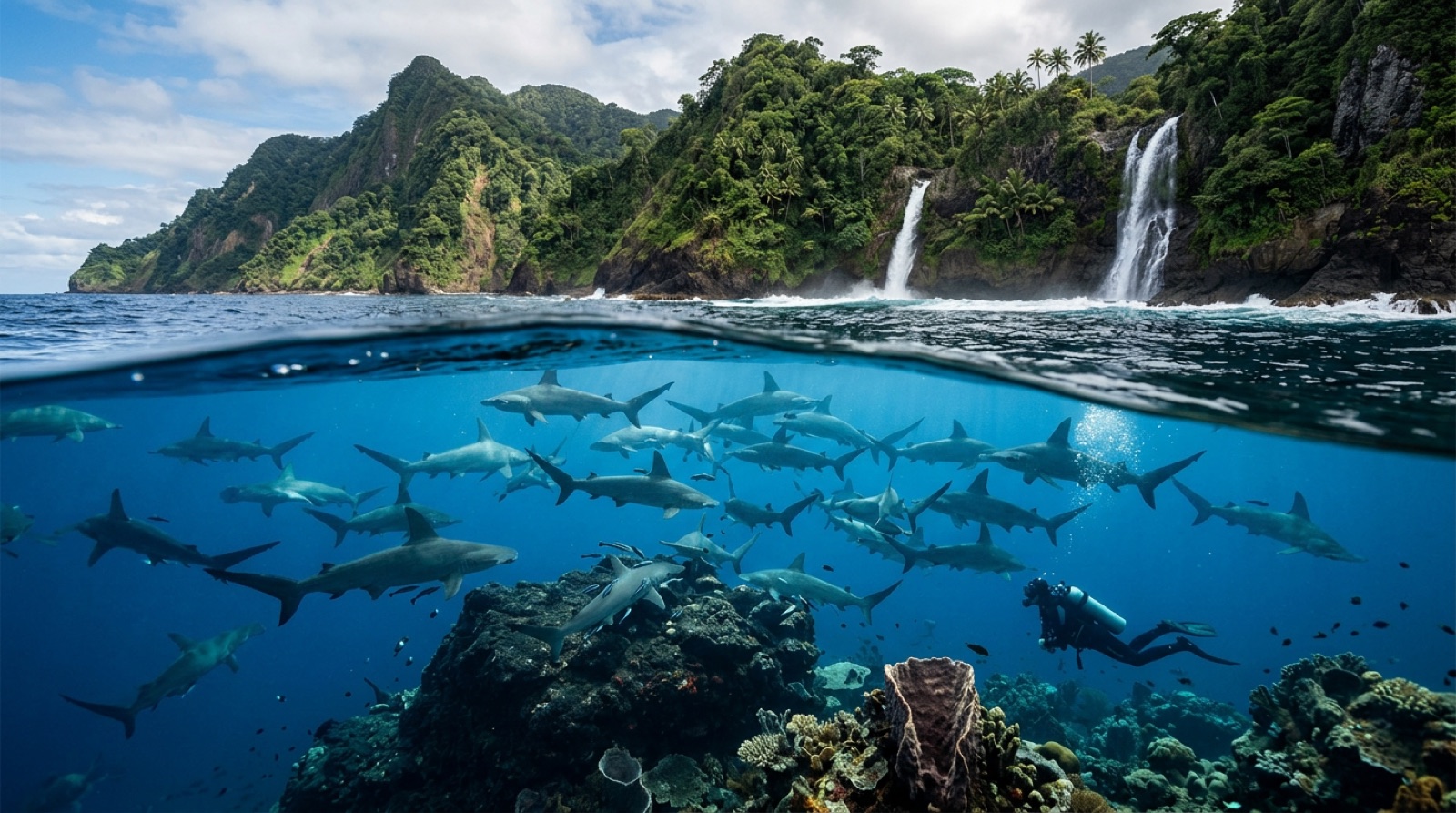
Costa Rica's diving splits into two different sports. Along the Pacific coast, volcanic rock reefs and islets like the Catalinas and Bat Islands gather big animals close to shore: white-tip reef sharks stacked under ledges, devil rays and the occasional manta overhead, humpbacks passing in season, and the Bat Islands' famous bull shark encounters for advanced divers. Then there is Cocos Island, 36 hours offshore by liveaboard, a jungle-covered seamount where scalloped hammerheads school above cleaning stations and marble rays, silkies, and tiger sharks work the same water. Visibility inshore is honest rather than gin-clear, because the plankton that feeds the food chain is the point. Pair either coastline with the country's rainforest travel culture and it becomes an easy trip to justify.
The Costa Rica Pacific Coast destination covers the Guanacaste operators diving the Catalina and Bat Islands plus the rock reefs off Playas del Coco and Tamarindo, along with the southern Osa Peninsula and Caño Island area. Cocos Island is its own expedition: liveaboards out of Puntarenas spend a week or more at the offshore seamounts of Bajo Alcyone, Dirty Rock, and their neighbors.
Experiências de eleição: Hammerhead walls at Cocos's Bajo Alcyone; bull sharks at the Bat Islands; night dives at Cocos with hunting white-tips carpeting the reef; devil ray squadrons off the Catalinas; humpback song in the water column during migration seasons.
Épocas: Cocos peaks in the rainy season, roughly June through November, when nutrient-rich water pulls in the biggest hammerhead and whale-shark numbers at the cost of surface chop. Inshore Pacific diving is best in the dry season, December through April, when seas are calmer, though upwellings then can cool the water; Bat Islands bull shark trips generally run May through November.
Os destinos
Sites de mergulho de destaque
| Local | Destino | Tipo | Profundidade | Nível |
|---|---|---|---|---|
| Bajo Alcyone | Cocos Island | Seamount | 25–40 m | Advanced |
| Dirty Rock | Cocos Island | Pinnacle | 12–35 m | Advanced |
| Dos Amigos Grande | Cocos Island | Pinnacle | 15–35 m | Advanced |
| Manuelita | Cocos Island | Reef | 8–30 m | Intermediate |
| Punta Maria | Cocos Island | Seamount | 22–40 m | Advanced |
| Submerged Rock | Cocos Island | Pinnacle | 10–30 m | Advanced |
| Bajo del Diablo (Cano Island) | Costa Rica Pacific Coast | Pinnacle | 12–28 m | Intermediate |
| Catalina Islands | Costa Rica Pacific Coast | Pinnacle | 8–25 m | Intermediate |
| Cueva del Tiburon (Cano Island) | Costa Rica Pacific Coast | Reef | 8–20 m | Beginner |
| The Big Scare (Bat Islands) | Costa Rica Pacific Coast | Pinnacle | 18–30 m | Advanced |
Todos os pontos mapeados em Costa Rica →
Vida marinha
O arquivo prático
Como chegar: Fly into San José (SJO) or Liberia (LIR), the latter closest to the Guanacaste dive towns. Cocos liveaboards depart Puntarenas, a couple of hours from San José, then cross about 36 hours of open Pacific each way.
Entrada & vistos: Many nationalities, including US, Canadian, UK, and EU citizens, typically enter visa-free for tourist stays. Verify current requirements and onward-ticket rules before travel.
Quanto custa mergulhar: Coastal two-tank trips run roughly USD 90-150, Bat Islands trips more; Cocos liveaboards are the big line item at about USD 5,000-7,000 for a 10-day itinerary plus park fees.
Idioma: Spanish is the national language; English is widely spoken throughout the tourism industry.
Gorjeta: Restaurants add a 10 percent service charge by law, so extra tipping is optional; dive crews and liveaboard staff are customarily tipped, often around 5-10 percent of the trip price.
Segurança em viagem: Costa Rica is stable and tourism-hardened, with petty theft, especially from rental cars and beaches, the main irritation. Rip currents kill more visitors than crime does, and roads are slower than maps suggest. At Cocos, currents are strong and help is a day and a half away, so conservative profiles and personal signaling gear matter; reputable boats brief this thoroughly.
Cobertura de recompressão: Hyperbaric treatment is available on the mainland reachable from the Pacific coast, but Cocos itself is roughly 36 hours from any chamber, so prevention is the plan. Availability changes; route emergencies through your operator, local EMS, and DAN.