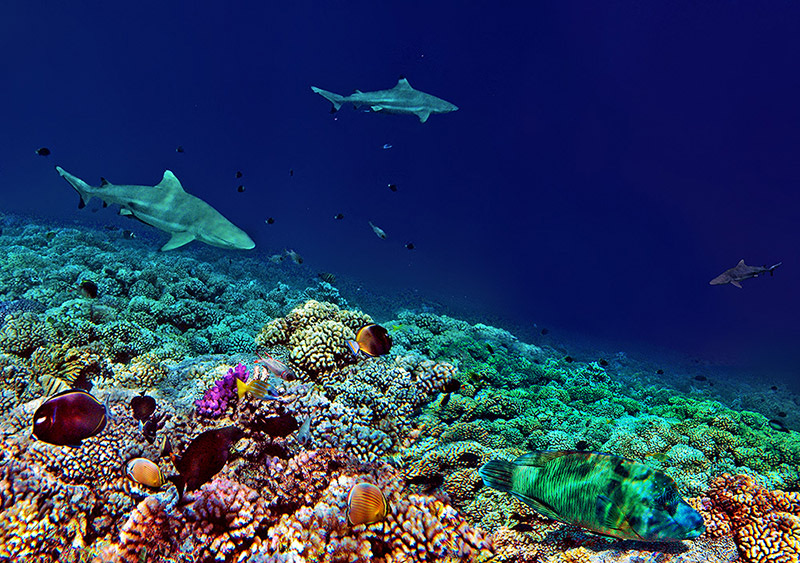
Plongée en French Polynesia
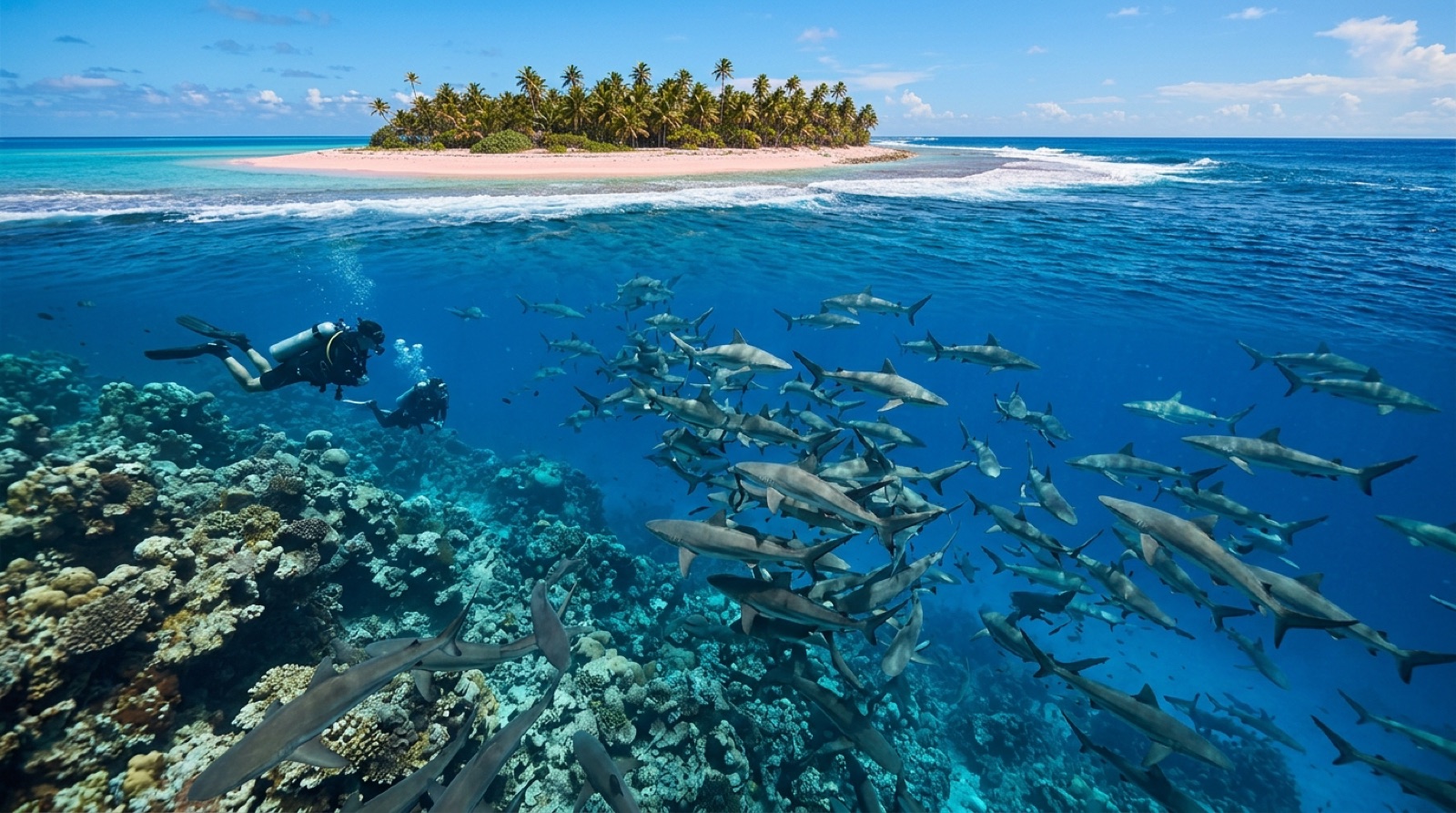
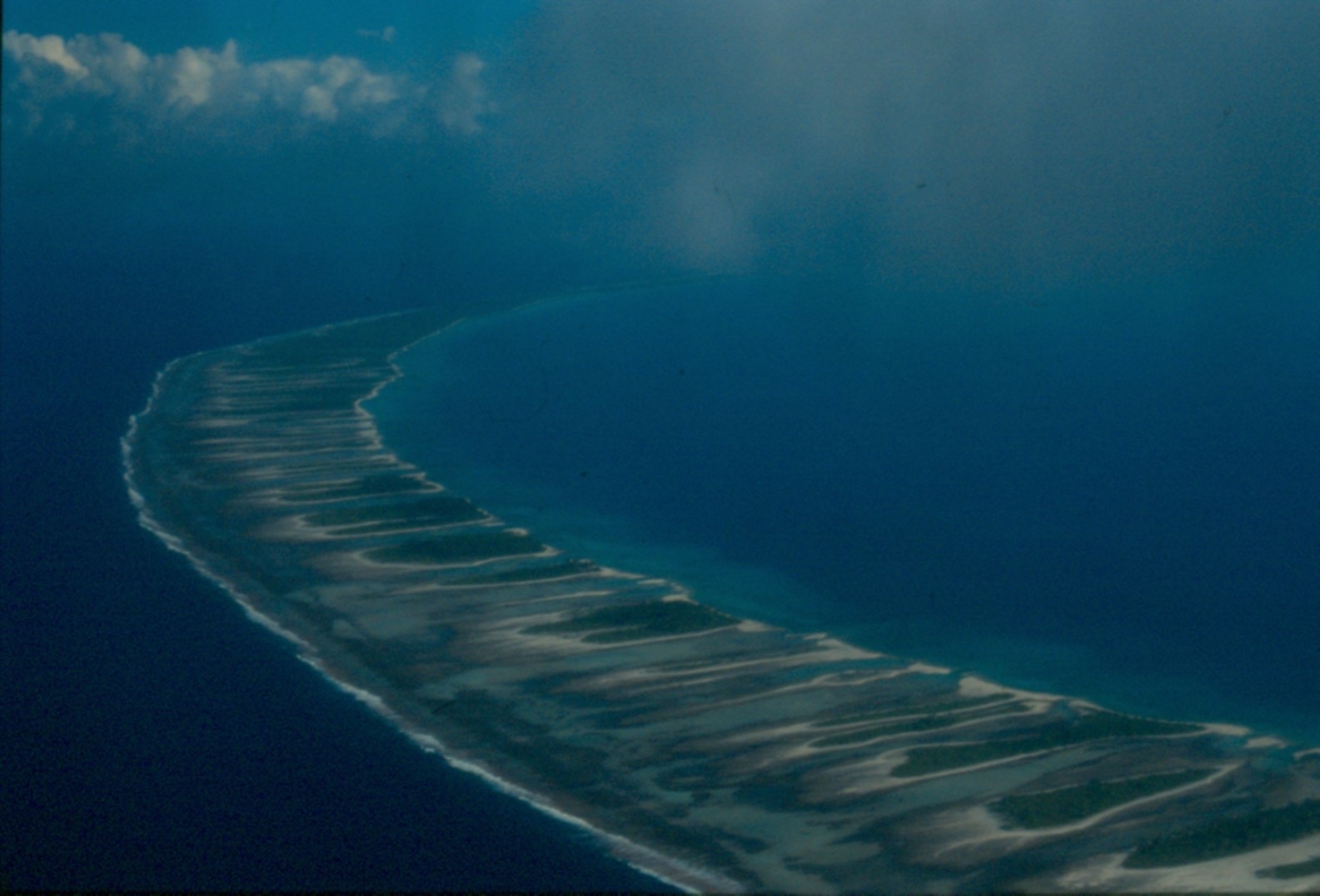
French Polynesia is pass diving perfected. In the Tuamotu atolls, entire lagoons breathe through a handful of narrow channels, and every tide sends oceanic water, and everything that hunts in it, streaming through. At Fakarava's south pass, gray reef sharks stack into a wall of hundreds of bodies; divers hang at the edge and watch the river of predators hold station. Rangiroa's Tiputa Pass adds dolphins that seek out divers, tiger and great hammerhead sightings in season, and outgoing-tide theatrics. The water is a violet-blue found in few other oceans, visibility routinely stretches past 30 meters, and the human scale stays village-small even as the diving ranks with the world's best. Costs and flight times are serious; the reward is the healthiest shark populations in the tropics, protected across the territory's entire exclusive economic zone.
Rangiroa, one of the largest atolls on earth, centers on Tiputa Pass with its resident bottlenose dolphins, shark traffic, and seasonal big visitors. Fakarava, a UNESCO biosphere reserve, pairs the north pass's scale with the south pass's famous wall of gray reef sharks and groupers massing to spawn around the June-July full moons. The Society Islands, Tahiti, Moorea, and Bora Bora, add lagoon and humpback experiences beyond the registry's core.
Expériences emblématiques: The wall of sharks on Fakarava's south pass incoming tide; camouflage grouper spawning aggregations around the June and July full moons; Tiputa Pass dolphins pressing in for eye contact; incoming-tide drift dives flying over coral at knots; whale season passages August through October.
Saisons: Diving runs year-round; May through October is drier and slightly cooler, and it brackets the grouper spawn and shark peak at Fakarava plus the humpback season. November through April is warmer and wetter with a modest cyclone risk. Pass diving works on tide, not season, so timing within the day matters most.
Les destinations
Sites de plongée incontournables
| Site | Destination | Type | Profondeur | Niveau |
|---|---|---|---|---|
| Avatoru Pass | Rangiroa | Channel | 10–35 m | Advanced |
| Blue Lagoon | Rangiroa | Reef | 1–5 m | Beginner |
| Garuae Pass | Fakarava | Channel | 15–40 m | Advanced |
| Ohotu Wall | Fakarava | Wall | 8–35 m | Intermediate |
| Tetamanu Jetty | Fakarava | Reef | 1–10 m | Beginner |
| The Aquarium | Rangiroa | Reef | 2–12 m | Beginner |
| Tiputa Pass | Rangiroa | Channel | 10–40 m | Advanced |
| Tumakohua Pass | Fakarava | Channel | 5–35 m | Intermediate |
Chaque site répertorié en French Polynesia →
Vie marine
Le dossier pratique
Comment s'y rendre: Fly into Papeete, Tahiti (PPT) from Los Angeles, San Francisco, Paris, Auckland, or Tokyo, then take Air Tahiti turboprops to Rangiroa (RGI) or Fakarava (FAV). Liveaboards and dive-and-stay pensions both work the Tuamotus; inter-island logistics reward booking early.
Entrée & visas: French Polynesia applies French entry rules: EU citizens enter freely and many nationalities, including US travelers, get visa-free short stays. Verify current requirements for your passport before travel.
Le coût de la plongée: Expect roughly USD 180-250 for a two-tank day, with multi-dive passes softening the rate; add long-haul airfare, inter-island flights, and lodging costs well above most dive destinations.
Langue: French and Tahitian are the local languages; dive centers handle English routinely, though rural stops may not.
Pourboires: Tipping is not customary in Polynesian culture and is never expected; a warm thank-you, or a small gift for a crew that made the trip, lands better than cash.
Sécurité en voyage: The islands are calm and crime is minimal; the risks are logistical and aquatic. Pass currents are powerful and can turn outgoing with little grace, so dive them with local guides on the planned tide, carry a surface marker, and be honest about drift experience. Remote atolls have basic medical posts only, making evacuation insurance effectively mandatory.
Couverture caisson hyperbare: The territory's hyperbaric facility is at the main hospital in Papeete, Tahiti, a flight away from the Tuamotu atolls. Availability changes; emergencies route through the dive center, local emergency services, and DAN, with air evacuation the standard path.