Chuuk (Truk) Lagoon
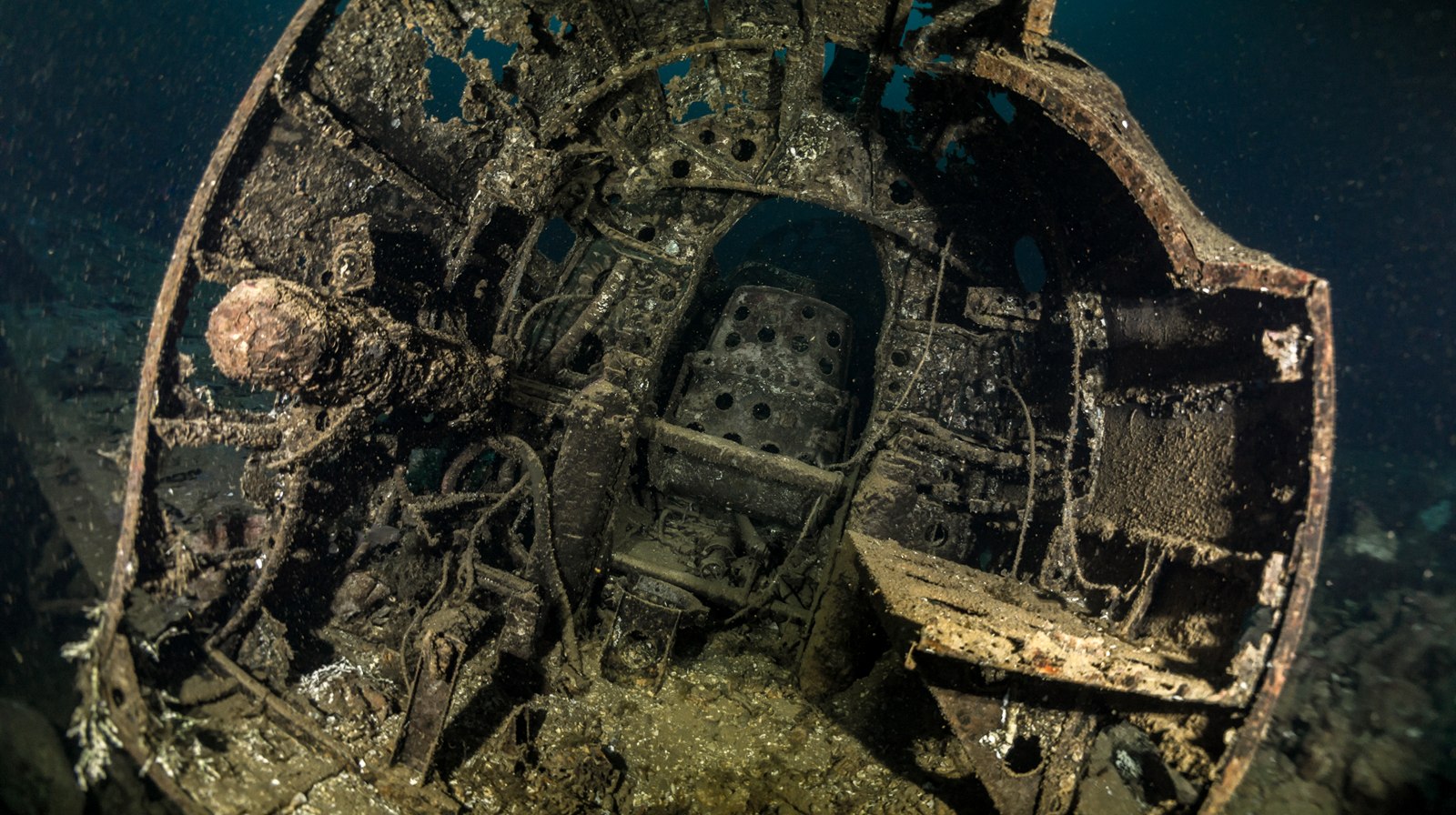
Chuuk Lagoon holds the greatest concentration of diveable shipwrecks on earth. In February 1944, US carrier aircraft caught much of Japan's merchant and naval support fleet at anchor here during Operation Hailstone; dozens of ships went down inside the barrier reef. Eighty years on, their holds still carry aircraft, tanks, trucks, and munitions, now wrapped in coral and anemones, in warm water so sheltered that many wrecks can be dived in near-flat calm.
为何选择这里潜水
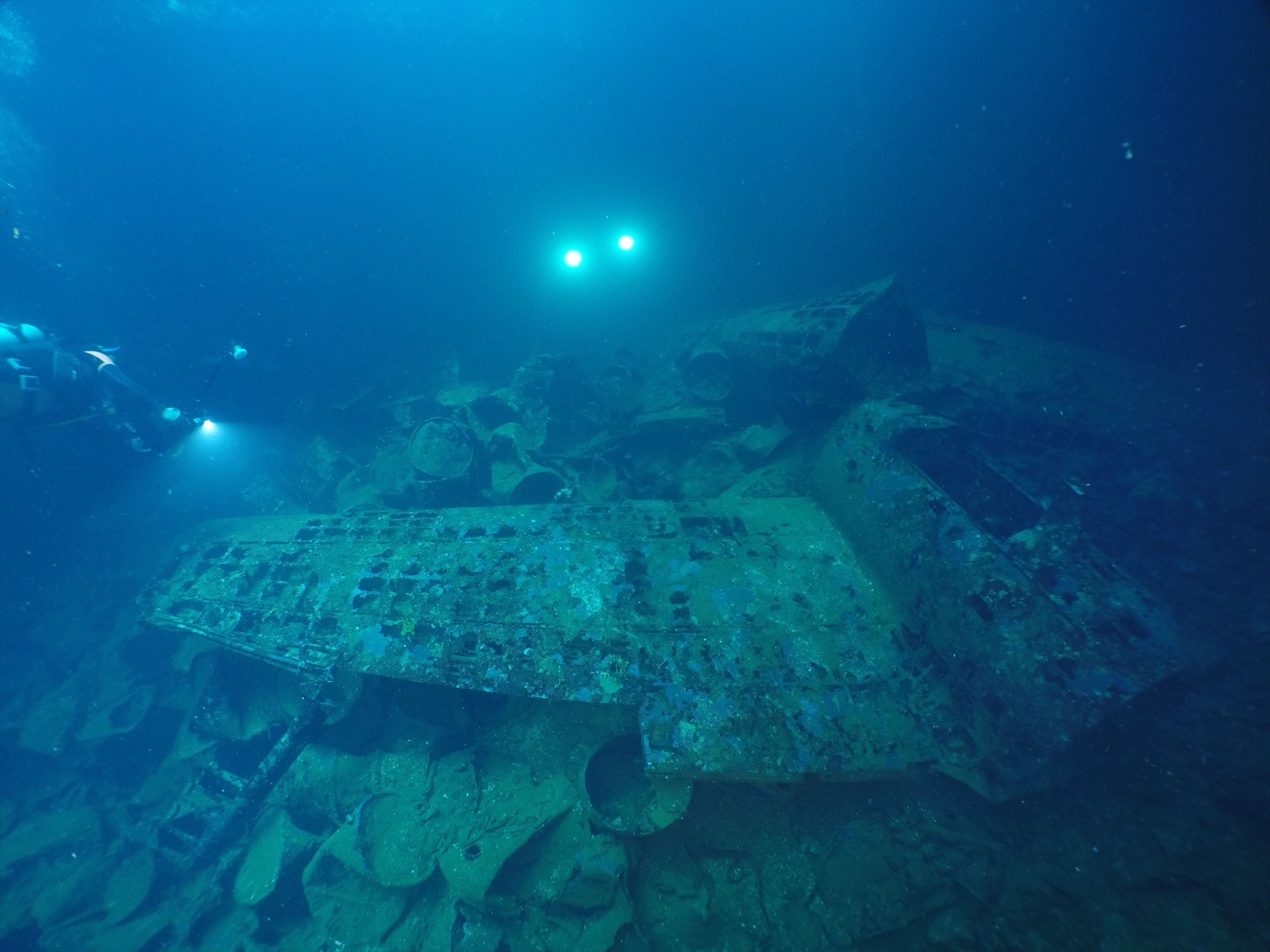
No other destination lets a diver swim through history at this scale. The lagoon's wrecks sit upright or on their sides in depths from a few meters to beyond 60, so a week here becomes a progression: coral-dressed decks and bow guns early on, then engine rooms, holds stacked with war cargo, and finally the deep freighters that reward technical training. The Fujikawa Maru's holds contain Zero fighter fuselages; the Shinkoku Maru carries the lagoon's lushest soft-coral growth over an intact operating theater; the San Francisco Maru's deck tanks sit below 45 meters. These ships are also where thousands of men died, and Chuukese guides expect the wrecks to be treated as memorials: take nothing, disturb nothing, and leave any human remains untouched. Conditions are forgiving (warm, usually calm, with modest current), which is exactly why the diving can quietly lure people deeper than their training. Plan profiles honestly, and the lagoon will give you more history per tank than anywhere else in the Pacific.
逐月概览
The drier trade-wind months of roughly December through April bring the most settled conditions. Mid-year is wetter and squally, though the lagoon itself stays diveable most days; Chuuk sits in a typhoon-genesis region, so storms occasionally interrupt travel at any season.
| 月份 | 水况 | 能见度 | 体验如何 |
|---|---|---|---|
| January●●●●● | 28–30 °C / 82–86 °F | 15–30 m | Trade-wind season; lagoon usually calm. |
| February●●●●● | 28–30 °C / 82–86 °F | 15–30 m | Often the driest, most settled month. |
| March●●●●● | 28–30 °C / 82–86 °F | 15–30 m | Settled; good light in the holds. |
| April●●●●○ | 28–30 °C / 82–86 °F | 12–30 m | Transition; still generally reliable. |
| May●●●●○ | 28–30 °C / 82–86 °F | 12–25 m | Showers increase. |
| June●●●○○ | 28–30 °C / 82–86 °F | 10–25 m | Wet season pattern; squalls between dives. |
| July●●●○○ | 28–30 °C / 82–86 °F | 10–25 m | Rainy; lagoon stays workable. |
| August●●●○○ | 28–30 °C / 82–86 °F | 10–25 m | Wet; watch tropical-storm forecasts. |
| September●●●○○ | 28–30 °C / 82–86 °F | 10–25 m | Unsettled spells continue. |
| October●●●●○ | 28–30 °C / 82–86 °F | 12–25 m | Improving windows. |
| November●●●●○ | 28–30 °C / 82–86 °F | 12–28 m | Drier pattern returning. |
| December●●●●● | 28–30 °C / 82–86 °F | 15–30 m | Season underway; boats fill with groups. |
月度数据置信度: Editorial estimate. 没有对应行的月份表示暂无核实数据。我们宁愿留白,也不愿凭空填写。
潜点 (5)
| 潜点 | 类型 | 深度 | 级别 | 访问 | |
|---|---|---|---|---|---|
| Fujikawa Maru Zero fighter fuselages in the forward holds; the coral-encrusted six-inch… | Wreck | 9–34 m | Intermediate | Boat | |
| Heian Maru The lettered bow; periscopes and torpedoes in the holds; the sheer scale of… | Wreck | 12–34 m | Intermediate | Boat | |
| Nippo Maru The deck tank; the standing bridge telegraph and helm; artillery pieces and… | Wreck | 28–48 m | Advanced | Boat | |
| San Francisco Maru Light tanks on deck; mines and munitions in the forward holds; an almost… | Wreck | 45–63 m | Technical | Boat | |
| Shinkoku Maru Anemone and soft-coral cover unmatched in the lagoon; the operating table… | Wreck | 11–38 m | Intermediate | Boat |
本地沉船
Aikoku Maru
Fujikawa Maru
Heian Maru
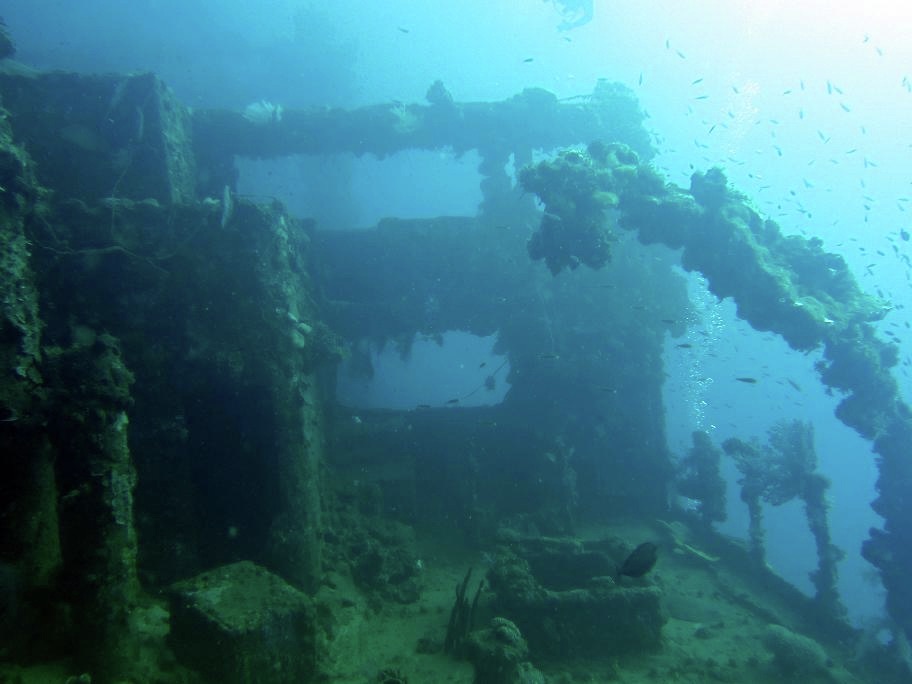
Nippo Maru
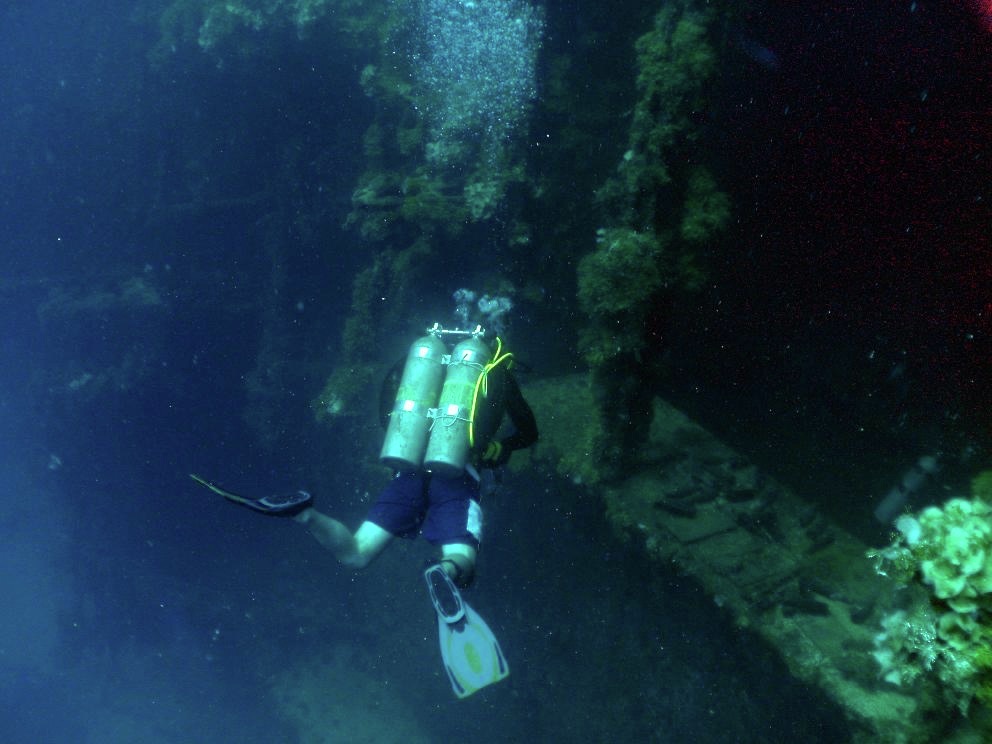
Rio de Janeiro Maru
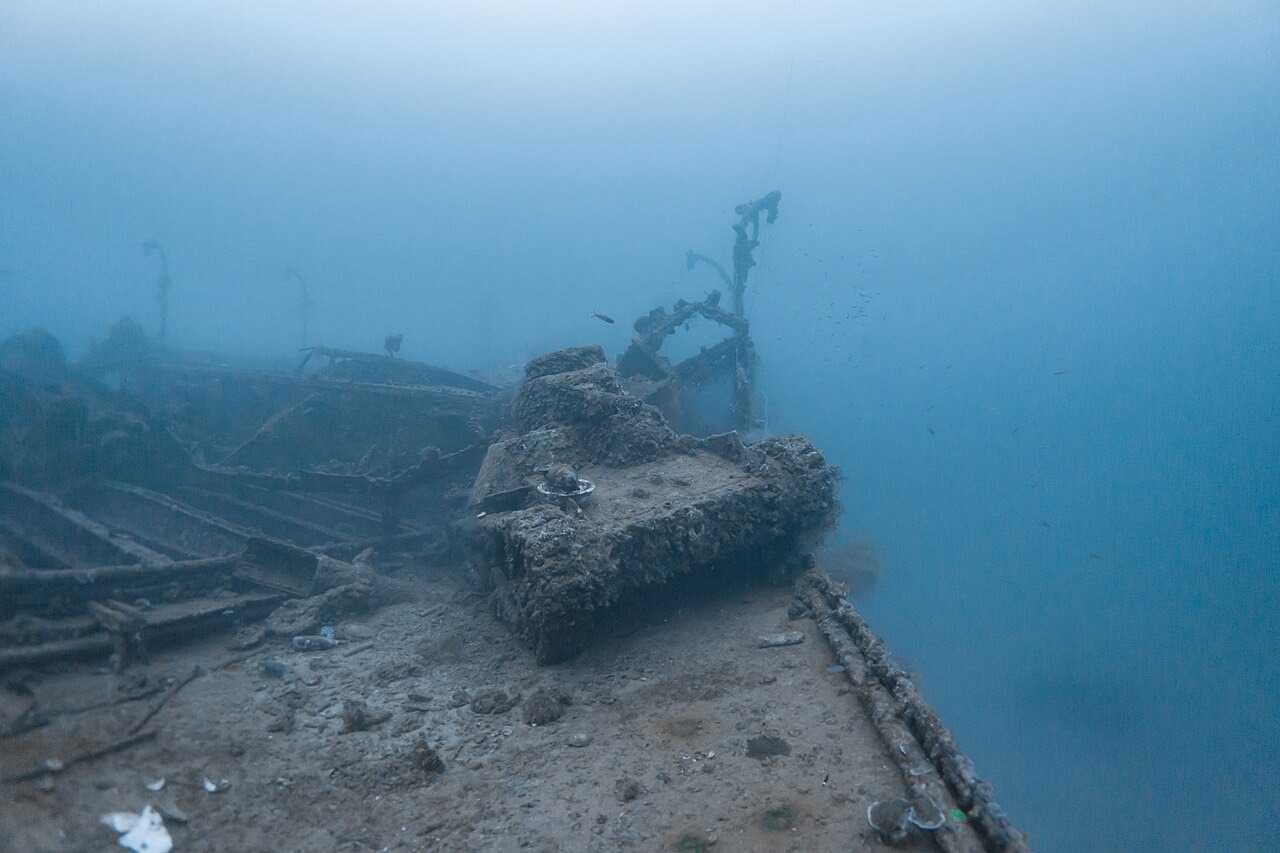
San Francisco Maru
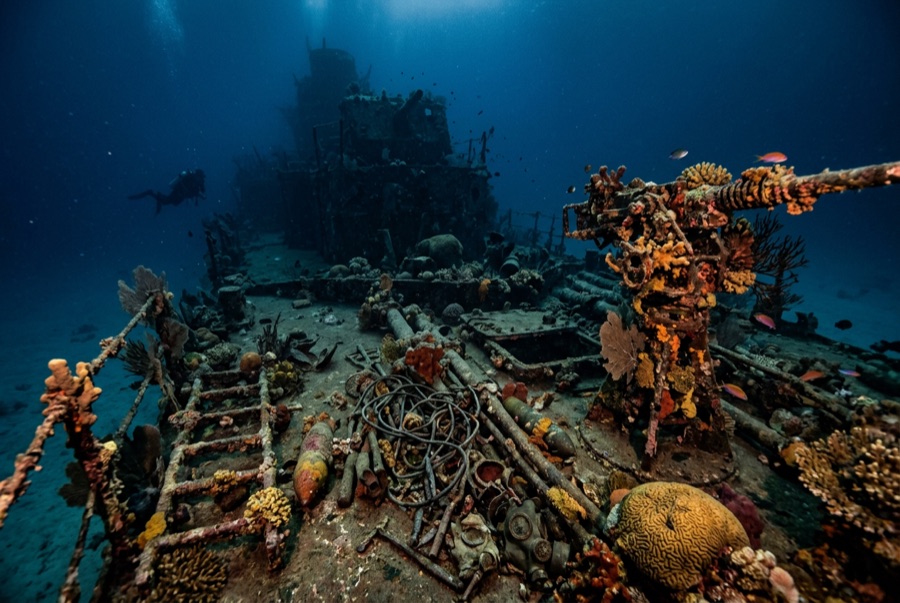
Shinkoku Maru
抵达与住宿
如何抵达: United's island-hopper service via Guam is the standard route, with connections from Honolulu and Asia through Guam. Flights are limited each week, so itineraries should build in buffer days.
住宿推荐: Shore-based divers use a small number of dive-focused hotels on Weno; liveaboards moor inside the lagoon and reach the wrecks fastest. Infrastructure is basic. Bring spares and patience.
船宿: Two styles work here: liveaboards maximize dives and reach the outer wrecks, while shore-based operations suit relaxed schedules and technical setups.
费用: Editorial estimate for guided two-tank boat diving in 2026; technical support, sofnolime, and helium (when available) cost extra. Chuuk State also charges a diving permit fee collected by operators; confirm the current amount locally.
两潜之间: Modest: WWII relics and guns on the lagoon islands, a Japanese-era lighthouse, village visits, and quiet beaches. Most visitors are here to dive.
安全与实用信息
危险因素: Depth creep is the classic Chuuk risk: the interesting cargo is often below 30 m. Overhead penetration demands training, lights, and line discipline; silt lifts easily inside. The wrecks still hold unexploded ordnance and fuel oil: touch nothing. Many ships are war graves; dive them with restraint.
Plan conservative repetitive profiles across a wreck-heavy week, use nitrox where it fits the depth, and leave penetration to those trained for it. Medical help is far away; that fact should shape every dive plan.
最近的减压舱: There is no reliably staffed recompression chamber in Chuuk; the nearest dependable facilities are on Guam, an evacuation flight away. Availability changes. Coordinate any emergency through EMS and DAN.