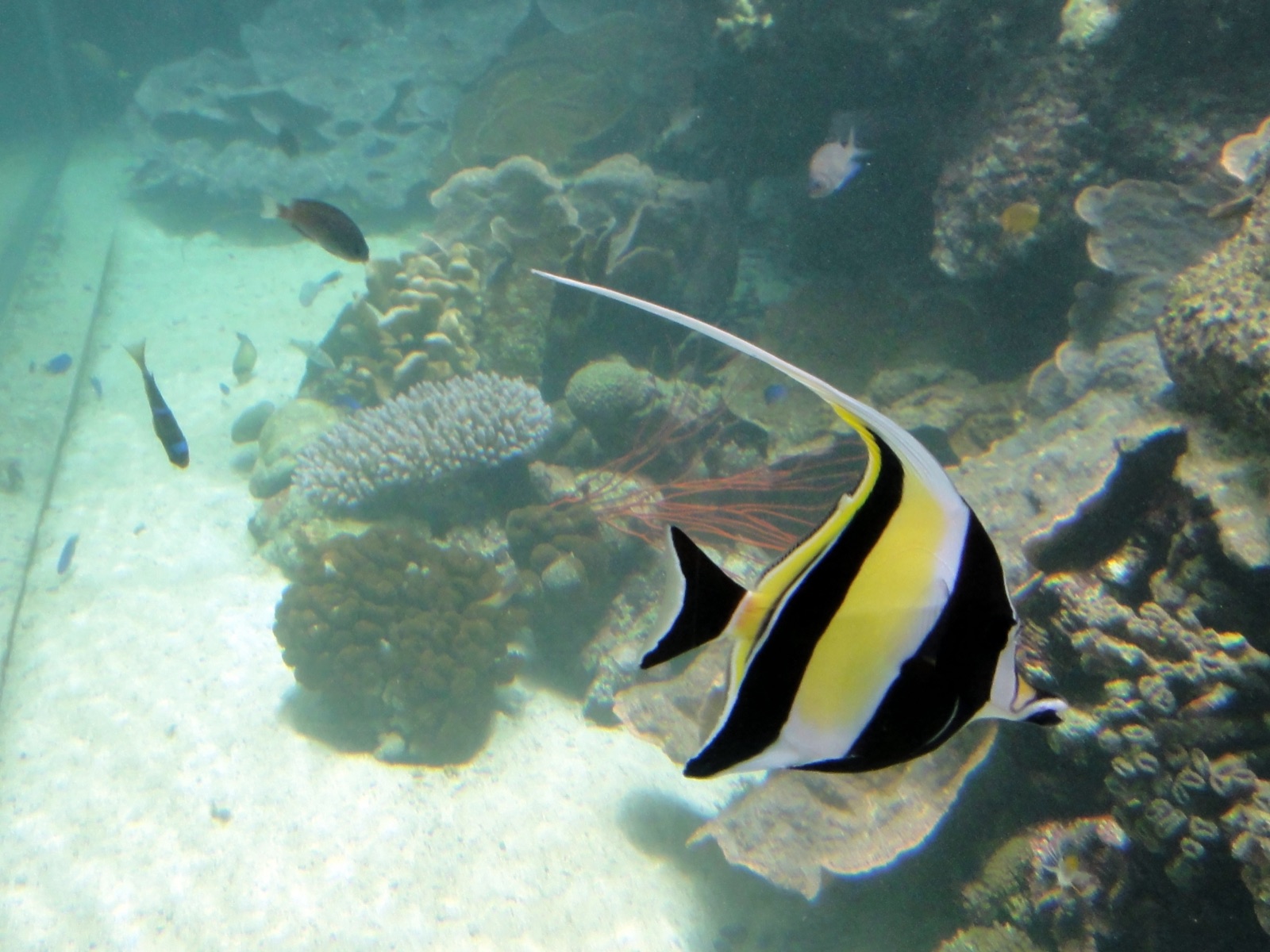
Palau
Palau concentrates more variety into one small archipelago than almost anywhere else in the Pacific: current-swept corners where gray reef sharks hold station in formation, a colonial-era channel that reef mantas use as a cleaning station, WWII wrecks resting inside a sheltered lagoon, and a marine lake where snorkelers drift through clouds of stingless jellyfish. The country declared the world's first shark sanctuary and later closed most of its waters to commercial fishing, and the reefs show the benefit.
이곳에서 다이빙해야 하는 이유
The diving here is built on tide. Twice a day the ocean pushes through the Rock Islands, and the famous sites sit exactly where that water accelerates: Blue Corner, where divers clip a reef hook into dead rock and watch sharks, jacks, and a very tame Napoleon wrasse ride the flow; Ulong Channel, a natural funnel lined with cabbage coral; German Channel, where mantas queue over cleaning stations. Between tides there is a second Palau: the cathedral light of Blue Holes, the air chambers of Chandelier Cave, and Japanese wrecks from the March 1944 air raids, including the fleet oiler Iro and a largely intact Jake floatplane. Ashore, Jellyfish Lake offers a snorkel found nowhere else. Palau protected sharks nationwide in 2009 and designated roughly four-fifths of its exclusive economic zone as a no-take sanctuary in 2020; the Rock Islands Southern Lagoon is a UNESCO World Heritage site. Expect boat rides of 45–70 minutes from Koror, warm water year-round, and dive briefings that treat current seriously, because here it is the whole point.
월별
Northeast trade winds from about November through April bring the calmest seas and the most reliable visibility. June through September sits under the wetter southwest monsoon: windier and rainier, though boats still run most days. Reef mantas are most dependable in German Channel from roughly December to March, and camouflage groupers gather to spawn at Ulong around the new moons of mid-year.
| 월 | 수온 | 시야 | 현장 분위기 |
|---|---|---|---|
| January●●●●● | 27–29 °C / 81–84 °F | 20–40 m | Dry-season trades; corners fire on the incoming tide. |
| February●●●●● | 27–29 °C / 81–84 °F | 20–40 m | Peak manta activity in German Channel. |
| March●●●●● | 27–29 °C / 81–84 °F | 20–40 m | Reliably calm; mantas still working the channel. |
| April●●●●○ | 27–29 °C / 81–84 °F | 15–40 m | Transition month; conditions usually still settled. |
| May●●●●○ | 28–30 °C / 82–86 °F | 15–35 m | Warm and quieter; first southwest weather possible. |
| June●●●○○ | 28–30 °C / 82–86 °F | 12–30 m | Wetter monsoon pattern; grouper spawning around the new moon. |
| July●●●○○ | 27–30 °C / 81–86 °F | 12–30 m | Rain and wind more likely; boats work sheltered sides. |
| August●●●○○ | 27–30 °C / 81–86 °F | 12–30 m | Southwest swell can limit outer corners. |
| September●●●○○ | 27–30 °C / 81–86 °F | 12–30 m | Late monsoon; unsettled spells between good windows. |
| October●●●●○ | 28–30 °C / 82–86 °F | 15–35 m | Weather begins to settle. |
| November●●●●○ | 28–30 °C / 82–86 °F | 15–40 m | Trades returning; visibility improves. |
| December●●●●● | 27–29 °C / 81–84 °F | 20–40 m | Season in full swing; book boats ahead. |
월별 데이터 신뢰도: Documented. 행이 없는 달은 확인된 데이터가 없는 것입니다. 저희는 없는 정보를 만들어내기보다 공백을 그대로 보여드립니다.
다이브 사이트 (8)
| 사이트 | 유형 | 수심 | 레벨 | 접근성 | |
|---|---|---|---|---|---|
| Blue Corner Gray reef sharks stacked in the current; the resident Napoleon wrasse at… | Wall | 8–30 m | Intermediate | Boat | |
| Blue Holes Light shafts through the skylights; the arched exits onto the wall; the… | Blue hole | 2–35 m | Intermediate | Boat | |
| Chandelier Cave Surfacing among stalactites; torchlight in the final chamber; mandarinfish… | Cave | 3–12 m | Intermediate | Boat | |
| German Channel Reef mantas at cleaning stations, best from about December to March; shark… | Channel | 8–25 m | Intermediate | Boat | |
| Iro Maru The coral-clad bow gun; kingposts silhouetted overhead; big morays and… | Wreck | 12–40 m | Advanced | Boat | |
| Jake Seaplane An intact WWII floatplane at leisure-dive depth; the exposed radial engine… | Wreck | 12–16 m | Beginner | Boat | |
| Jellyfish Lake The midday migration, when the swarm concentrates in sunlit water; light… | Freshwater | 0–5 m | Beginner | Shore | |
| Ulong Channel The lettuce-coral bank; shark line at the entrance; grouper spawning… | Channel | 5–20 m | Intermediate | Boat |
미리 계획할 수 있는 해양 생물
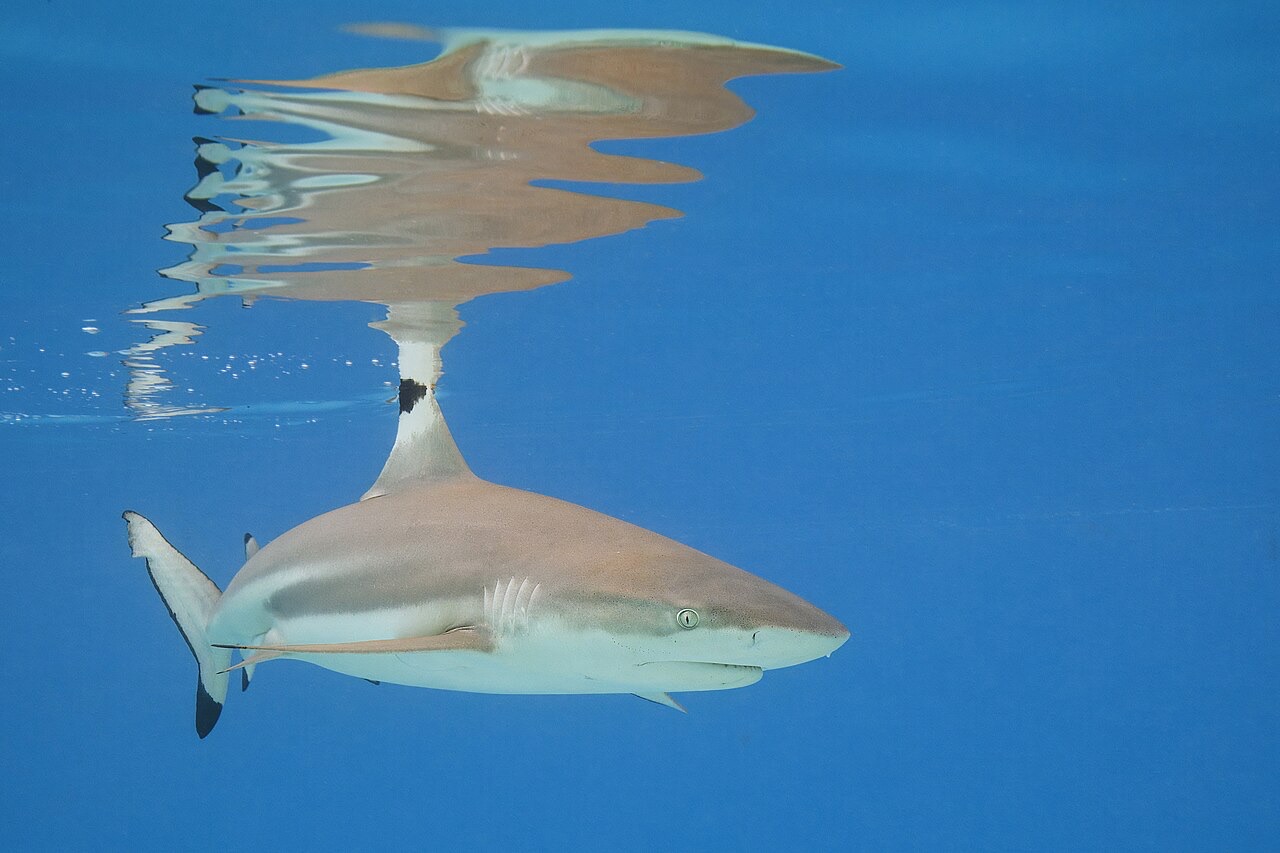
Blacktip Reef Shark
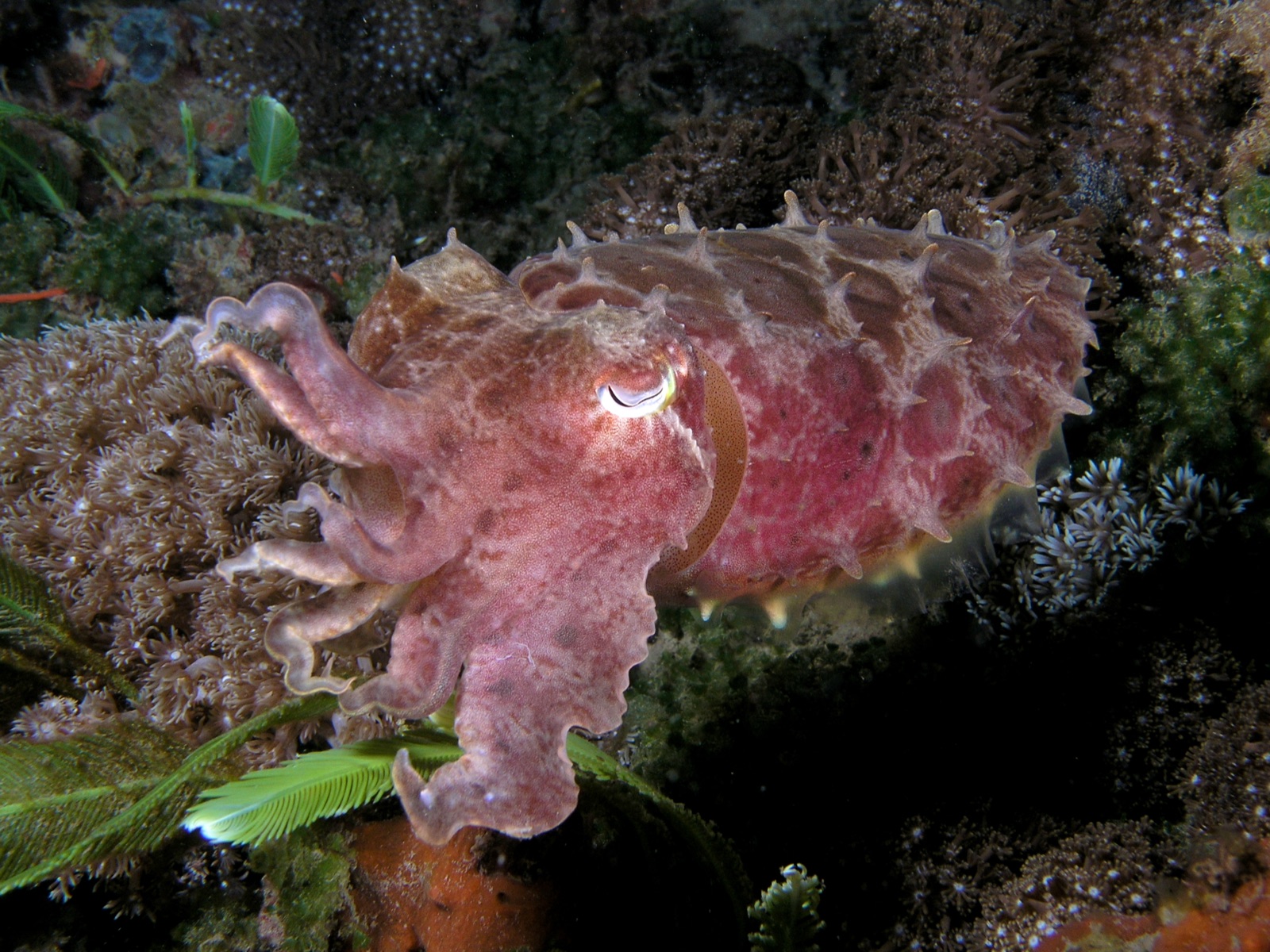
Broadclub Cuttlefish
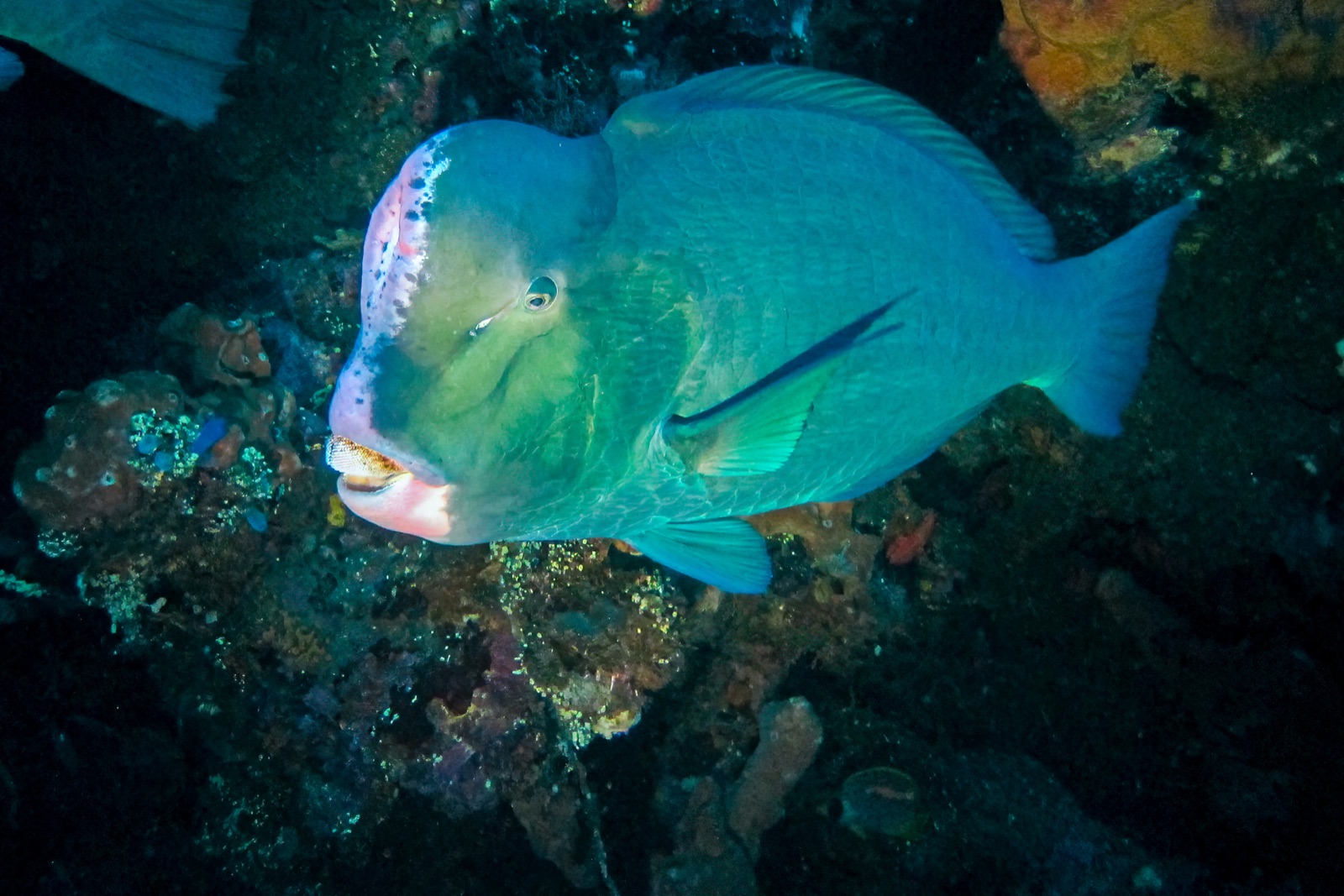
Bumphead Parrotfish
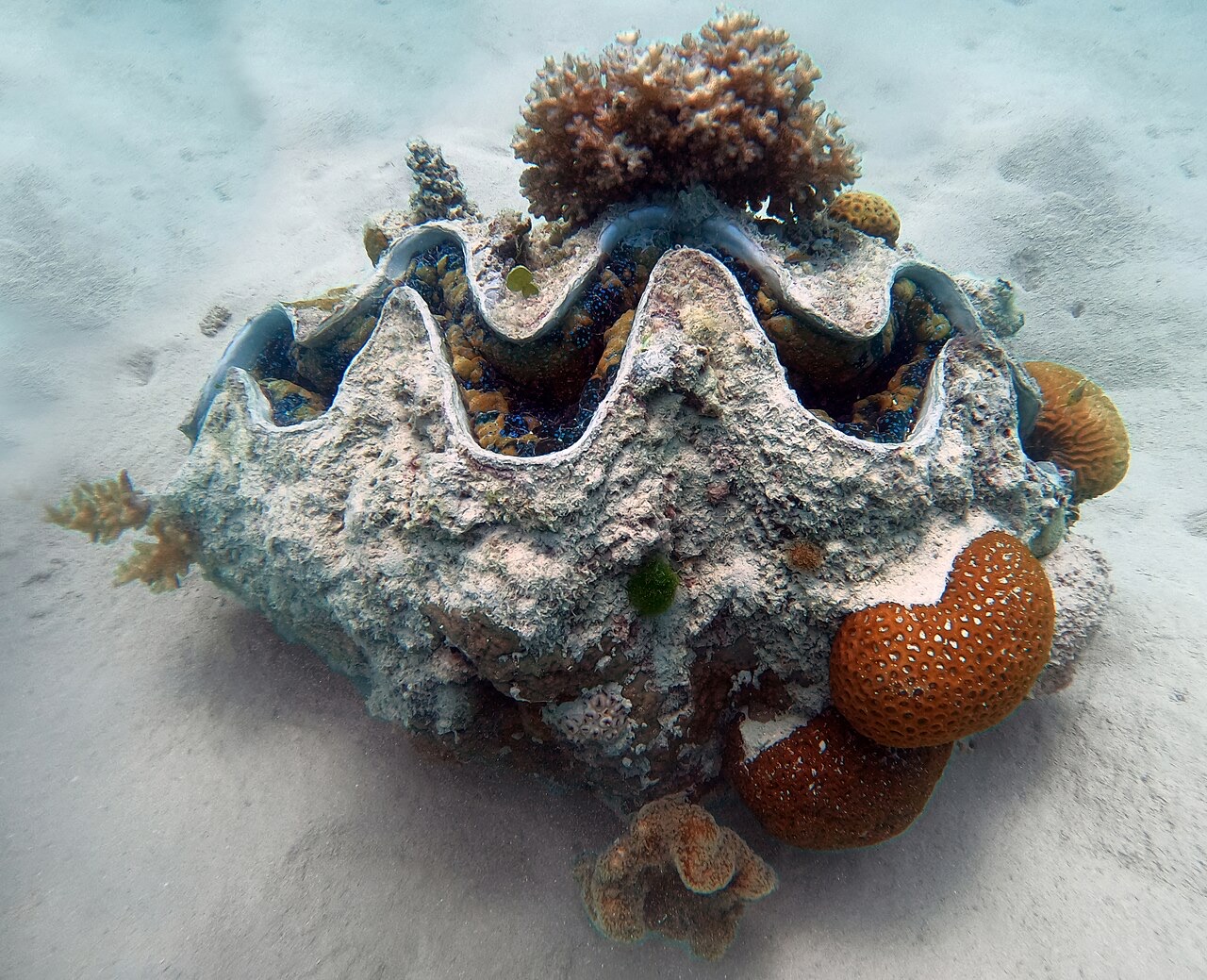
Giant Clam
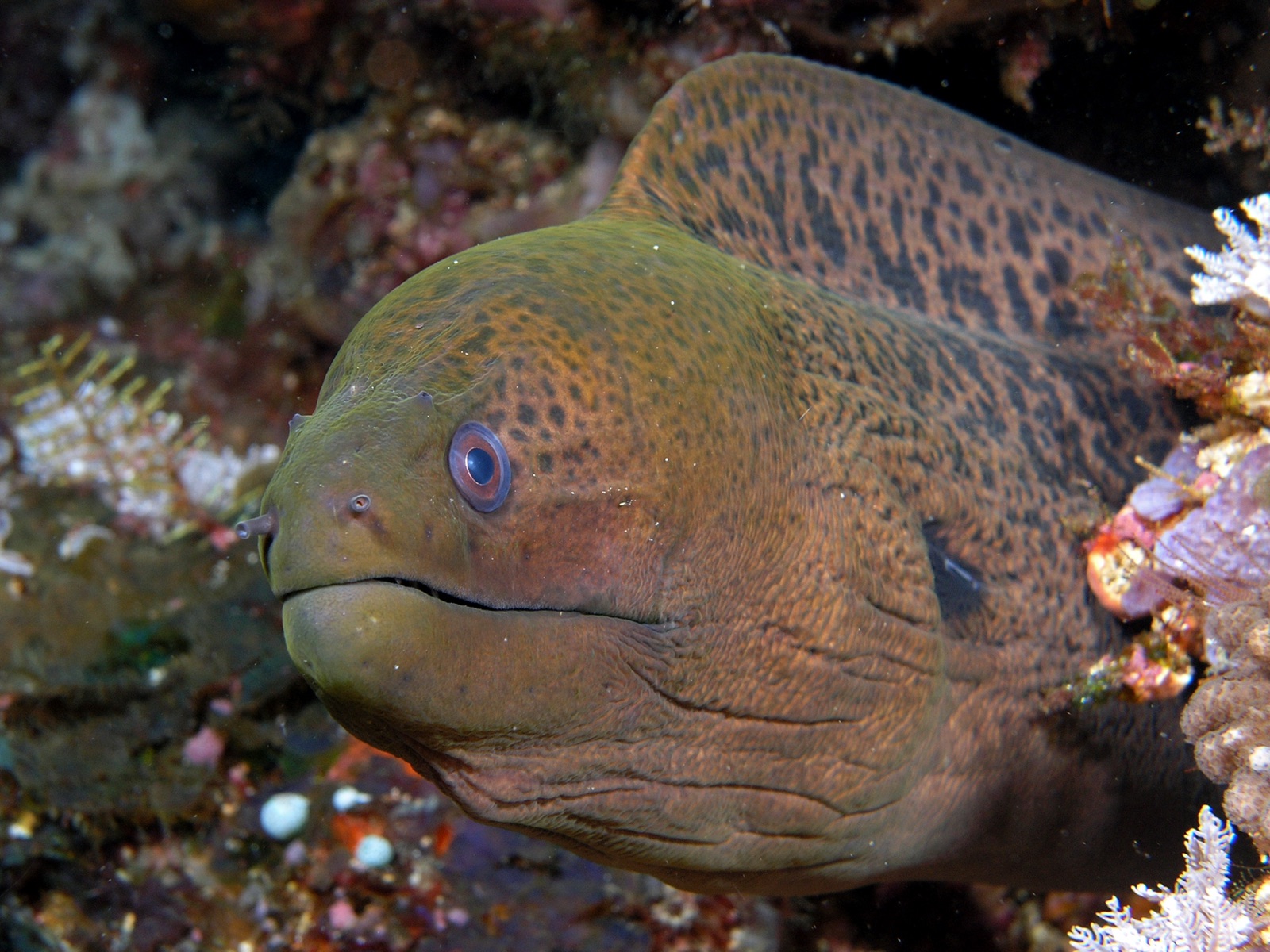
Giant Moray Eel
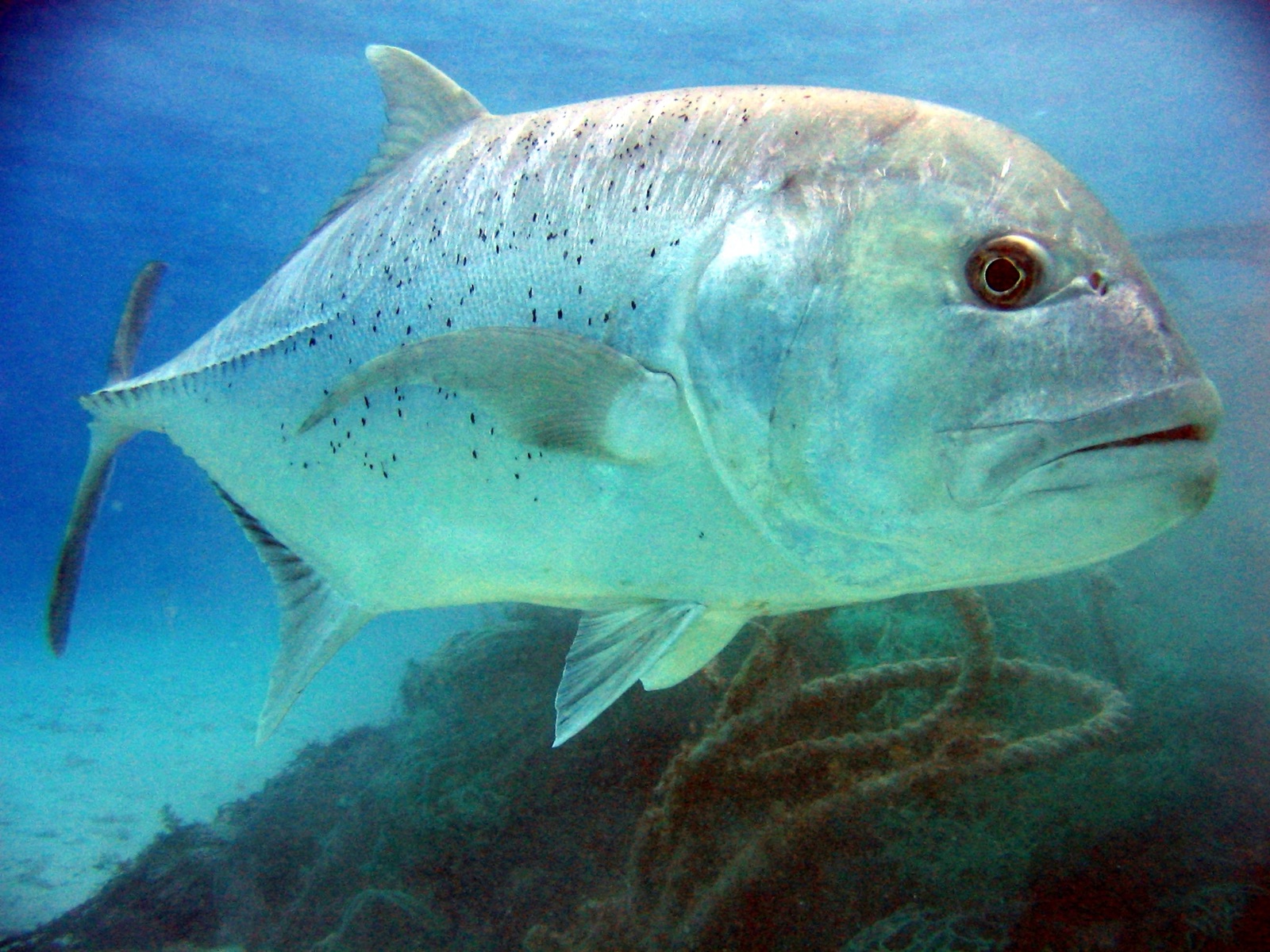
Giant Trevally
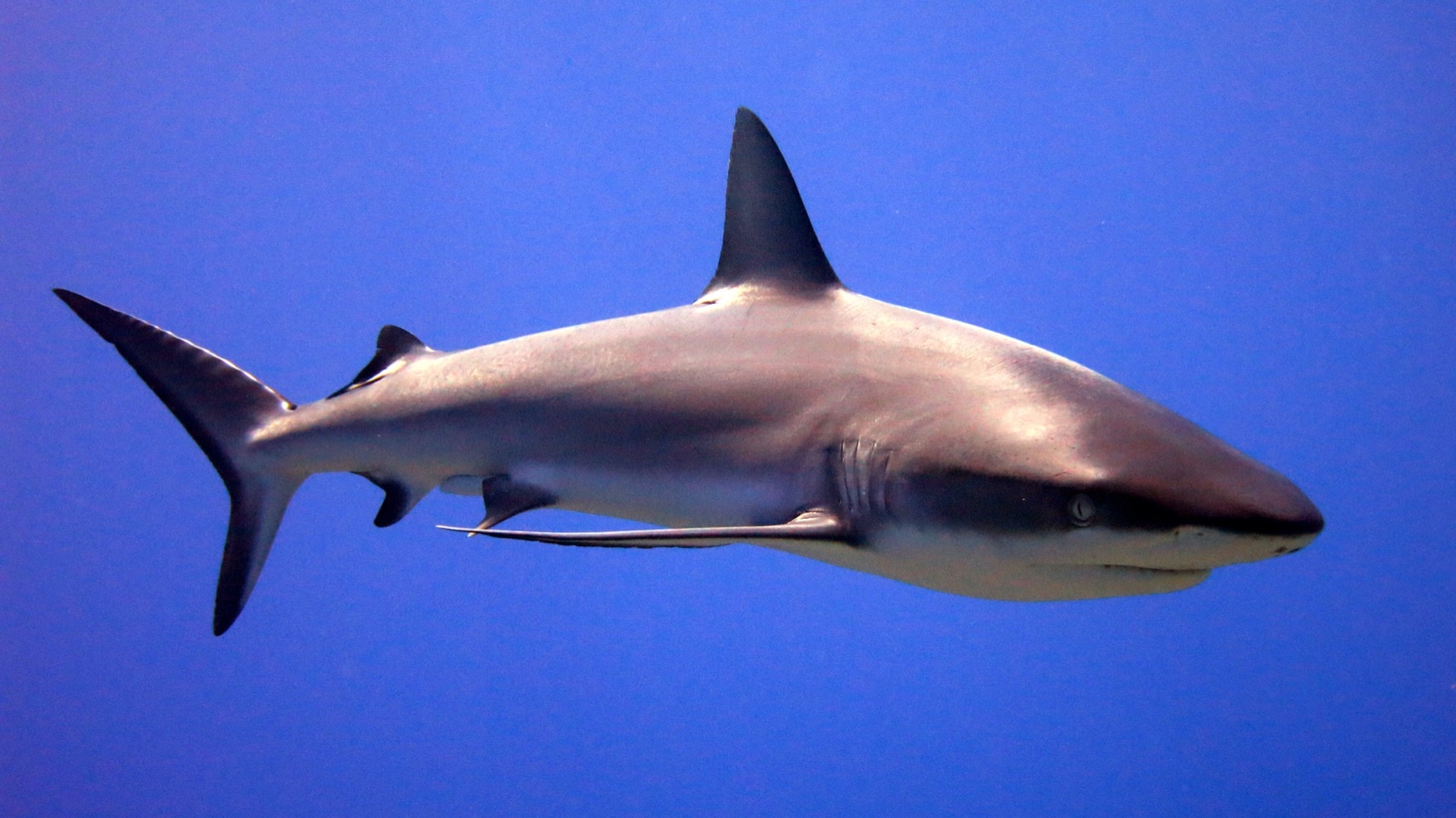
Grey Reef Shark
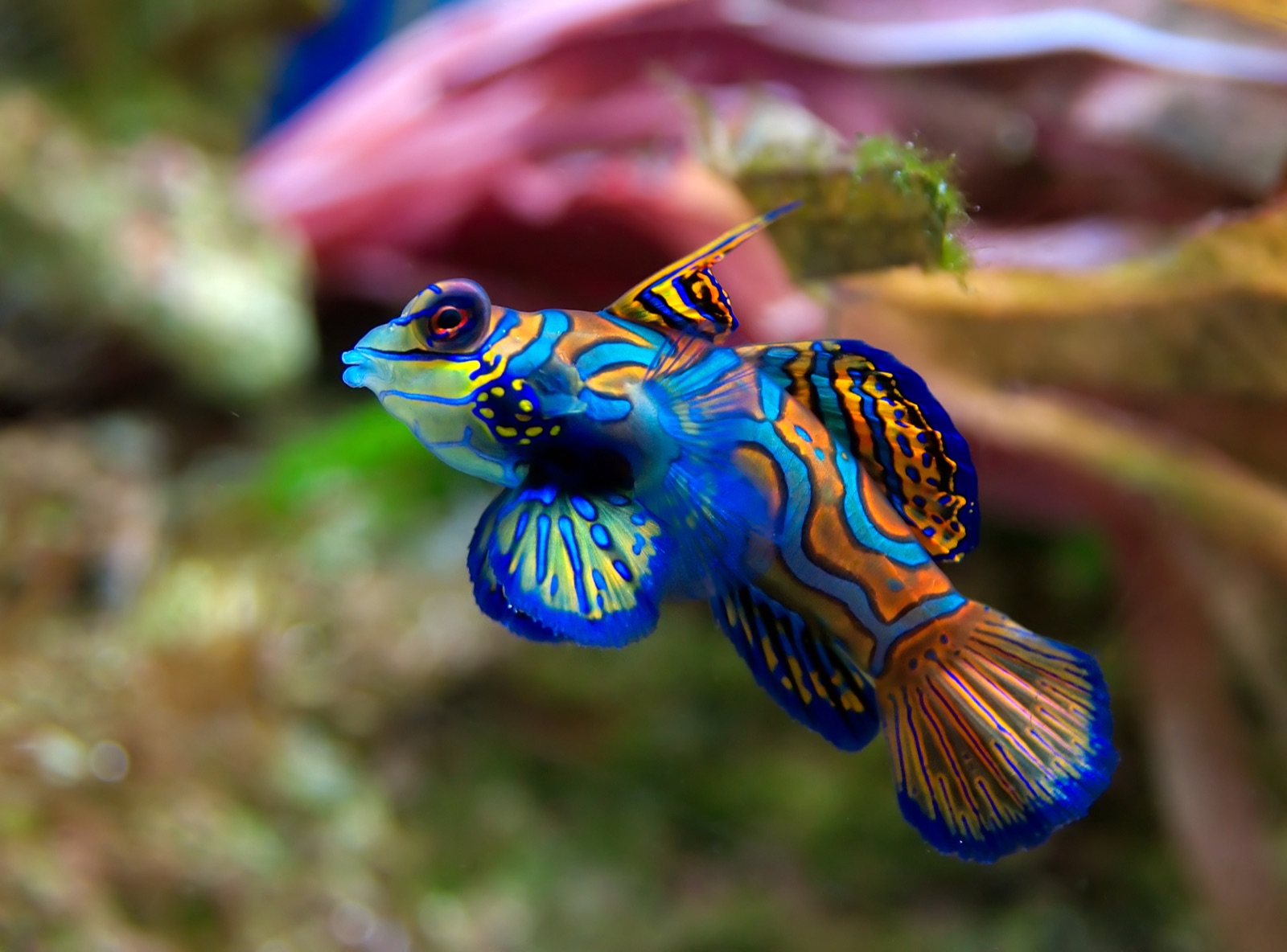
Mandarinfish
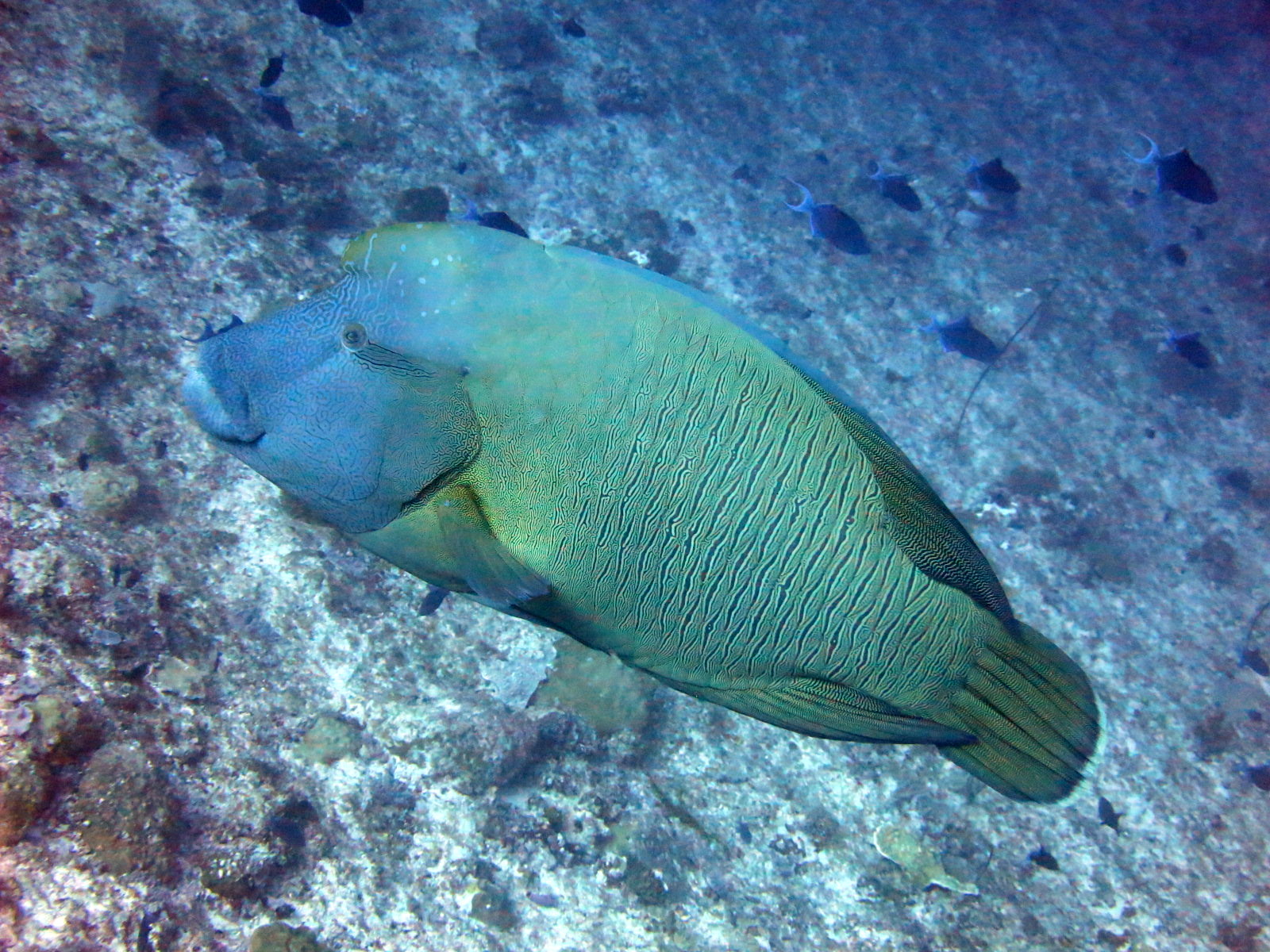
Napoleon (Humphead) Wrasse
Gray reef, whitetip, and blacktip reef sharks on nearly every outer-reef dive, reef mantas at German Channel, Napoleon wrasse, bumphead parrotfish, both green and hawksbill turtles, barracuda and trevally schools, and dense hard-coral cover inside the lagoon.
이곳의 난파선
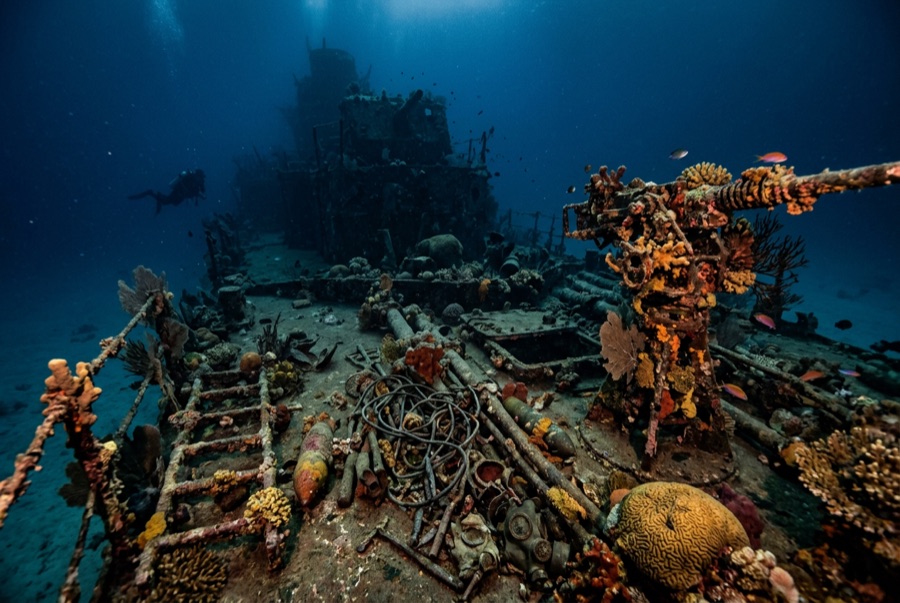
Iro Maru
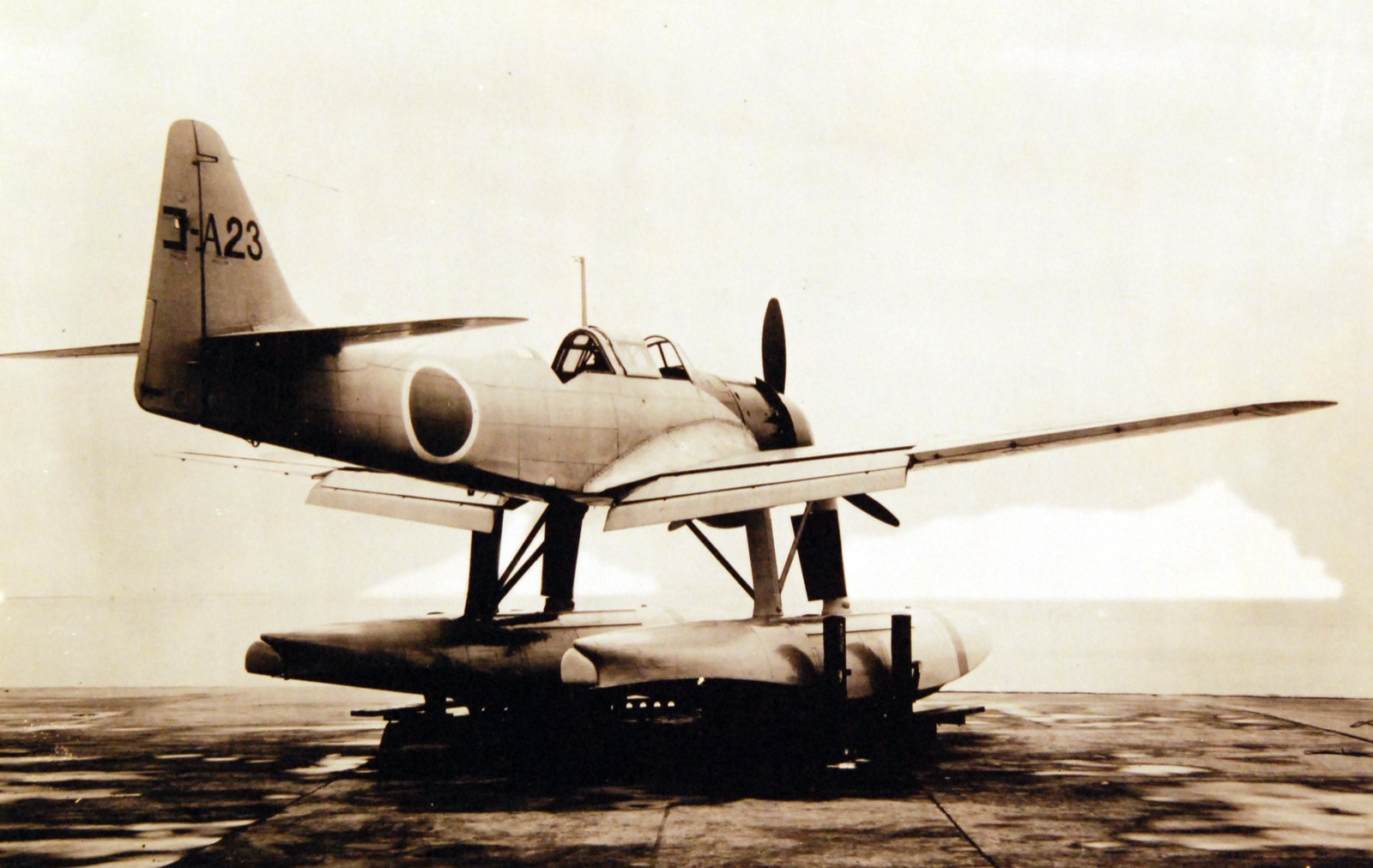
Jake Seaplane
찾아가는 방법 및 숙박
찾아가는 방법: Most divers connect through Taipei, Seoul, Manila, or Guam; schedules change often, so check current routings. The airport sits on Babeldaob about 20–30 minutes from the Koror hotels, and dive boats leave from Koror's marinas for the western barrier reef.
숙소: Nearly everyone bases in Koror, from budget dive lodges to full resorts. Liveaboards cover the same southwest sites with the advantage of dawn slots at Blue Corner before the day boats arrive.
리브어보드: Several liveaboards operate week-long loops out of Koror concentrating on the southwest reefs and Peleliu; they suit divers who want multiple tide windows at the marquee sites.
비용: Editorial estimate for a two-tank day boat from Koror in 2026. Koror State permits are extra (Rock Islands roughly US$50, or about US$100 including Jellyfish Lake, valid ten days), and Peleliu charges its own fee. Palau's US$100 environmental departure fee is normally built into airfare.
다이빙 사이: Kayaking and skiff tours through the Rock Islands, the sobering WWII battlefield of Peleliu, Ngardmau waterfall on Babeldaob, the national museum in Koror, and the milky-white limestone mud lagoon that tour operators treat as a spa stop.
스노클링: Jellyfish Lake is snorkel-only by rule, and the Rock Island lagoons offer easy protected snorkeling; the outer corners are too current-prone for casual surface swimming.
안전 & 실용 정보
위험 요소: Strong, reversing tidal currents, with occasional down-currents off reef corners; boat traffic at popular moorings; long runs to remote Peleliu sites. Use a reef hook only on bare substrate, fly a delayed surface marker on drift dives, and follow the tide briefing exactly.
Currents can switch mid-dive; stay with the guide, keep gas reserves conservative, and carry a DSMB and audible signal on every dive. Palau is remote; dive well within limits.
가장 가까운 감압 치료 시설: A recompression chamber operates in Koror at the national hospital. Availability and staffing change; route any suspected decompression illness through local EMS and DAN rather than direct to the facility.