Yap
Yap is the Pacific's quietest famous dive destination: a traditional Micronesian island where stone money still leans against village paths and a resident population of reef manta rays uses the mangrove-lined channels year-round. Divers come for close manta passes in the winter mating season, summer cleaning-station work in the northeast, sharks stacked along the western walls, and a south-tip maze of caverns, usually with no other boat in sight.
Why dive here
Yap built its reputation on one animal done properly. Around a hundred reef mantas live here permanently, and because they commute through narrow channels rather than open sea, encounters are close and repeatable. From roughly December through April, courtship trains of mantas wind through Mi'il Channel in the northwest; in the middle of the year the action shifts to the cleaning stations of Goofnuw Channel on the northeast side. The outer reef adds a second act: Vertigo's wall, where gray reef and blacktip sharks patrol within touching distance of the drop, and the sculpted swim-throughs of Yap Caverns at the southern tip. Villages own their reefs here, and operators work with them, a reminder that diving happens inside a living culture. Water stays warm all year, boat rides are short, and the pace is unhurried. Yap rewards divers who value intimacy over spectacle-hopping: fewer sites than Palau next door, but time to know them.
Month by month
December through April is the manta mating season in Mi'il Channel and generally the drier, settled half of the year. June through August favors the Goofnuw Channel cleaning stations. Late summer and early autumn are wetter, and Yap sits on the fringe of the typhoon belt.
| Month | Water | Visibility | What it's like |
|---|---|---|---|
| January●●●●● | 27–29 °C / 81–84 °F | 10–30 m | Manta courtship trains in Mi'il Channel. |
| February●●●●● | 27–29 °C / 81–84 °F | 10–30 m | Often the peak of the mating season. |
| March●●●●● | 27–29 °C / 81–84 °F | 10–30 m | Mating season continues; settled weather. |
| April●●●●○ | 27–29 °C / 81–84 °F | 10–30 m | Season tapering; still reliable mantas. |
| May●●●○○ | 28–30 °C / 82–86 °F | 10–25 m | Transition month. |
| June●●●●○ | 28–30 °C / 82–86 °F | 10–25 m | Cleaning-station activity in Goofnuw Channel. |
| July●●●●○ | 28–30 °C / 82–86 °F | 10–25 m | Goofnuw mantas; showers likely. |
| August●●●●○ | 28–30 °C / 82–86 °F | 10–25 m | Cleaning stations still working. |
| September●●●○○ | 28–30 °C / 82–86 °F | 8–25 m | Wetter; storm fringe possible. |
| October●●●○○ | 28–30 °C / 82–86 °F | 8–25 m | Unsettled spells. |
| November●●●●○ | 27–29 °C / 81–84 °F | 10–28 m | Drying out; mantas shifting northwest. |
| December●●●●● | 27–29 °C / 81–84 °F | 10–30 m | Mating season beginning. |
Monthly figures confidence: Documented. Months without a row have no verified data. We would rather show a gap than invent one.
The dive sites (4)
| Site | Type | Depth | Level | Access | |
|---|---|---|---|---|---|
| Goofnuw Channel Cleaning-station manta encounters at their mid-year best; long, shallow… | Channel | 5–18 m | Intermediate | Boat | |
| Mi'il Channel Courtship trains of reef mantas December–April; close cleaning-station… | Channel | 5–20 m | Intermediate | Boat | |
| Vertigo Gray reef and blacktip sharks at close quarters; exceptional outer-reef… | Wall | 5–30 m | Intermediate | Boat | |
| Yap Caverns Light-filled swim-throughs and canyons; resting whitetip reef sharks… | Reef | 5–30 m | Intermediate | Boat |
Marine life you can plan around
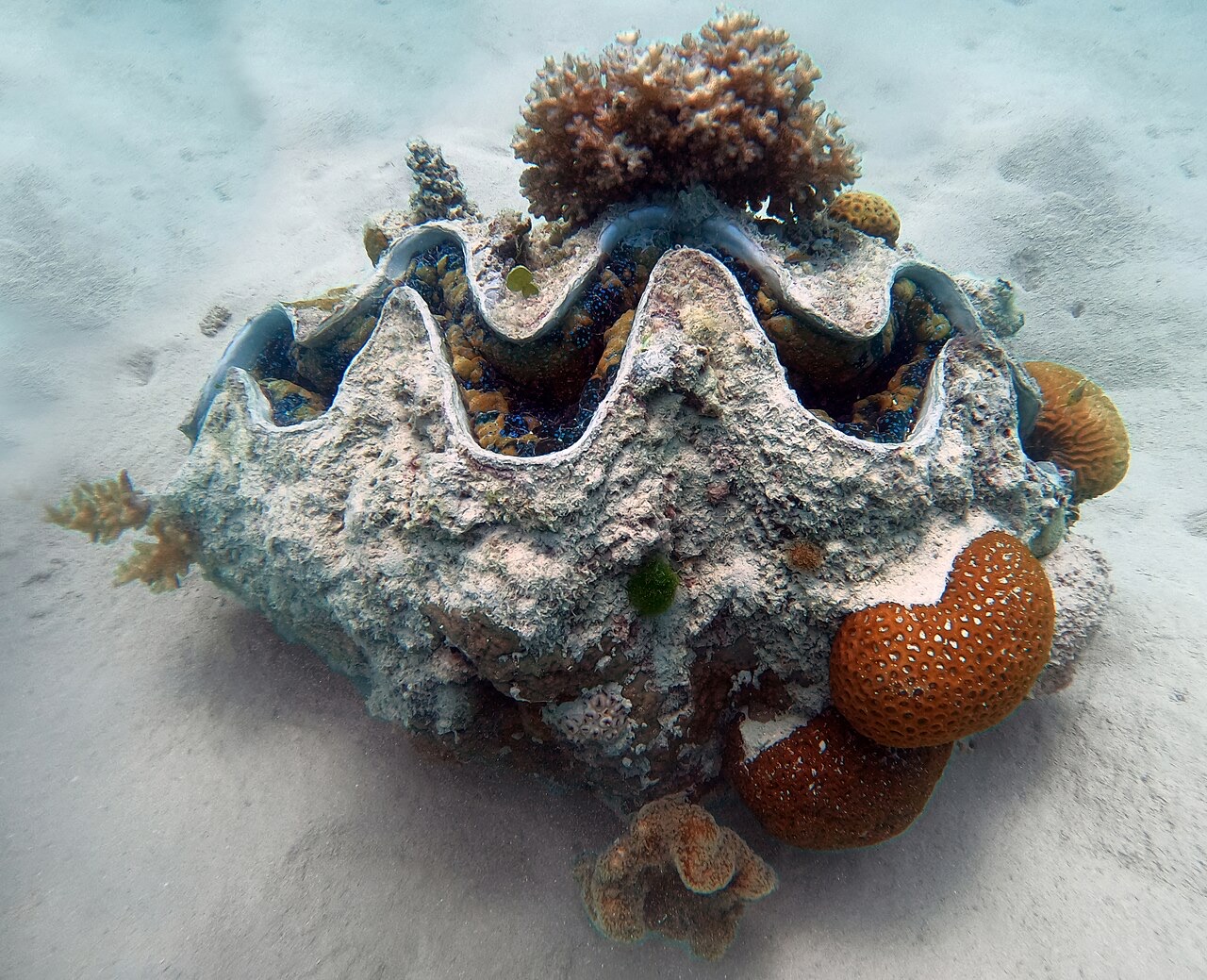
Giant Clam
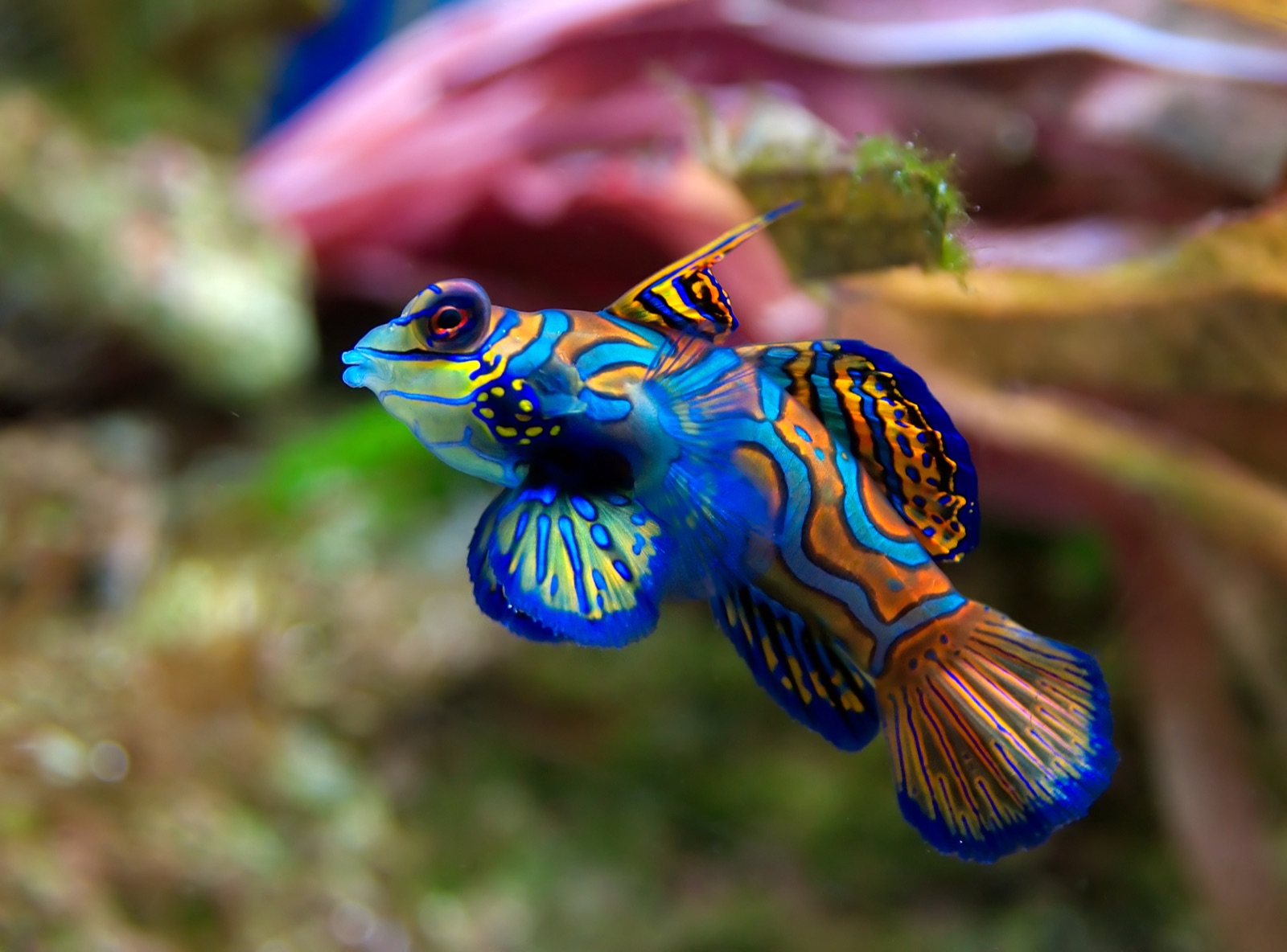
Mandarinfish
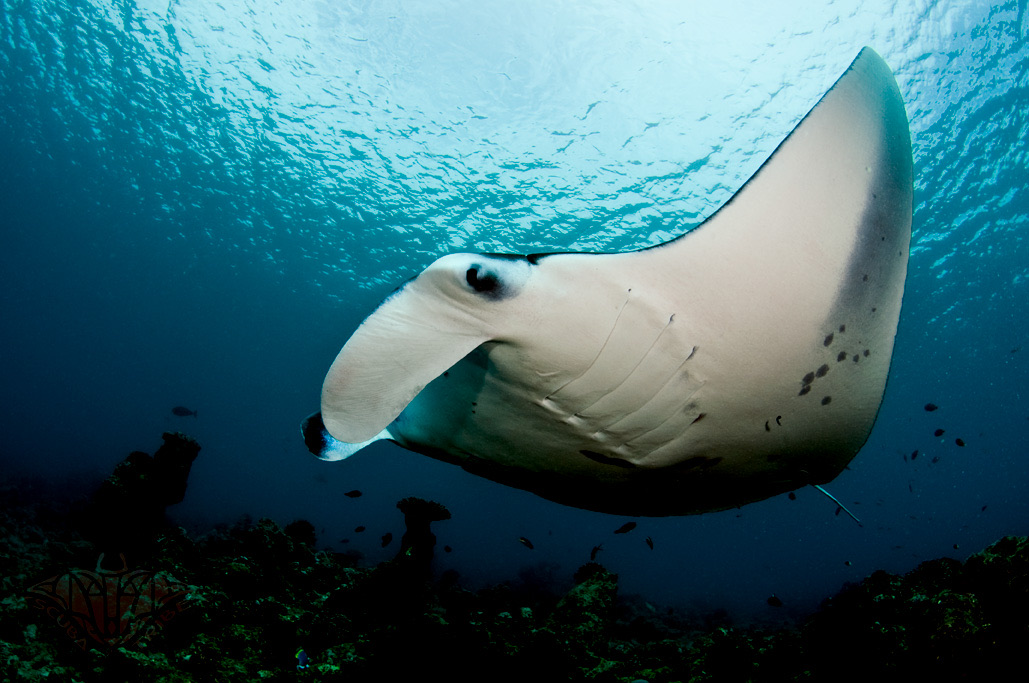
Reef Manta Ray
Resident reef mantas year-round, gray reef and blacktip sharks on the outer walls, whitetips resting in the caverns, turtles, barracuda, and rich channel-mouth fish traffic on the tides.
Getting there & staying
Getting there: United serves Yap via Guam (and at times Palau) a few days a week; there is no daily service, so trips are planned around the flight schedule.
Where to stay: Colonia, the small harbor town, holds the dive resorts and guesthouses; most diving runs from hotel docks through the mangrove channels to either coast.
Costs: Editorial estimate for a guided two-tank boat day in 2026; marine-resource and village reef fees may be added by operators.
Between dives: Village visits arranged with local permission, the famous stone-money banks, WWII relics, hiking, and traditional dance events. Dress modestly away from the resorts: Yap takes custom seriously.
Snorkeling: Channel manta sites are dived rather than snorkeled; sheltered inner reefs offer easy snorkeling from boats.
Safety & practicalities
Hazards: Tidal current in the channels, reduced channel visibility on outgoing water, and long swims if timing is missed. On the outer reef, surge near the caverns in swell.
Manta etiquette is enforced: settle low and still at cleaning stations, never chase or touch, and let the animals control the encounter. Yap is remote: conservative profiles apply.
Nearest recompression: No reliably available recompression chamber operates on Yap; serious cases are evacuated toward Guam or Palau. Availability changes. Work through EMS and DAN in any emergency.