Ausrüstung · Core
Dive Masks
The one piece of gear that must fit your face and no one else's: how mask fit, volume, and skirt design work, and why this is the first purchase almost every diver should make.
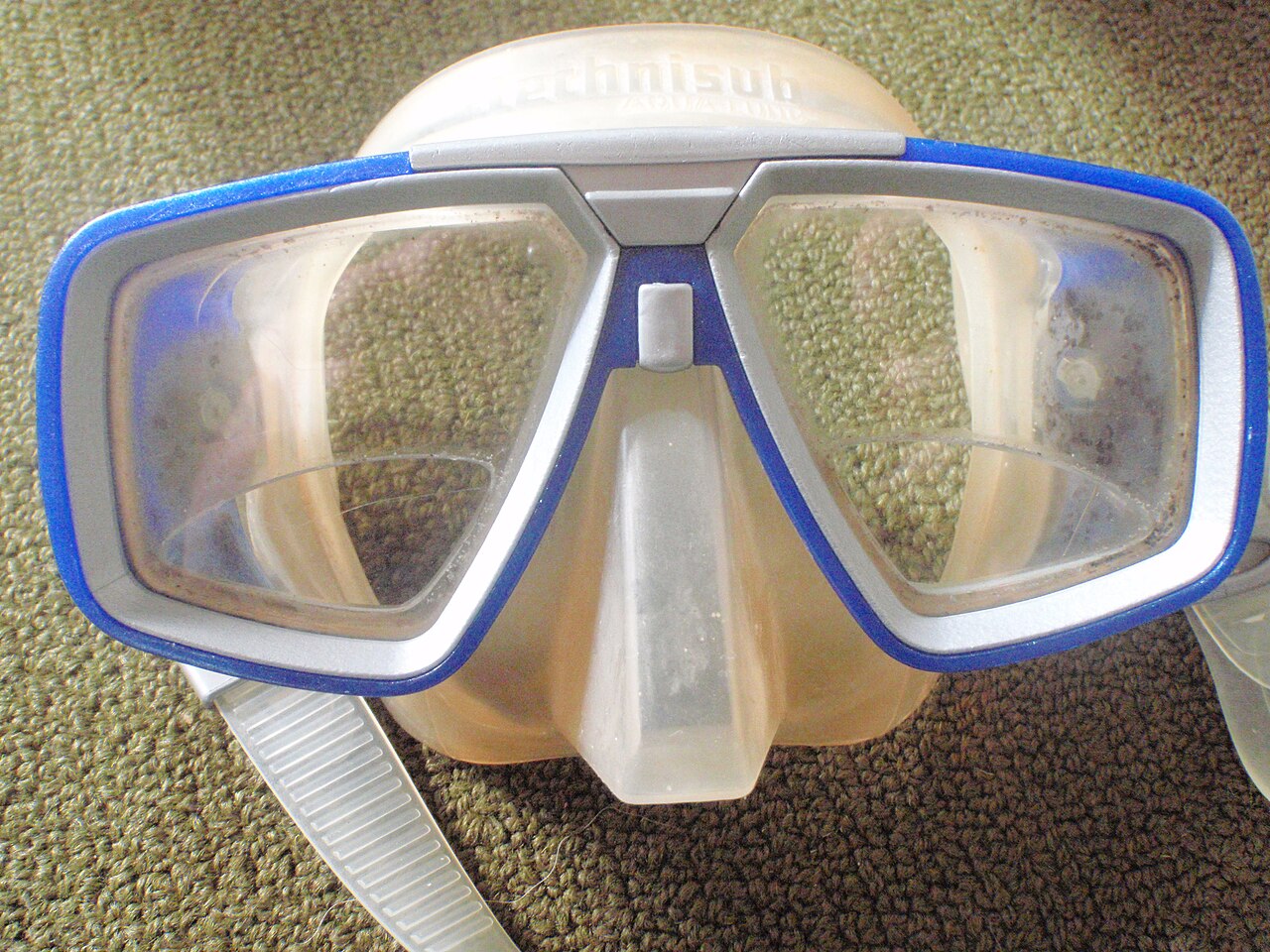
A dive mask does one job - it holds an air space in front of your eyes so they can focus underwater - and everything about choosing one flows from the fact that the seal is made against your face, not anyone else's. Tempered glass lenses sit in a rigid frame or bond directly to a soft silicone skirt, which presses against forehead, cheeks, and upper lip; a nose pocket lets you pinch to equalize and clear. When the skirt matches your face, the mask disappears from your attention for the whole dive. When it does not, you spend the dive clearing dribbles, and no price tag fixes a bad match.
Fit is tested the same way everywhere: place the mask against your face without the strap, inhale gently through your nose, and let go. A mask that fits stays put on suction alone with no hissing at the edges. Do the test while smiling and while wearing a regulator mouthpiece if you can, because your face changes shape around one. Check that the nose pocket is reachable through gloves if you dive cold, that the frame does not press your brow, and that your field of view feels open. Everything else is preference: low-volume masks clear with less air and suit freedivers and photographers; clear skirts feel brighter, while black skirts cut glare and reflections, which photographers tend to prefer; single-lens designs give an unbroken view, and twin-lens frames accept prescription drop-in lenses - a quiet gift for divers whose eyesight has drifted, since optical inserts and even custom-ground lenses are widely available.
Price bands are friendly. Serviceable masks start around US$30-50, mid-range models with better skirts and buckles run US$50-100, and premium or prescription setups reach US$100-150 and beyond. Because fit trumps features, an inexpensive mask that seals beats a costly one that does not.
This is also the classic first purchase, and the argument is hygiene and certainty: rental masks have met a thousand faces and fit none of them in particular, while your own mask fits, travels in any bag, and works for snorkeling between dives. New masks need one ritual - the manufacturing residue on the glass must be scrubbed off with a mild abrasive such as toothpaste (or burned off carefully where the maker permits) or no defog treatment will hold. Thereafter a drop of defog or diluted baby shampoo before each dive keeps it clear.
Maintenance is nearly nothing: rinse in fresh water after diving, keep it out of direct sun, which ages silicone, and store it in its box so nothing deforms the skirt. Check the strap and buckles occasionally, and carry a spare strap - or better, a whole spare mask on trips, since a broken mask is one of the few failures that genuinely ends a dive day. Skirts last many years; when the silicone hardens or the seal starts weeping on every dive, the mask has told you it is finished.
One honest warning for travel shoppers: masks bought from general sporting-goods racks with plastic lenses belong in swimming pools, not on dives. Tempered glass, marked as such, is the non-negotiable feature at any price.
Preise sind ehrliche Marktspannen, keine Angebote; kein Hersteller bezahlt hier für eine Platzierung.