장비 · Core
Snorkels
The simplest tube in diving and the debates around it: styles from bare J-tubes to dry-tops, when a snorkel earns its place on your mask strap, and when it belongs in a pocket or at home.
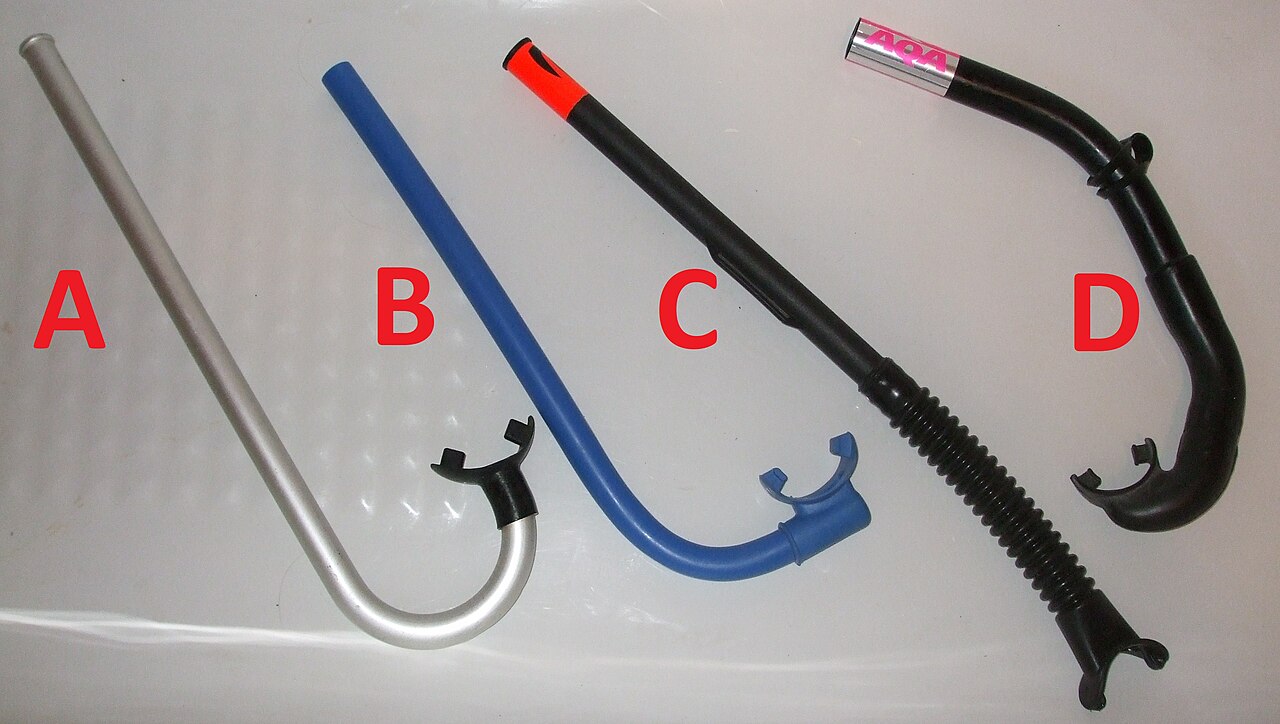
A snorkel is a bent tube that lets you breathe face-down at the surface without spending tank gas, and almost everything else written about it is refinement or argument. The refinements are real enough. A classic J-tube is nothing but pipe and mouthpiece: cheap, streamlined, unbreakable. Semi-dry designs add a splash guard that deflects chop, and a purge valve below the mouthpiece that makes clearing easier. Dry-top snorkels carry a float valve that seals the tube when it submerges, keeping water out entirely - popular with surface snorkelers, though the sealed float adds buoyancy and bulk that divers notice underwater. Flexible lower sections let the mouthpiece drop away when a regulator replaces it, and roll-up snorkels collapse into a small coil that lives in a BCD pocket until needed.
The argument is whether to carry one at all, and honest guidance runs by situation rather than doctrine. The case for: on long surface swims to a shore site or back to an anchored boat, a snorkel saves meaningful tank gas and effort; in choppy waits at the surface it keeps waves out of your airway; and while watching for a pickup or floating with whale sharks between drops, it is simply the right tool. Training agencies generally teach with one for exactly these reasons, and some standards expect it on courses. The case against: a tube on the mask strap catches kelp, line, and wreck fixtures, tugs the mask in current, and clutters the head area photographers and technical divers keep deliberately clean - which is why those communities either stow a foldable in a pocket or leave the snorkel ashore, and why cave and wreck training treats a strapped-on snorkel as a snag hazard. Both camps are right in their own water.
Choosing is mercifully cheap. Basic tubes run about US$15-30, semi-dry and dry designs US$25-60, and foldable pocket models sit in the same range; there is little above US$80 worth buying. Fit points are few: the mouthpiece should sit comfortably without jaw effort, the tube should follow your head's curve rather than levering the mask, and the clip should release from the mask strap easily - you want to be able to hand it off or stow it, not wrestle it. If you dive cold water in a hood, check the mouthpiece reaches past the hood's bulk.
Maintenance and travel are trivial: rinse, dry, and toss it in any bag; purge valves occasionally trap grit, so flush them when clearing feels sticky. Mouthpieces are replaceable for pennies when chewed.
The sensible bottom line for most recreational divers: own one, because it costs less than a boat lunch, and decide per dive whether it rides on the mask, in a pocket, or in your room. Shore divers and snorkeling-heavy travelers will use it constantly; boat divers on calm seas may not touch it for a season; and anyone heading into overhead or technical training will be told exactly where it goes, which is away.
가격은 실제 시장 범위를 정직하게 제시한 것이며 판매 제안이 아닙니다. 어떠한 업체도 이곳에 비용을 지불하고 노출되지 않습니다.