Comparativa · 4 min de lectura
Air vs Nitrox: What Enriched Air Actually Buys You
Longer no-deco time at moderate depth, a shallower maximum depth, and a required course: the real physics and economics of nitrox, minus the folklore.
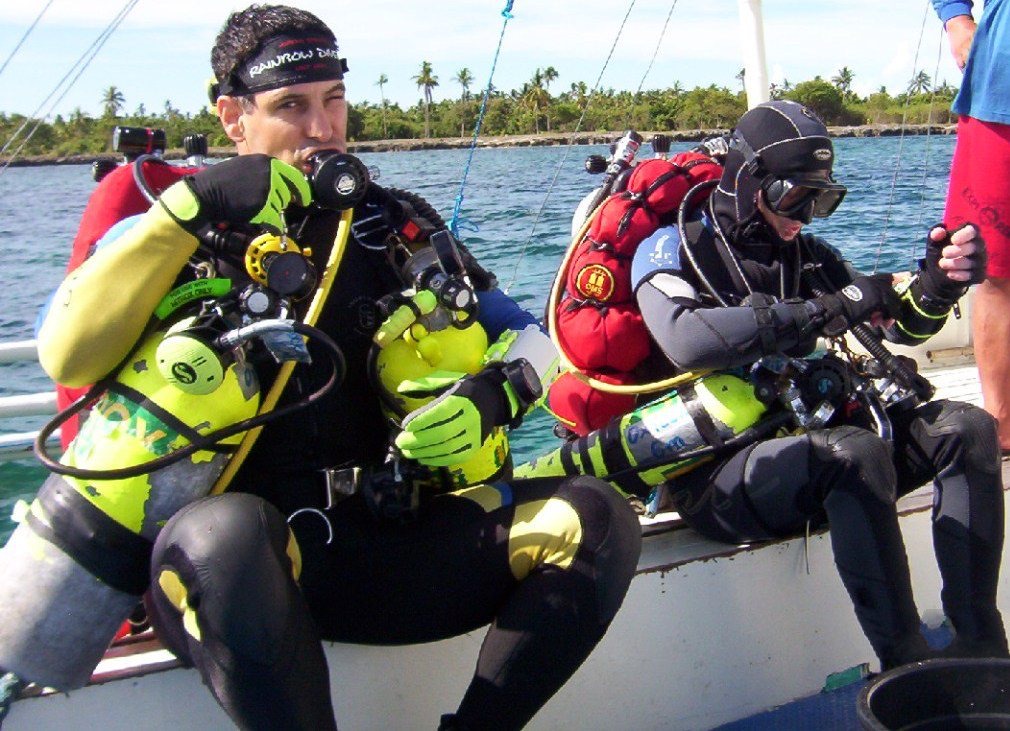
Nitrox (enriched air, usually 32% or 36% oxygen instead of air's 21%) is the most misunderstood purchase in recreational diving. It is neither a deep-diving gas nor a magic energy supplement. It is a nitrogen-management tool with one large, provable benefit, one hard limit, and a modest price. Here is the honest ledger.
What nitrox genuinely buys
Less nitrogen in the mix means slower nitrogen loading, which means longer no-decompression limits exactly where recreational divers run out of them: the 15–30 m band. On a 20–25 m reef or wreck profile, an enriched-air diver gets materially more bottom time before the computer calls the ascent, and across repetitive days (liveaboard weeks on Egypt's offshore routes, multi-dive days on Cozumel's walls, channel circuits in the Maldives), the advantage compounds dive after dive. The classic 30 m profile of the Thistlegorm is the textbook case where the benefit peaks. Divers running conservative computer settings also see friendlier surface-interval math between repetitive dives, which is exactly where four-dive days feel the squeeze.
What it does not do
Three myths, retired: nitrox does not let you dive deeper (the opposite, as below). It does not make your gas last longer; consumption is about physiology and technique, covered in improving air consumption. And the widespread claim that nitrox leaves you less tired is anecdotal: controlled studies have not demonstrated a reliable effect, however sincerely divers report it.
The hard limit: oxygen depth ceilings
More oxygen becomes a problem at depth. At the standard 1.4 bar oxygen partial-pressure limit, 32% nitrox reaches its maximum operating depth around 33–34 m, and 36% around 29 m, shallower than air's recreational envelope. Exceeding those ceilings risks central-nervous-system oxygen toxicity, which is why the certification course exists and why divers personally verify each tank's mix with an analyzer before every dive. The mechanisms live in oxygen toxicity basics; the broader decompression context in decompression sickness explained.
Cost, training, availability
The certification is a short, inexpensive specialty, often completable in an evening plus tank analysis practice. Fills typically cost a few dollars more than air at day-boat operations, while many liveaboards now bundle free or cheap nitrox because it suits their four-dive days. Availability is near-universal at serious destinations and spottier at small island operations; ask before assuming, and on full boats reserve ahead: enriched-air supplies can run short, and the divers who booked get the fills. The analyzer habit is the course's real content: check the mix yourself, sign the fill log, set your computer to the same number, and label the tank. Four steps, one minute, and the entire class of wrong-gas errors disappears.
| Air | Nitrox (EAN32/36) | |
|---|---|---|
| No-deco time at 15–30 m | Standard | Materially longer |
| Maximum depth | Recreational limit (40 m trained) | Roughly 33–34 m on 32%; roughly 29 m on 36% (at 1.4 bar) |
| Training | Included in certification | Separate short specialty |
| Cost per tank | Baseline | Slightly higher; often free on liveaboards |
| Best for | Shallow reefs, single dives, tight budgets | Repetitive days and 18–30 m profiles |
When plain air is the right call
Above roughly 12–15 m, no-deco limits on air usually outlast your gas supply, so nitrox buys little on shallow reef and house-reef diving, Bonaire-style days included, unless you run deep profiles repeatedly. Single-dive days rarely justify the surcharge. And no gas changes the rules that matter most: plan conservatively, respect safety stops, and stay inside training limits, nitrox card or not.
The bottom line
Take the course once; then buy nitrox when the diving is repetitive or lives in the 18–30 m band, and skip it when it is shallow or occasional. Divers heading toward deeper training should read the deep diving guide: depth progression is a training problem, and nitrox was never its answer.