Редакционное · 4 мин. чтения
The Best Shark Diving in the World
Nine places that reliably put sharks in front of divers (baited and unbaited, tropical and cold), with the ethics, seasons, and closures stated honestly.
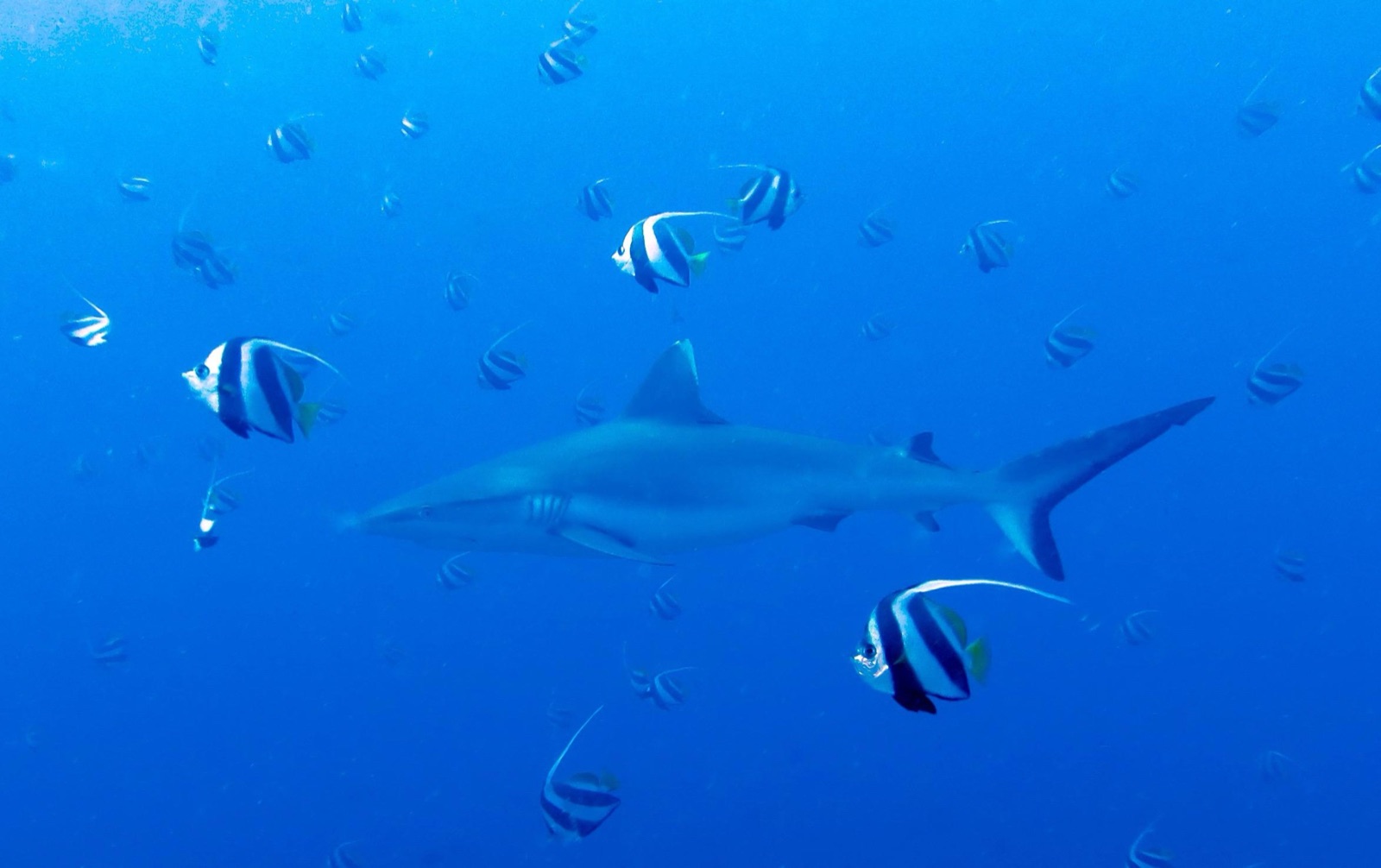
Start with the honest part: many reliable shark encounters exist because operators use bait or chum, and opinion inside diving is genuinely split on the practice. Baited dives concentrate animals and fund local protection; they also alter behavior and demand strict protocols. Unbaited alternatives exist and are listed here too. Whichever you choose, vet the operation the way you would any dive operator (protocols, briefings, group sizes) and follow the briefing to the letter.
One closure to know before planning: Mexico shut down cage diving at Guadalupe Island in 2023 with no announced reopening. Treat anyone still selling it as a red flag.
Tiger Beach, Bahamas
A sunlit sandbank in under 10 m of gin-blue water where baited dives bring in tiger sharks, lemons, and (in midwinter) great hammerheads. Tiger Beach is shallow and long on bottom time, but these are large predators over bait: kneel where told, keep hands folded, and skip it if freelancing tempts you.
Fakarava, French Polynesia
No bait needed in Fakarava's south pass, where hundreds of grey reef sharks hold in the tidal flow year-round; around the June–July full moons, spawning groupers thicken the wall of sharks further. The tradeoffs are remoteness, cost, and currents that dictate every dive plan.
Galápagos, Ecuador
Darwin and Wolf concentrate schooling hammerheads, Galápagos sharks, and seasonal whale sharks into a few current-blasted corners of the Galápagos Marine Reserve. Cold thermoclines, surge, and negative entries make this an experienced diver's trip, priced at the top of the liveaboard market.
Cocos Island, Costa Rica
Cocos delivers hammerhead schools over cleaning stations plus night dives where whitetip reef sharks hunt in packs. The price of admission is the crossing (roughly 36 hours of open Pacific each way) and conditions that reward experience and patience in equal measure.
Malapascua, Philippines
The seamounts off Malapascua are the one place divers see pelagic thresher sharks with real consistency, at cleaning stations in the first light of dawn. It is an alarm-clock dive with a single headline act; plan the rest of the trip around Cebu's other diving.
Beqa Lagoon, Fiji
The feed dives of Beqa Lagoon can put eight shark species in front of you in one dive, bull sharks front and center. It is choreographed, unashamedly baited, and run with local marine-protected-area fees built in, the clearest example of the tradeoff working for conservation.
Brothers and Daedalus, Egypt
In October and November, oceanic whitetips patrol beneath liveaboards moored at Egypt's offshore islands: close, confident passes with no bait involved. Operators enforce surface protocols for good reason; these are bold animals that demand attention, not fear.
Neptune Islands, South Australia
Cage diving with great white sharks runs from Port Lincoln in South Australia (since Guadalupe's closure, the most established operation of its kind). Cold water, long swells, and days when the sharks simply do not show are all part of the honest deal.
Aliwal Shoal, South Africa
Aliwal Shoal offers baited dives with oceanic blacktips most of the year and, through the austral winter into spring, aggregations of ragged-tooth sharks resting in the gullies. Surf launches through the Umkomaas river mouth are their own adventure; the nearby Sardine Run each June–July is the wildest show in African seas.
The through-line
Sharks are declining globally, and dive tourism is one of the few industries that makes them worth more alive than dead, the case laid out in why shark conservation matters. Go, spend, and behave like a guest. Set expectations honestly too: even at these famous sites, sharks answer to water temperature, tide, and season rather than to the itinerary, and a blank day at a wild aggregation says nothing about the operator. Budget more than one day at any shark destination: the second morning is often the one you came for.