编辑推荐 · 4 分钟阅读
The Best Wreck Diving Destinations in the World
From Chuuk's sunken fleet to Scapa Flow's scuttled battleships: where wreck diving is deepest in history, and what each destination demands in training, cold, or cash.
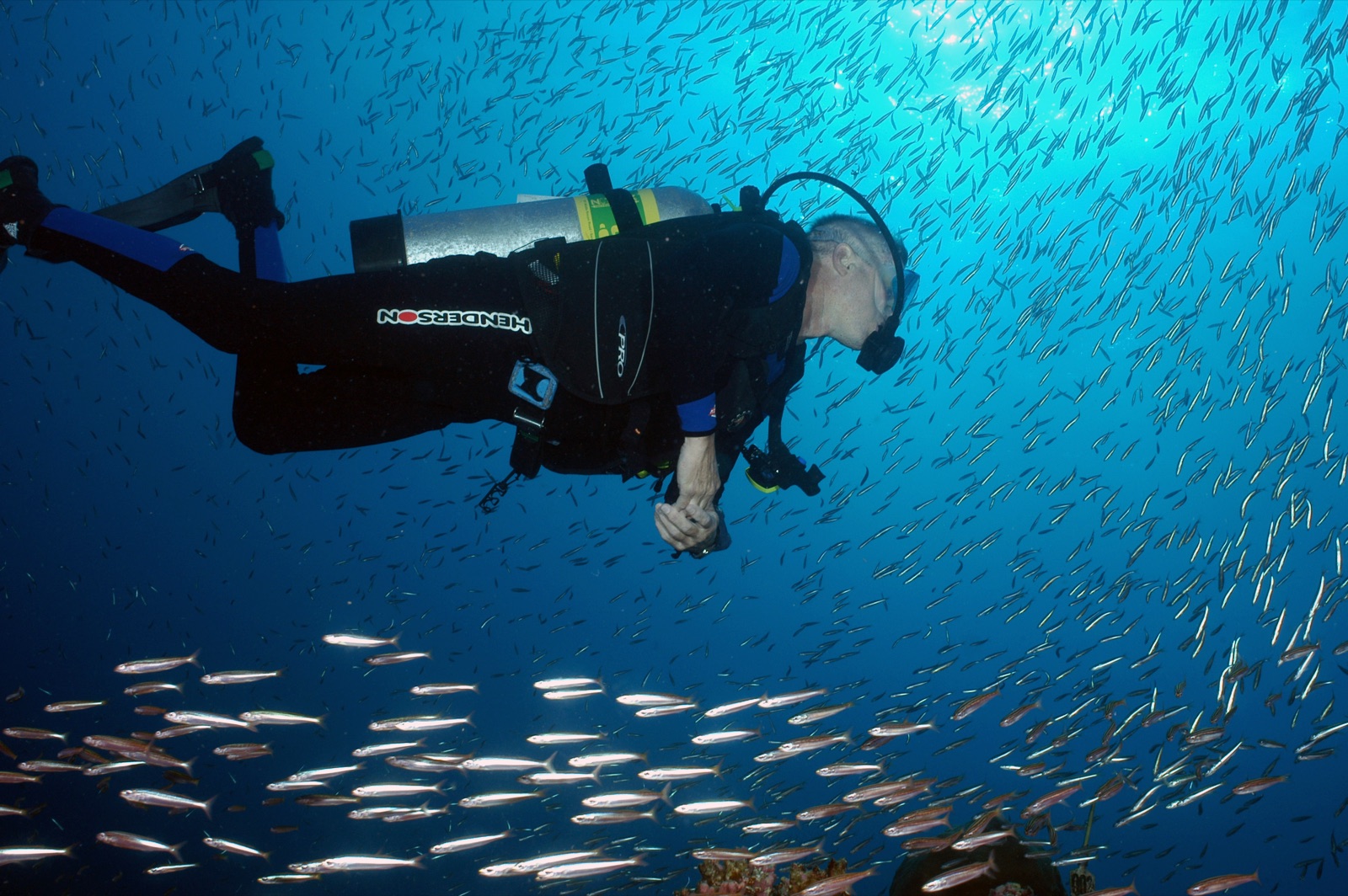
A great wreck destination needs more than a hull on the sand: history you can read in the fabric of the ship, enough intactness to navigate by, and diveable conditions often enough to plan around. One rule travels with this whole list. Several of these ships took lives when they went down, and some are formal war graves. Dive them the way you would walk a battlefield cemetery: take nothing, touch nothing, keep the whooping for the boat.
Chuuk Lagoon, Micronesia
Operation Hailstone sank a Japanese supply fleet here in February 1944, and Chuuk Lagoon now holds dozens of coral-covered wrecks in calm, warm water: holds full of trucks, gas masks, and ordnance. Shallower icons suit any wreck-trained diver; the deep military cargo of the San Francisco Maru sits around 50 m, firmly in technical territory. Remoteness is the price: small flights, simple infrastructure.
The Northern Red Sea, Egypt
Nowhere packs more classic wrecks into a week of easy logistics. The SS Thistlegorm carries motorcycles and locomotives and, deservedly, crowds; the Abu Nuhas reef stacks four cargo wrecks on one sandy slope. The Salem Express, a ferry lost in 1991 with hundreds aboard, is dived by some and skipped by others on principle. If you go, go quietly and stay outside.
Coron, Philippines
A 1944 US carrier raid put a dozen Japanese ships on the bottom of Coron's island-locked bays. Wrecks like the tanker Okikawa Maru offer roomy, trainable penetration at moderate depths, and prices are among the lowest in wreck diving. Visibility runs modest (greenish 5–15 m is normal), which keeps expectations honest.
Scapa Flow, Scotland
The German High Seas Fleet scuttled itself in Scapa Flow in 1919, and the surviving battleships and cruisers remain the greatest naval-history dive in Europe. This is cold, dark, drysuit diving in the 25–45 m band, best approached with experience and ideally a drysuit already mastered. The reward is scale nothing else matches: gun turrets the size of cottages.
Bikini Atoll, Marshall Islands
The ghost fleet of the atomic tests (the carrier USS Saratoga, the battleship Nagato) lies at Bikini Atoll in depths that make decompression routine, so operators run it as a technical destination. Add genuine remoteness and expedition pricing, and this is the wreck diver's summit trip, not the starter.
Espiritu Santo, Vanuatu
The SS President Coolidge, a 199 m ocean liner turned troopship, sank on friendly mines in 1942 and now starts a short swim from shore at Espiritu Santo, from about 20 m at the bow to 70 m at depth. It is a shore dive that will happily out-deep your training; run it with the local guides who know its ladders and lamps.
Malta and Cyprus
The Mediterranean's scuttle-and-sink belt: Malta surrounds itself with prepared wrecks like the tanker Um El Faroud (lost to a fatal 1995 shipyard explosion, later scuttled, and reachable from shore), while Cyprus holds the Zenobia, a ro-ro ferry that sank in 1980 with its trucks still chained aboard. Clear water and low costs; winter swell picks the calendar.
Florida and North Carolina, United States
Florida's Keys scuttled a fleet of giants for divers, led by the 155 m USS Spiegel Grove, while North Carolina pairs the U-boat U-352 with wrecks patrolled by sand tiger sharks. Both are ocean diving with real current and weather cancellations; both convert effort into some of the best warm-blue wreck diving reachable on a US flight.
The Yongala, Australia
The SS Yongala went down with all 122 aboard in a 1911 cyclone and now works as an artificial oasis on open sand: resident giant groupers, sea snakes, eagle rays, bull sharks in season. Penetration is prohibited and the site is exposed; blown-out days are common enough that flexible itineraries win.
The one that waits
Port Sudan's Umbria, an intact 1940 cargo liner still holding munitions, would sit high on this list, but Sudan's conflict has kept the liveaboard season suspended since 2023. Until that changes, it stays a future trip. Wherever you start, build the foundation first: wreck diving basics and honest depth progression beat enthusiasm every time.