Grundlagen · 4 Min. Lesezeit
Choosing a Training Agency
How PADI, SSI, NAUI, RAID, CMAS, BSAC, GUE and TDI/SDI actually differ, why entry-level cards are interchangeable, and what should really drive your choice.
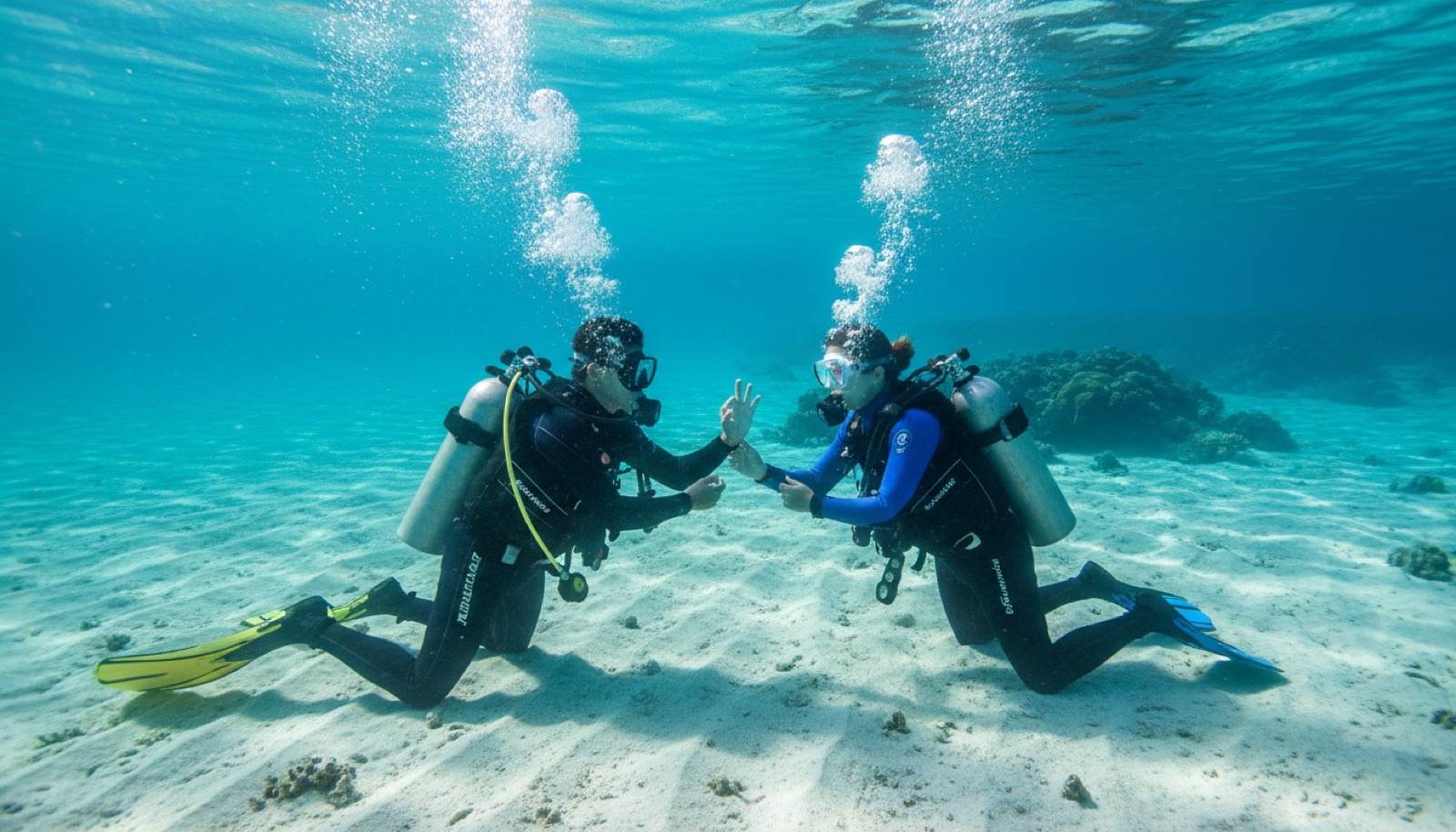
New divers agonize over this decision far more than it deserves, so here is the short version up front: entry-level certifications from every major agency are built to the same international standard (ISO 24801-2 for autonomous diving), every dive shop on earth accepts every major agency's card, and you can switch agencies freely at any later course. The agency question matters less than the instructor question. That said, the organizations do have distinct personalities.
The big recreational agencies
PADI is the largest by a wide margin, with the most dive centers worldwide and polished eLearning; if you certify on vacation, odds are it will be with PADI simply because of availability. SSI, now a close second in many regions, runs a similar curriculum through affiliated dive centers with free digital theory and an app-based logbook many divers prefer. NAUI, one of the oldest agencies, keeps a strong following in North America and gives instructors more latitude in how they teach. RAID is newer, fully digital, and puts unusually early emphasis on buoyancy and trim. All four teach the same core skills to the same depth limits.
The club and specialist traditions
Two European organizations work differently. BSAC, the UK's national club, and CMAS, the international federation behind many national clubs, train divers through member clubs rather than commercial shops: slower, cheaper, more social, and well suited to cold-water divers who want a community rather than a transaction. Their grades map cleanly onto shop-agency equivalents when you travel.
At the demanding end, GUE teaches a single unified system with strict standards, extensive skill benchmarks and a team-diving philosophy; its Fundamentals course is popular even among divers trained elsewhere who want their skills rebuilt properly. TDI is a leading technical-diving agency whose recreational arm, SDI, offers a normal sport-diving path with a modern, computer-first curriculum. These suit divers who already suspect they are headed toward wrecks, caves or deeper technical diving.
What should actually decide it
- The instructor and shop in front of you: group size, patience, recent reviews, and whether they will let you meet the instructor before paying. A superb SSI instructor beats a mediocre PADI one everywhere, and the reverse is equally true.
- Availability where you live and where you travel: continuing education is easiest when nearby shops teach your agency, even though crossovers are simple.
- Format preferences: club pace versus vacation pace, printed materials versus app, cold-water culture versus tropical resort culture.
- Long-term intent: divers who already know they want technical training sometimes start with GUE, TDI/SDI or RAID to avoid changing systems later. It is a convenience, not a requirement.
One practical note on mixing: prerequisites occasionally assume same-agency courses, but every major agency publishes equivalency rules and accepts competitors' certifications for continuing education. A diver with a NAUI Open Water card can take an SSI Advanced course and a TDI nitrox course, and no one blinks. Choose the best teacher available for each course you take, collect cards from whoever employs them, and spend the energy you saved on diving.

