Habilidades · 5 min de lectura
Cold-Water Diving
Kelp forests, wolf eels and wrecks in green water: what actually changes below about 15 °C (exposure protection, weighting, regulators and dive planning) and why cold-water divers rate their home seas so highly.
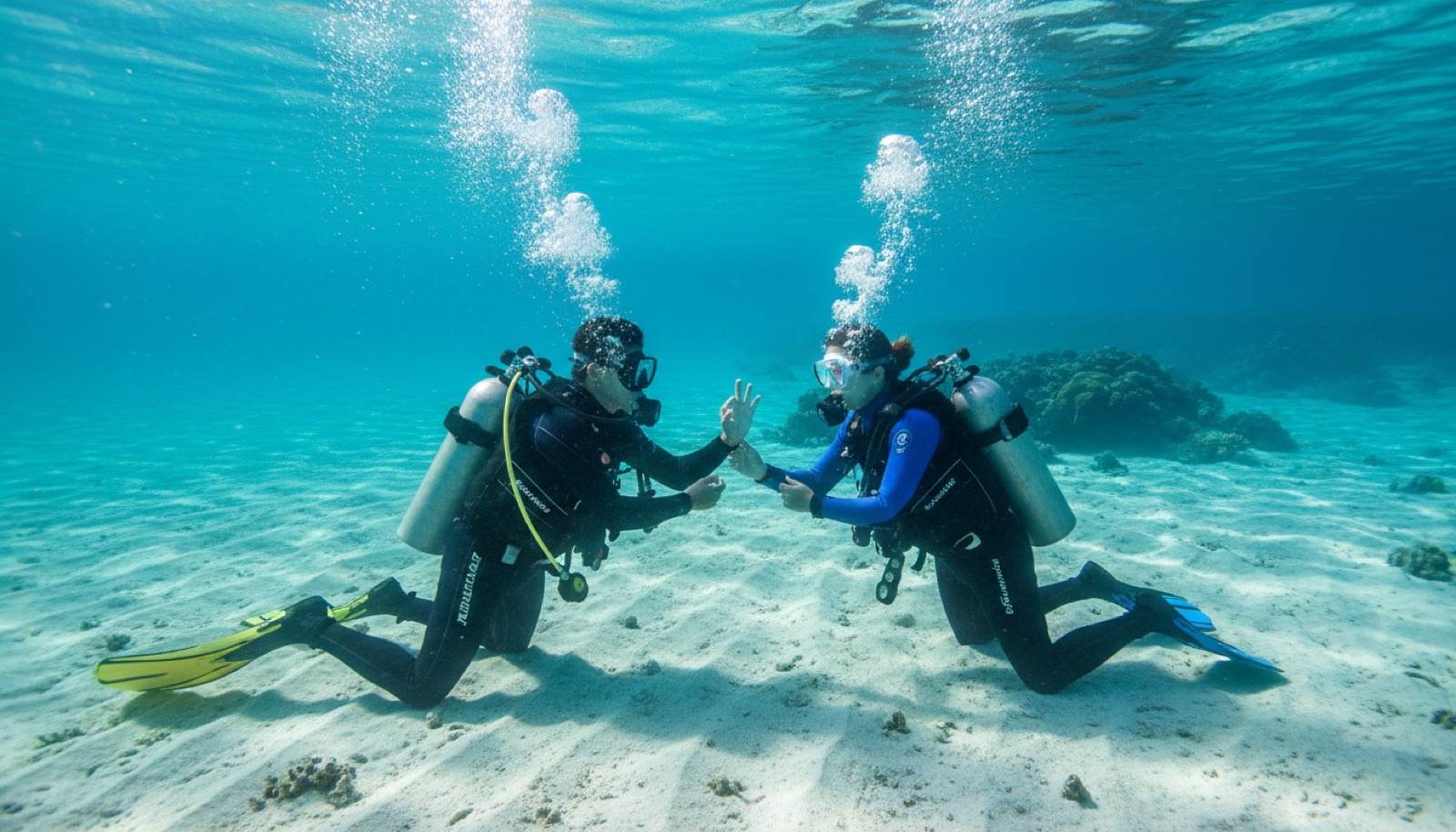
Ask a British Columbia or Scapa Flow regular why they dive in water that makes tropical divers wince and the answer is always the same: the diving is superb. Emerald kelp forests, giant Pacific octopus and wolf eels, seals that play with fins, intact century-old wrecks preserved by the cold, the cathedral clarity of Silfra's glacial water, South Australia's seadragons: cold seas hold life and history the tropics simply do not have. The price of entry is technique and equipment: cold changes diving in specific, manageable ways.
Exposure protection sets the terms
Somewhere below the low twenties Celsius, a thin tropical suit stops being enough; by the mid-teens most divers want a 7 mm wetsuit or semi-dry with hood, gloves and boots, and below roughly 10–15 °C the drysuit becomes the standard answer: a watertight shell over insulating undergarments, keeping you dry rather than warming trapped water. Drysuits bring their own skill set: the suit is a second buoyancy volume, inflated on descent and vented on ascent, and agencies teach a drysuit specialty precisely because runaway feet-up ascents and squeeze are learnable, avoidable problems. Hoods deserve their own respect (they compress ear-covering neoprene, so equalization wants a little more patience), and thick gloves cost dexterity, which is why cold-water divers rehearse clip-handling and computer buttons wearing them, on land, before the season.
The knock-on effects
- Weighting rises substantially: all that neoprene or undergarment loft floats, and a cold-water rig can need double a tropical ballast load. Redo the weight check properly with each configuration; guessing wastes gas and control.
- Regulators need to be cold-water rated: environmentally sealed first stages resist the free-flow risk that comes with frigid water and high gas flows. Anti-freeze-flow habits are taught alongside: do not breathe off a regulator at the surface in freezing air any longer than needed, and know the free-flow-breathing drill from your course.
- Air consumption climbs (cold bodies burn fuel) and dives shorten accordingly; plan gas and time around the diver you are at 8 °C, not the one you were in Indonesia.
- The cold itself is a dive-management input: shivering degrades attention and grip, and mainstream teaching treats being genuinely cold during the later, off-gassing phase of a dive as something to avoid, not endure. End dives while still comfortable; two shorter dives with a warm interval beat one long chilled one.
Making the transition well
Do it with structure: a drysuit course if a drysuit is involved, a local orientation dive with a club or shop that knows the site, and conservative first profiles while your weighting, mobility and mindset recalibrate. Everything feels slower and bulkier for a few dives, and then it does not. Copy the locals' logistics, which are half the sport in cold regions: flasks of something hot, wind protection for surface intervals, changing mats and dry gloves, gear staged so the cold window between suit-up and splash stays short. Respect the environments that come with the temperature: kelp wants slow movement and a cutting tool within reach, green-water visibility wants tighter buddy contact and lights even by day, and tides rule many temperate sites the way they rule Scapa. The reward structure is real: skills sharpened by thicker gloves and greener water transfer everywhere, the sites are uncrowded, and a diver comfortable at 8 °C owns the whole map, not the warm half of it.

