Konservasi · 5 menit baca
Coral Bleaching, Explained Properly
Bleached coral is starving, not dead (yet). The symbiosis that fails under heat stress, how scientists measure it, the global record so far, and what divers can usefully do.
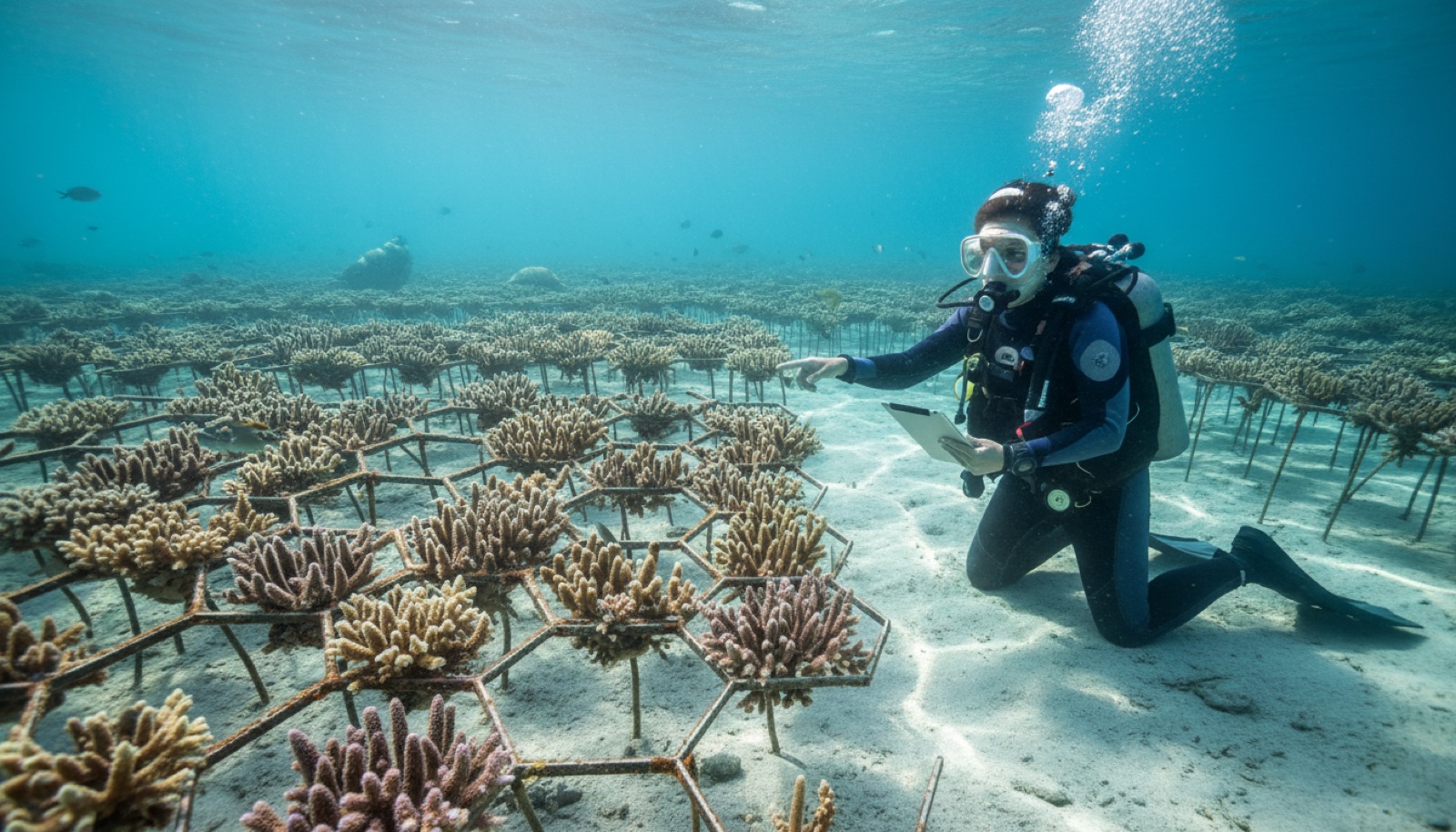
A bleached reef is a shocking thing to swim over: acres of structure gone bone white, like a photograph with the color layer deleted. To read that scene correctly you need one fact most news coverage skips: white coral is not dead coral. It is coral in crisis, starving in the open, with the outcome still undecided. Understanding why starts with the strangest partnership in the sea.
A symbiosis, and how it breaks
A coral is an animal, a colony of tiny polyps, hosting microscopic algae inside its tissues. The algae photosynthesize and hand the coral the majority of its energy, and they carry most of the pigment; the coral in return provides shelter and nutrients. Heat breaks the deal. When water runs sustained a degree or so above the normal local summer maximum, the algae's photosynthetic machinery begins producing damaging compounds, and the coral expels its own food supply. What remains is transparent living tissue over white limestone skeleton: bleached.
Starving, not dead
If temperatures fall within a few weeks, corals can regain their algae and recover, sometimes fully. If the heat persists, they starve, sicken, and die, and colonies that took centuries to grow are lost in a season. Species differ (branching corals tend to bleach first, massive boulder corals hold out longer), and researchers are genuinely interested in heat-tolerant corals and symbiont types that cope better, one of the field's few hopeful threads.
How it is measured, and the record so far
Scientists track heat stress in degree heating weeks, a running total of how far and how long temperatures exceed the local bleaching threshold; roughly four such weeks make significant bleaching likely, and around eight bring risk of widespread mortality. Satellites monitor this globally in near real time. The record they describe is blunt: mass global bleaching events in 1998, 2010, and 2014–2017, and a fourth global event declared by US and international reef bodies in April 2024. The Great Barrier Reef has logged repeated mass events since 2016, including bleaching in a La Niña year once considered the reef's cool refuge. Local stressors (nutrient runoff, sediment, overfishing of grazing fish, crown-of-thorns outbreaks) do not cause mass bleaching, but they load the dice against recovery.
What a diver can usefully do
- Dive stressed reefs with exaggerated care: perfect buoyancy, nothing touched, fins well clear. Bleached colonies are fighting for their lives.
- Record what you see: bleaching-survey programs run by reef science groups turn dive observations into monitoring data.
- Choose operators that use moorings, brief on reef contact, and support local protection.
- Reduce the local stressors you touch directly, and be honest about the global one: the trajectory of bleaching is set by how fast the ocean warms, and no amount of good fin technique changes that alone.
None of that is despair: reefs given clean water, intact fish populations, and breathing room between heatwaves recover measurably better. It is simply the real shape of the problem, and divers who can read a white reef are among its most credible witnesses.

