技术要求 · 5 分钟阅读
Deep Diving Within Recreational Limits
What changes between 18 and 40 meters (gas, time, narcosis and margins) and how training and planning turn the deeper band into ordinary, unhurried diving.
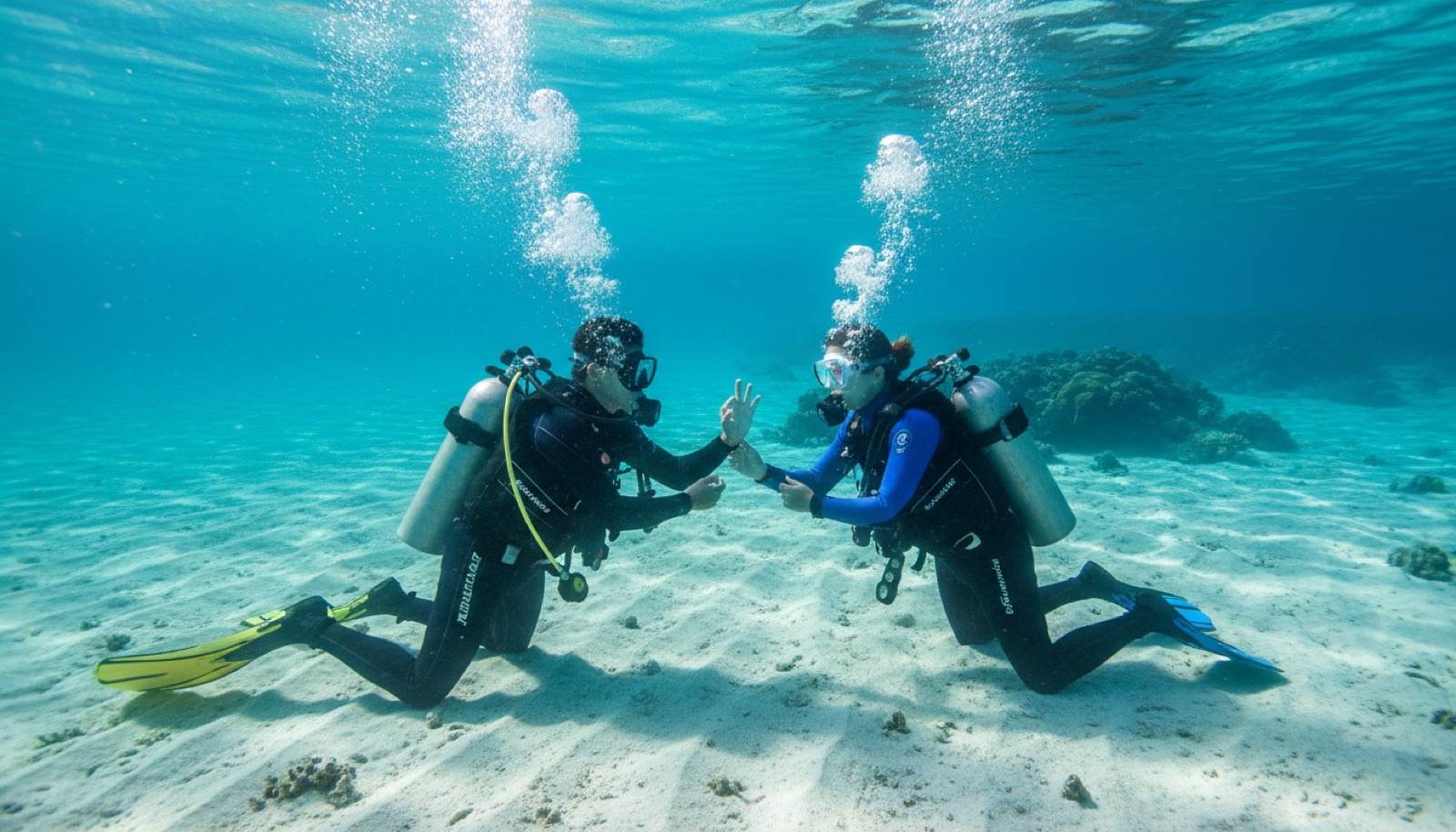
Depth is the most seductive number in diving and the least informative. Nothing magical lives at 40 meters that is absent at 25; what deep sites offer is specific things that happen to be deep: the intact stern of a wreck like the Yongala's deeper sections, the cleaning stations where Malapascua's thresher sharks rise out of blue water at dawn, a wall's black-coral zone. Diving deeper well means understanding exactly what changes on the way down, because every one of those changes compounds the others.
The four things depth actually changes
- Gas goes faster. At 30 meters you breathe four times the surface quantity per breath; a tank that lasts an hour at 10 meters lasts a fraction of that. Deep dives are short by physics before they are short by rules.
- Allowed time shrinks. No-decompression limits at 30 meters run to roughly twenty minutes on air and single digits at 40; the deeper band is a visit, not a stay, and the computer's countdown becomes the dive's metronome.
- Narcosis arrives. From around 30 meters most divers carry some cognitive fog (slower thinking, fixation, mood shifts), manageable by keeping tasks simple and by the universal cure of ascending a few meters.
- Margins thin. The surface is further, direct ascents take minutes, and small problems have more time to grow. This is why redundancy thinking (conservative gas rules, tight buddy discipline, rehearsed procedures) scales with depth.
The framework agencies teach
Recreational deep diving lives between the entry-level 18 meter limit, the 30 meter Advanced Open Water envelope, and the hard recreational ceiling of 40 meters reached via deep specialty training. The courses are not formalities: they cover planning gas around a rock-bottom reserve that can get two divers to the surface with stops from maximum depth, managing narcosis on supervised deep dives, contingency planning for accidental deco obligations, and the discipline of the square-ish profile (descend, do the thing, leave, ascend slowly, stop). Nitrox deserves a specific mention because its role reverses down here: enriched air extends no-deco time beautifully in the 18–30 meter band, but oxygen limits cap its maximum depth (a standard 32 percent mix runs out of legal depth around 33 meters at the taught PO2 limit), so deep-and-nitrox is a pairing you plan deliberately, mix by mix, not a default. Beyond 40 meters lies technical diving, with different gases, redundant equipment and staged decompression; the recreational limit is the start of that world, not a dare.
Habits of good deep divers
Plan backwards from the exit: decide the gas pressure at which the ascent begins, generously, before deciding anything else, and treat the deepest point as the first stop on the dive rather than the destination you linger at. Front-load the depth: deepest early, then work shallower, which spends nitrogen loading efficiently and keeps options open. Descend on a reference where possible, equalizing early, and arrive at depth composed rather than task-loaded. Keep jobs at depth to one or two (a photograph, a look under the stern) because narcosis taxes everything else. Ascend like a professional: computer-paced, with the safety stop treated as non-negotiable and, as many deep divers practice, unhurried extra minutes in the shallows. And be honest about conditions: 35 meters in warm, clear, still water and 35 meters in cold green current are different dives wearing the same number. Built this way, deep diving loses its edge of bravado and becomes what it should be: a calm, brief, well-planned visit to the parts of the ocean that happen to live further down.

