Basics · 4 min read
Age Requirements for Scuba Diving
Minimum ages, junior certification limits and supervision rules across the major agencies, plus a realistic word on the other end of the age range.
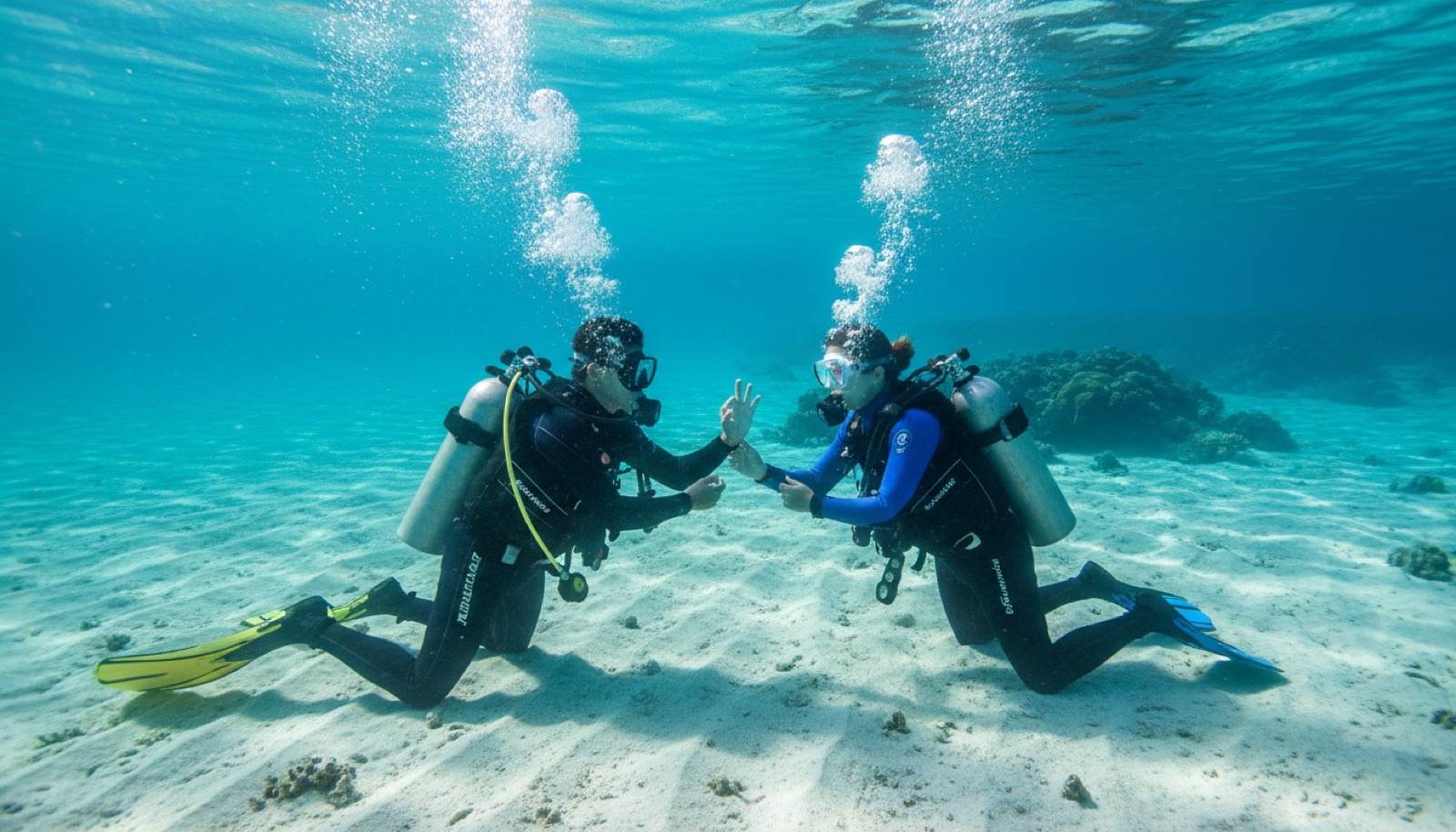
Scuba has a lower age floor than most parents expect and no upper ceiling at all, but the details between those two facts are where families need to pay attention, because junior certifications come with depth and supervision rules that vary by age band and agency.
The younger end, step by step
- Around age 8, the big agencies offer pool-only introduction programs (PADI's Bubblemaker and Seal Team, SSI's Scuba Rangers), shallow, playful, and instructor-supervised throughout. No certification results, and none is claimed.
- From age 10, PADI, SSI and several others issue Junior Open Water certifications after the same course adults take. The card carries restrictions: 10 and 11 year olds typically dive to a maximum of 12 meters and only with a parent, guardian or dive professional.
- From 12 to 14, junior divers may generally dive with any certified adult, with a maximum depth of 18 meters at the junior Open Water level; junior Advanced certifications extend this to about 21 meters. Exact figures differ slightly between agencies, so check the one you train with.
- At 15, most agencies automatically treat the junior card as a full Open Water certification; an updated card can be requested, but the qualification upgrades regardless.
- Some organizations simply start later: BSAC, for example, begins entry-level training at 12, and minimum ages for professional-level ratings sit at 18 everywhere.
A quiet but important point for parents: age minimums are eligibility, not a recommendation. Agencies set 10 as the floor because some 10 year olds handle the cognitive load (monitoring a gauge, remembering procedures, acting sensibly when startled) and some do not. Instructors can and do decline or pause a child's training when maturity is not there yet, and a good instructor telling you to wait a year is doing you a favor. There is no prize for earliest certification, and a frightened first experience can close a door that patience would have kept open.
Teenagers and course progression
From 15 up, teenagers train exactly as adults do, and courses like Rescue Diver are open in junior form from 12 with most agencies. The practical constraints are usually parental: junior divers cannot sign their own medical forms or liability releases, some liveaboards and remote-destination operators set their own higher minimum ages regardless of certification, and travel insurance for dive activities may have age clauses worth reading before booking a family trip.
The older end
There is no maximum age in any agency's standards, and dive boats everywhere carry active divers in their seventies and eighties. What changes with age is the weight of the medical questionnaire: cardiovascular history, medications and general fitness deserve honest answers and, where flagged, a physician's evaluation, ideally from a doctor familiar with dive medicine. Many older divers also self-impose sensible adjustments: shallower profiles, warmer water, lighter gear carried by crew, nitrox for conservatism within computer limits, and an unhurried pace. Diving rewards exactly the temperament experience brings, which is why the sport's demographic curve stretches so far to the right.
The one-line summary for families: pool programs from 8, restricted junior cards from 10, near-adult status from 12, full status at 15, and no finish line after that, with an instructor's judgment and an honest medical form outranking the birthday math at every step.