基本情報 · 4 分で読めます
Swim and Fitness Requirements
The actual water-skills tests behind entry-level certification, what counts as fit enough to dive, and honest options if swimming is your weak point.
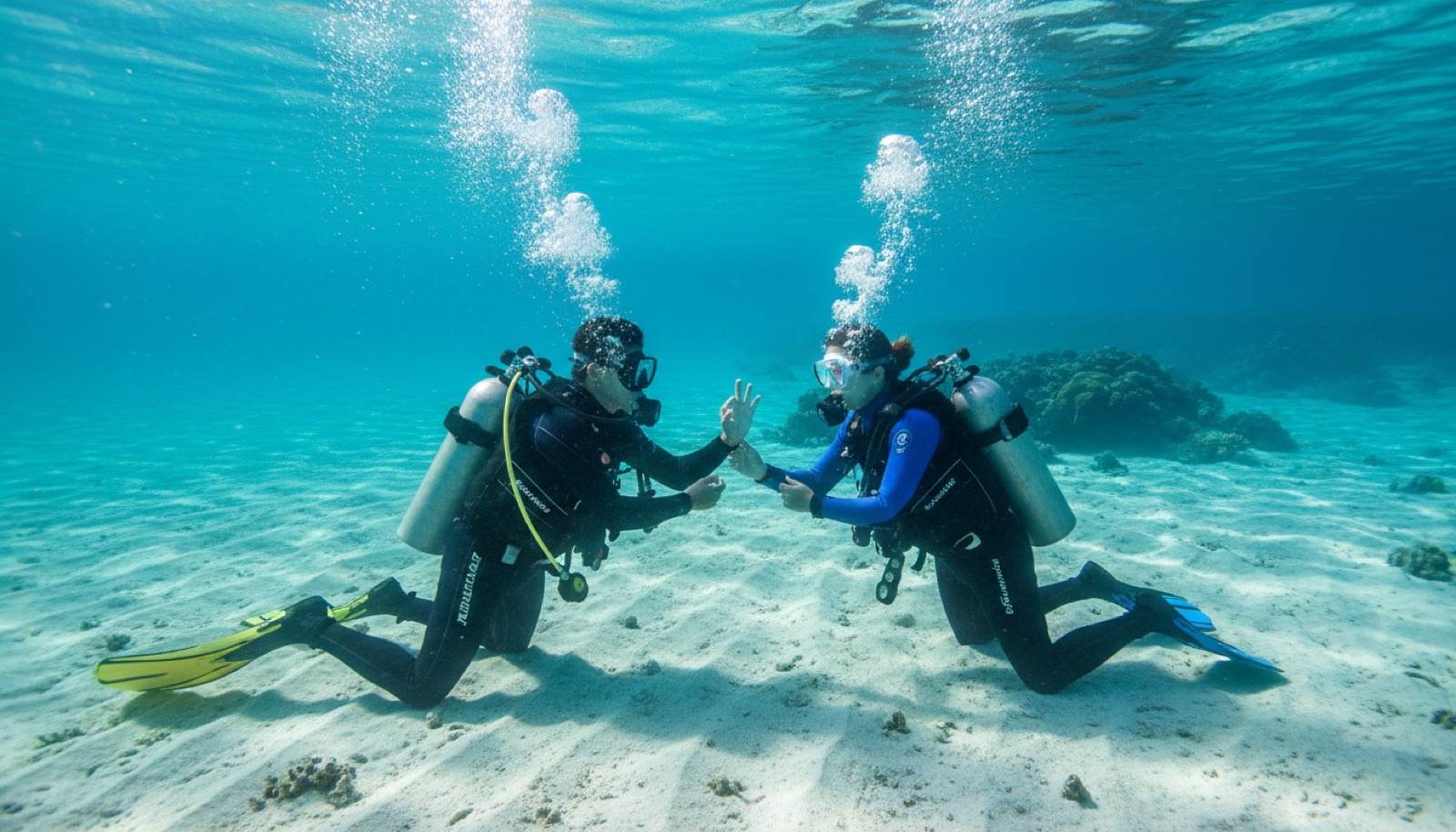
You do not need to be an athlete to earn a scuba certification, but you do need to be genuinely comfortable in water, and the agencies test this with two specific requirements that surprise people who assumed diving was all floating. Knowing them in advance turns a potential course-day embarrassment into a non-event.
The two water-skills tests
Entry-level standards at PADI, SSI and their peers require, first, a continuous 200 meter swim with no aids and no time limit, or, alternatively, 300 meters wearing mask, snorkel and fins. Any stroke counts, resting by floating is generally acceptable as long as you do not touch the bottom or the side, and slow is fine; the point is sustained comfort, not speed. Second, you must float or tread water for 10 minutes without support. Both are usually done in the pool on the first day.
The snorkel-swim alternative matters more than it looks. Plenty of competent, water-happy people have inefficient strokes, and 300 meters with fins is easier for most of them than 200 without. If your freestyle is rusty, simply ask the shop to use the mask-snorkel-fins option: it is standard, not a concession.
What fit enough actually means
Recreational diving is mostly low-exertion (slow finning, long exhales, deliberate movement), punctuated by occasional real demands: a surface swim against chop, climbing a boat ladder in 20 kilograms of gear, helping a buddy in current. Fitness for diving means handling those spikes without going to pieces. If you can swim the requirement, walk up several flights of stairs with a heavy backpack, and carry gear across a beach, you are in the normal range for the sport.
Health is a separate axis from fitness, and the medical questionnaire handles it: conditions such as heart disease, some respiratory issues and some medications route you to a physician, ideally one versed in dive medicine, for evaluation before training. Being lean and sporty does not skip that step, and being older or heavier does not fail it. Divers in their seventies pass physician review routinely; the questionnaire cares about specific risk factors, not appearance.
If swimming is the obstacle
- Book a few adult swim lessons before the course. Two or three sessions focused on relaxed, sustainable strokes are usually enough to cover 200 meters, and the confidence transfers directly to diving.
- Practice the 10 minute float in advance: most non-swimmers discover treading is the easier of the two tests once someone shows them a relaxed sculling rhythm.
- Tell the shop honestly where you stand. Instructors schedule pool time differently for a nervous swimmer, and a good one would far rather know on day zero.
- Do not aim for a try-dive as a permanent workaround; supervised intro dives still assume basic water comfort, and certification standards exist because divers occasionally must handle themselves at the surface without help.
The requirements are a floor, not a finish line. Divers who keep a little swimming in their routine, even 20 minutes weekly, find everything downstream easier: air consumption drops, surface swims stop being dramatic, and the sport stays open to them for decades.

