Khám phá nơi lặn, thời điểm nên đi và những gì bạn có thể thấy.

Khám phá nơi lặn, thời điểm nên đi và những gì bạn có thể thấy.
★
Menu
Điểm đến Điểm lặn Sinh vật biển Xác tàu Tin tức
Lên kế hoạch chuyến đi Lập kế hoạch chuyến đi Thời điểm lặn Bộ tính chi phí So sánh Lịch sinh vật biển Nhiệt độ nước Liveaboard Nhà điều hành & khu nghỉ dưỡng Công viên biển Buồng giảm áp (hyperbaric) Bản đồ thế giới
Lặn hang động Tất cả về lặn hang Điểm đến & Địa điểm lặn Hệ thống hang & bản đồ Huấn luyện & Chứng chỉ Trung tâm lặn & Hướng dẫn viên Thiết bị & Công nghệ Nghiên cứu an toàn & sự cố Khoa học, Lịch sử & Bảo tồn Tài nguyên & Cập nhật
Các khu vực Úc, New Zealand & Đông ÁCaribe & Tây Đại Tây DươngChâu Âu, Đại Tây Dương & Địa Trung HảiẤn Độ Dương & Đông PhiCác đảo Thái Bình Dương & MicronesiaBiển Đỏ & Trung ĐôngĐông Nam Á & Tam giác San hôChâu Mỹ & Thái Bình Dương phía Đông Quốc gia
Học & Công cụ Tất cả hướng dẫn Các chứng chỉ Hướng dẫn thiết bị Video Hỏi Dữ Liệu AI Agents API
Giới thiệu Về chúng tôi Phương pháp luận Tuyên bố miễn trách nhiệm Liên hệ
Chế độ xem của bạn
★ Đã lưu

Các điểm đến, địa điểm lặn và loài bạn đã đánh dấu sao, được lưu trên trình duyệt này.

API GATEWAY

Truy cập JSON chỉ đọc miễn phí vào dữ liệu đã lưu cache của atlas.

Chế độ tối

Chế độ Hướng dẫn
Mới bắt đầu lặn? Độ sâu, dòng chảy, cấp độ chứng chỉ? Chúng tôi giải thích mọi thuật ngữ khi bạn duyệt, bằng ngôn ngữ dễ hiểu. Cùng dữ liệu, với phần hỗ trợ được tích hợp sẵn.

Chế độ Chuyên gia
Bạn đã biết sự khác biệt giữa lặn vách và drift dive. Chỉ dữ liệu: gọn, nhanh và súc tích. Đây là chế độ xem mặc định.

Ngôn ngữ giao diện

Cơ bản · 4 phút đọc

Swim and Fitness Requirements

The actual water-skills tests behind entry-level certification, what counts as fit enough to dive, and honest options if swimming is your weak point.
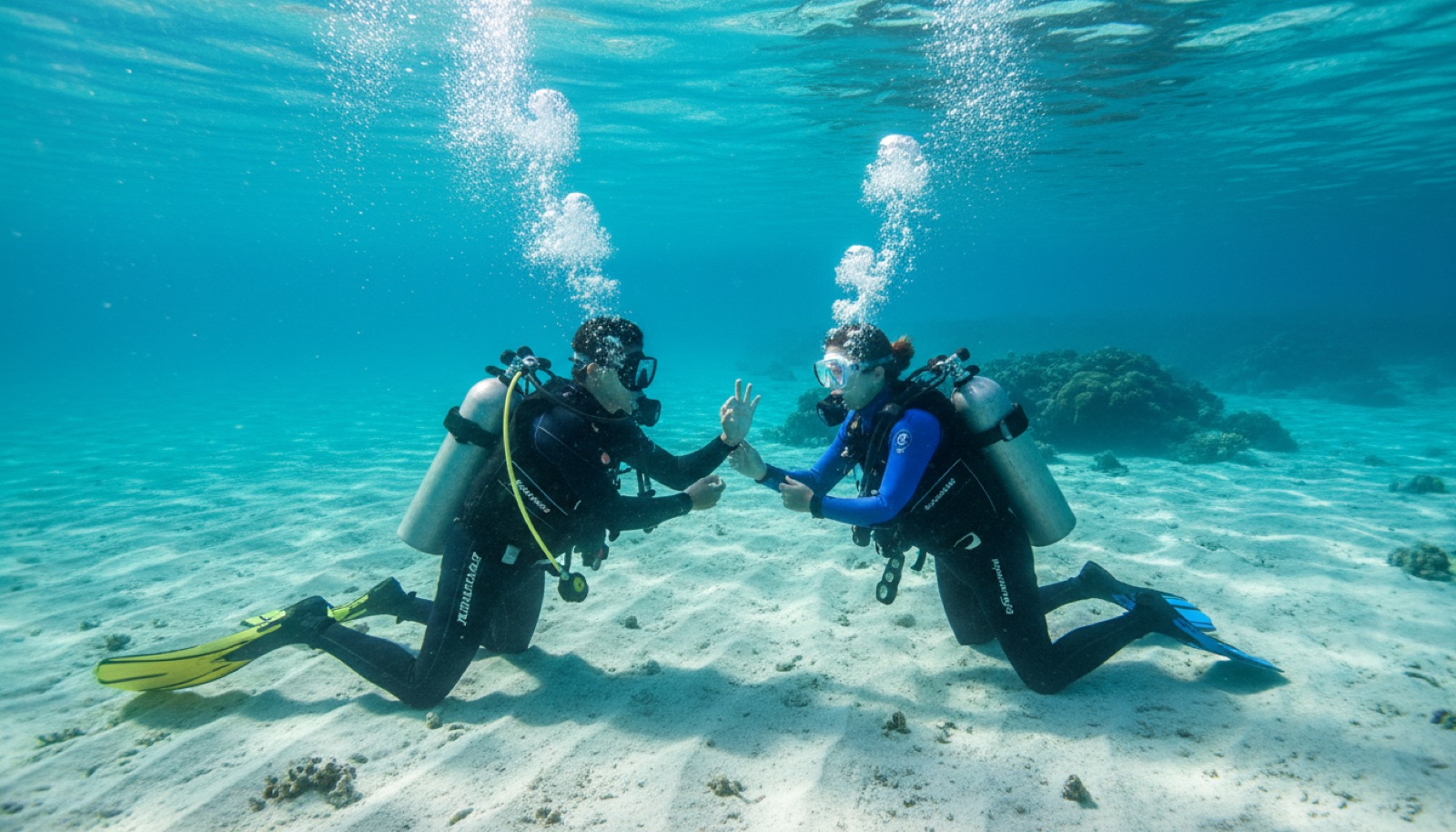
Hình minh họa do AI tạo ra cho Scuba Guide: mang tính minh họa, không phải ảnh tư liệu thực tế.

You do not need to be an athlete to earn a scuba certification, but you do need to be genuinely comfortable in water, and the agencies test this with two specific requirements that surprise people who assumed diving was all floating. Knowing them in advance turns a potential course-day embarrassment into a non-event.

The two water-skills tests

Entry-level standards at PADI, SSI and their peers require, first, a continuous 200 meter swim with no aids and no time limit, or, alternatively, 300 meters wearing mask, snorkel and fins. Any stroke counts, resting by floating is generally acceptable as long as you do not touch the bottom or the side, and slow is fine; the point is sustained comfort, not speed. Second, you must float or tread water for 10 minutes without support. Both are usually done in the pool on the first day.

The snorkel-swim alternative matters more than it looks. Plenty of competent, water-happy people have inefficient strokes, and 300 meters with fins is easier for most of them than 200 without. If your freestyle is rusty, simply ask the shop to use the mask-snorkel-fins option: it is standard, not a concession.

What fit enough actually means

Recreational diving is mostly low-exertion (slow finning, long exhales, deliberate movement), punctuated by occasional real demands: a surface swim against chop, climbing a boat ladder in 20 kilograms of gear, helping a buddy in current. Fitness for diving means handling those spikes without going to pieces. If you can swim the requirement, walk up several flights of stairs with a heavy backpack, and carry gear across a beach, you are in the normal range for the sport.

Health is a separate axis from fitness, and the medical questionnaire handles it: conditions such as heart disease, some respiratory issues and some medications route you to a physician, ideally one versed in dive medicine, for evaluation before training. Being lean and sporty does not skip that step, and being older or heavier does not fail it. Divers in their seventies pass physician review routinely; the questionnaire cares about specific risk factors, not appearance.

If swimming is the obstacle

  • Book a few adult swim lessons before the course. Two or three sessions focused on relaxed, sustainable strokes are usually enough to cover 200 meters, and the confidence transfers directly to diving.
  • Practice the 10 minute float in advance: most non-swimmers discover treading is the easier of the two tests once someone shows them a relaxed sculling rhythm.
  • Tell the shop honestly where you stand. Instructors schedule pool time differently for a nervous swimmer, and a good one would far rather know on day zero.
  • Do not aim for a try-dive as a permanent workaround; supervised intro dives still assume basic water comfort, and certification standards exist because divers occasionally must handle themselves at the surface without help.

The requirements are a floor, not a finish line. Divers who keep a little swimming in their routine, even 20 minutes weekly, find everything downstream easier: air consumption drops, surface swims stop being dramatic, and the sport stays open to them for decades.
Được ghi chép đầy đủ

Xem

Từ kênh chính thức

Tất cả video →

Cavern and Limited Mine: Understanding SSI’s New Extended Range Overhead…

SSI International · YouTube ↗ · Oct 06

How to make sushi rice at home

Monterey Bay Aquarium · YouTube ↗ · Sep 30

Video là các liên kết nhúng dẫn đến kênh của chính tác giả. Chúng tôi không lưu trữ gì và ghi công đầy đủ.

Úc, New Zealand & Đông Á

Cairns & the Ribbon ReefsNingaloo ReefCoral Sea & Osprey ReefOkinawa & the Kerama IslandsPoor Knights IslandsTownsville & the YongalaGreen IslandIzu Peninsula

Caribe & Tây Đại Tây Dương

BonaireCozumelRiviera Maya & the CenotesBelize Barrier ReefGrand CaymanIsla Mujeres & CancúnRoatánTiger Beach & Grand Bahama

Châu Âu, Đại Tây Dương & Địa Trung Hải

Malta & GozoSilfra & IcelandThe AzoresCanary IslandsLarnaca & the ZenobiaScapa FlowArctic NorwayMadeira

Ấn Độ Dương & Đông Phi

North & South Malé AtollsAri AtollBaa Atoll & Hanifaru BayAliwal Shoal & UmkomaasMafia IslandMauritiusSeychellesSodwana Bay

Các đảo Thái Bình Dương & Micronesia

PalauChuuk (Truk) LagoonFakaravaKona, HawaiʻiRangiroaTaveuni & Rainbow ReefBeqa Lagoon & Pacific HarbourEspiritu Santo

Biển Đỏ & Trung Đông

Sharm El Sheikh & Ras MohammedBrothers, Daedalus & St John'sDahabHurghada & El GounaMarsa Alam & the Deep SouthAqabaDaymaniyat IslandsMusandam Peninsula

Đông Nam Á & Tam giác San hô

Bali & Nusa PenidaKomodoRaja AmpatSipadan & MabulAnilaoCoronKoh TaoLembeh Strait

Châu Mỹ & Thái Bình Dương phía Đông

Galápagos IslandsCocos IslandFlorida KeysSea of Cortez & Cabo PulmoSocorro & the RevillagigedosBritish ColumbiaCalifornia Channel IslandsCosta Rica Pacific Coast