Naturschutz · 4 Min. Lesezeit
Why Divers Touch Nothing
The no-touch rule protects the reef from you and you from the reef. What a single contact does to coral, what coral does back to careless hands, and why buoyancy is the real fix.
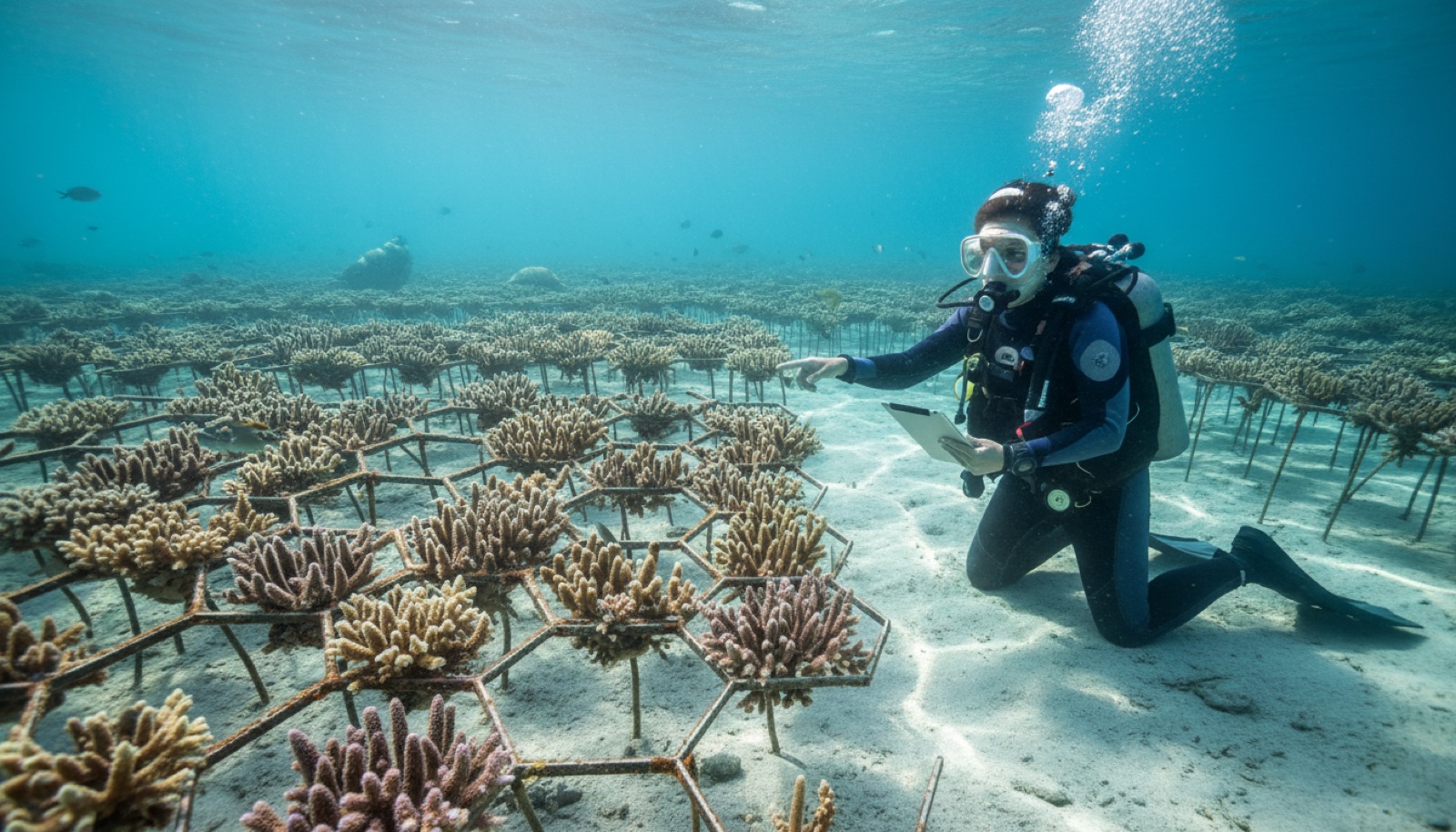
It is the first rule of reef diving and the most broken: touch nothing. Divers hear it as etiquette, which undersells it badly. The no-touch rule is two safety rules wearing one wetsuit: it protects a living surface that damages easily, and it protects the diver from a living surface that fights back.
What one touch does to the reef
Stony corals are colonies of small animals wearing a thin layer of living tissue over their skeleton, protected by a mucus coating that fends off infection. A hand, a knee, or a dragging gauge crushes polyps and breaches that barrier, opening the door to disease and algae at the wound. The mathematics are unforgiving: a boulder coral may add less than a couple of centimeters a year, so a moment's steadying grip can undo decades, and a busy site absorbs thousands of diver contacts a season. Even without breakage, repeated handling stresses animals that budget every joule: a fish handled loses protective slime coat, an octopus prodded from its den spends energy it needed for hunting.
What the reef does to you
Self-interest argues the same case. Fire coral and stinging hydroids look like harmless fuzz and sting like regret. Scorpionfish and stonefish are camouflage perfected: the hand that finds them finds venomous spines, and stonefish envenomation is a medical emergency. Sea urchins spike careless knees, bristle worms reward pokes, and a titan triggerfish guarding its nest will charge a diver hovering over the wrong patch of rubble. Most marine-life injuries to divers are defensive, and most begin with a human hand arriving first.
Buoyancy is the actual rule
Nearly every reef contact is a buoyancy or awareness failure wearing an excuse. The genuine fixes are unglamorous: weight yourself correctly, get trim flat so fins ride high, look down before you descend, keep a respectful meter of clearance in surge, and learn the back kick so you can retreat without turning. Streamline your kit so no gauge or octopus hose drags a furrow through the coral. If a current genuinely demands stabilization and local rules permit it, a single fingertip or a pointer placed deliberately on bare, dead rock is the accepted technique: chosen, momentary, and never on anything living. Where reef hooks are sanctioned for strong-current hangs, use them as taught, on dead substrate.
Gloves, sticks, and culture
Many marine parks ban gloves precisely to make hands feel consequential, and ban muck sticks that get used as crowbars. Respect both rules and their reasoning: tools that make touching comfortable make touching common. Culture completes the loop: guides who grip coral teach forty divers a week that gripping coral is normal, so choose operators whose staff dive hands-off and take the hint yourself. The same discipline extends to your equipment: clip and stow every dangling hose and gauge, because a console dragged across a reef is a touch you never felt making. On a healthy reef the winning move is the one that looks like nothing: hovering quietly, hands folded, close enough to see everything and touching none of it.

