Nerede dalış yapacağınızı, ne zaman gideceğinizi ve neler görebileceğinizi keşfedin.

Nerede dalış yapacağınızı, ne zaman gideceğinizi ve neler görebileceğinizi keşfedin.
★
Menü
Destinasyonlar Dalış Noktaları Deniz Yaşamı Batıklar Haberler
Gezi planla Gezi planlayıcı Dalış için en iyi zaman Maliyet hesaplayıcısı Karşılaştırmalar Deniz canlıları takvimi Su sıcaklığı Liveaboard'lar Operatörler & tatil köyleri Deniz parkları Hiperbarik merkezler Dünya haritası
Mağara dalışı Tüm mağara dalışları Destinasyonlar ve Dalış Noktaları Mağara Sistemleri ve Haritalar Eğitim ve Sertifikalar Dalış Merkezleri ve Rehberler Ekipman ve Teknoloji Güvenlik ve Olay Araştırması Bilim, Tarih ve Koruma Kaynaklar ve Güncellemeler
Bölgeler Avustralya, Yeni Zelanda ve Doğu AsyaKarayipler ve Batı AtlantikAvrupa, Atlantik & AkdenizHint Okyanusu ve Doğu AfrikaPasifik Adaları & MikronezyaKızıldeniz & Orta DoğuGüneydoğu Asya & Mercan ÜçgeniAmerika & Doğu Pasifik Ülkeler
Öğren ve Araçlar Tüm rehberler Sertifikasyonlar Ekipman rehberleri Videolar Veriye Sor Yapay Zeka Ajanları API
Hakkında Hakkımızda Metodoloji Sorumluluk Reddi İletişim
Görünümün
★ Kaydedildi

Yıldızladığınız destinasyonlar, dalış noktaları ve türler; bu tarayıcıda saklanır.

API GATEWAY

Atlasın önbelleğe alınmış verilerine ücretsiz salt okunur JSON erişimi.

Karanlık mod

Rehberli Görünüm
Dalışa yeni mi başladınız? Derinlikler, akıntılar, sertifika seviyeleri? Gezinirken her terimi sade bir dille açıklıyoruz. Aynı veriler, yardım dahil.

Uzman Görünümü
Duvar dalışı ile drift dive arasındaki farkı zaten biliyorsunuz. Sadece veriler: sade, hızlı ve kompakt. Bu varsayılan görünümdür.

Arayüz dili

Koruma · 4 dk okuma

Why Divers Touch Nothing

The no-touch rule protects the reef from you and you from the reef. What a single contact does to coral, what coral does back to careless hands, and why buoyancy is the real fix.
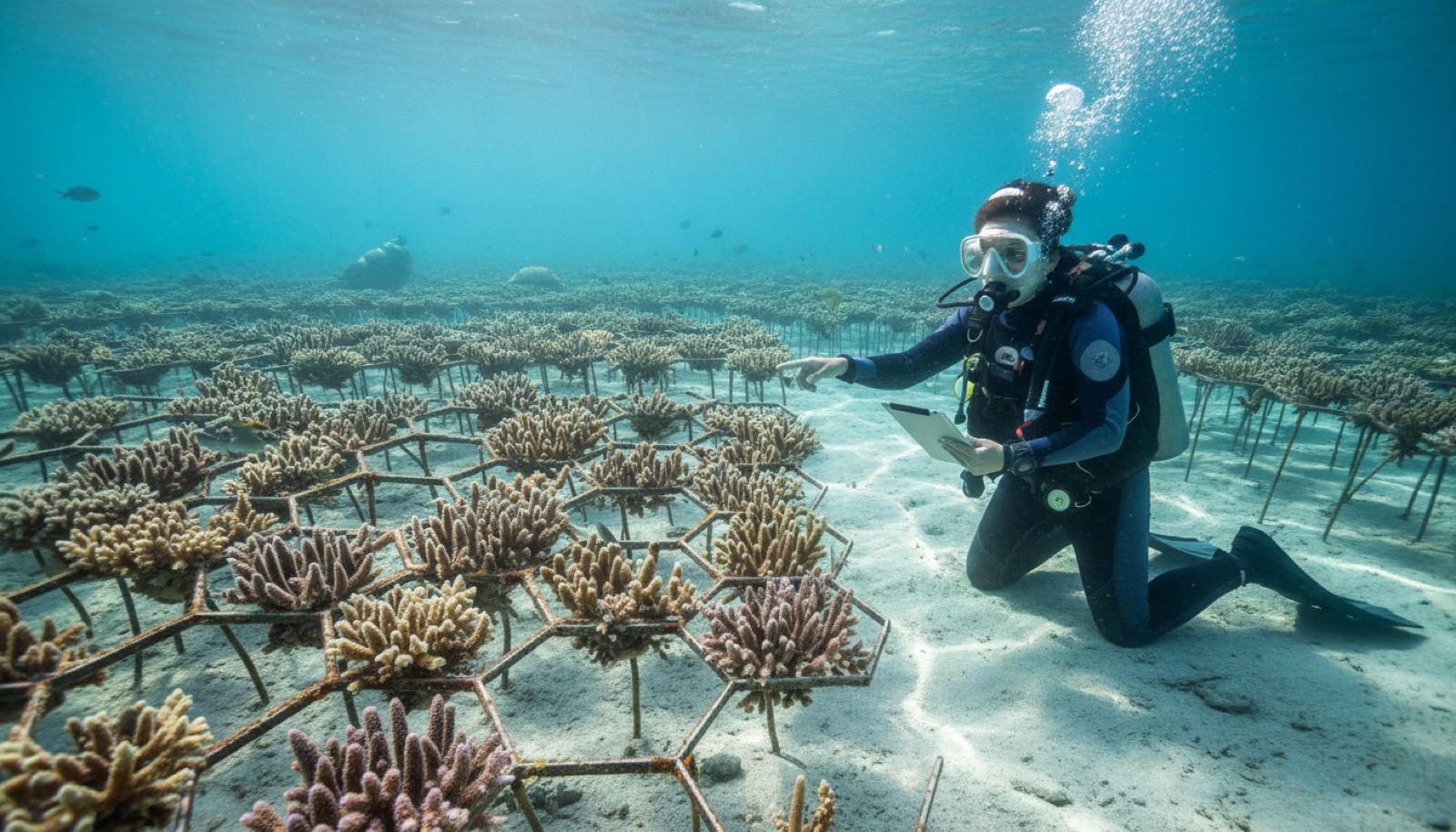
Scuba Guide için yapay zeka destekli illüstrasyon: açıklayıcı amaçlıdır, belgesel fotoğraf değildir.

It is the first rule of reef diving and the most broken: touch nothing. Divers hear it as etiquette, which undersells it badly. The no-touch rule is two safety rules wearing one wetsuit: it protects a living surface that damages easily, and it protects the diver from a living surface that fights back.

What one touch does to the reef

Stony corals are colonies of small animals wearing a thin layer of living tissue over their skeleton, protected by a mucus coating that fends off infection. A hand, a knee, or a dragging gauge crushes polyps and breaches that barrier, opening the door to disease and algae at the wound. The mathematics are unforgiving: a boulder coral may add less than a couple of centimeters a year, so a moment's steadying grip can undo decades, and a busy site absorbs thousands of diver contacts a season. Even without breakage, repeated handling stresses animals that budget every joule: a fish handled loses protective slime coat, an octopus prodded from its den spends energy it needed for hunting.

What the reef does to you

Self-interest argues the same case. Fire coral and stinging hydroids look like harmless fuzz and sting like regret. Scorpionfish and stonefish are camouflage perfected: the hand that finds them finds venomous spines, and stonefish envenomation is a medical emergency. Sea urchins spike careless knees, bristle worms reward pokes, and a titan triggerfish guarding its nest will charge a diver hovering over the wrong patch of rubble. Most marine-life injuries to divers are defensive, and most begin with a human hand arriving first.

Buoyancy is the actual rule

Nearly every reef contact is a buoyancy or awareness failure wearing an excuse. The genuine fixes are unglamorous: weight yourself correctly, get trim flat so fins ride high, look down before you descend, keep a respectful meter of clearance in surge, and learn the back kick so you can retreat without turning. Streamline your kit so no gauge or octopus hose drags a furrow through the coral. If a current genuinely demands stabilization and local rules permit it, a single fingertip or a pointer placed deliberately on bare, dead rock is the accepted technique: chosen, momentary, and never on anything living. Where reef hooks are sanctioned for strong-current hangs, use them as taught, on dead substrate.

Gloves, sticks, and culture

Many marine parks ban gloves precisely to make hands feel consequential, and ban muck sticks that get used as crowbars. Respect both rules and their reasoning: tools that make touching comfortable make touching common. Culture completes the loop: guides who grip coral teach forty divers a week that gripping coral is normal, so choose operators whose staff dive hands-off and take the hint yourself. The same discipline extends to your equipment: clip and stow every dangling hose and gauge, because a console dragged across a reef is a touch you never felt making. On a healthy reef the winning move is the one that looks like nothing: hovering quietly, hands folded, close enough to see everything and touching none of it.
İyi belgelenmiş

İzle

Resmi kanallardan

Tüm videolar →

Cavern and Limited Mine: Understanding SSI’s New Extended Range Overhead…

SSI International · YouTube ↗ · Oct 06

How to make sushi rice at home

Monterey Bay Aquarium · YouTube ↗ · Sep 30

Videolar, içerik üreticilerinin kendi kanallarına yerleştirilmiş bağlantılardır. Hiçbir şeyi biz barındırmıyoruz; her şeyin kaynağını belirtiyoruz.

Avustralya, Yeni Zelanda ve Doğu Asya

Cairns & the Ribbon ReefsNingaloo ReefCoral Sea & Osprey ReefOkinawa & the Kerama IslandsPoor Knights IslandsTownsville & the YongalaGreen IslandIzu Peninsula

Karayipler ve Batı Atlantik

BonaireCozumelRiviera Maya & the CenotesBelize Barrier ReefGrand CaymanIsla Mujeres & CancúnRoatánTiger Beach & Grand Bahama

Avrupa, Atlantik & Akdeniz

Malta & GozoSilfra & IcelandThe AzoresCanary IslandsLarnaca & the ZenobiaScapa FlowArctic NorwayMadeira

Hint Okyanusu ve Doğu Afrika

North & South Malé AtollsAri AtollBaa Atoll & Hanifaru BayAliwal Shoal & UmkomaasMafia IslandMauritiusSeychellesSodwana Bay

Pasifik Adaları & Mikronezya

PalauChuuk (Truk) LagoonFakaravaKona, HawaiʻiRangiroaTaveuni & Rainbow ReefBeqa Lagoon & Pacific HarbourEspiritu Santo

Kızıldeniz & Orta Doğu

Sharm El Sheikh & Ras MohammedBrothers, Daedalus & St John'sDahabHurghada & El GounaMarsa Alam & the Deep SouthAqabaDaymaniyat IslandsMusandam Peninsula

Güneydoğu Asya & Mercan Üçgeni

Bali & Nusa PenidaKomodoRaja AmpatSipadan & MabulAnilaoCoronKoh TaoLembeh Strait

Amerika & Doğu Pasifik

Galápagos IslandsCocos IslandFlorida KeysSea of Cortez & Cabo PulmoSocorro & the RevillagigedosBritish ColumbiaCalifornia Channel IslandsCosta Rica Pacific Coast