基础知识 · 4 分钟阅读
What Scuba Certification Costs
Realistic price ranges for entry-level certification around the world, what the quoted fee usually includes, and the extras that catch people out.
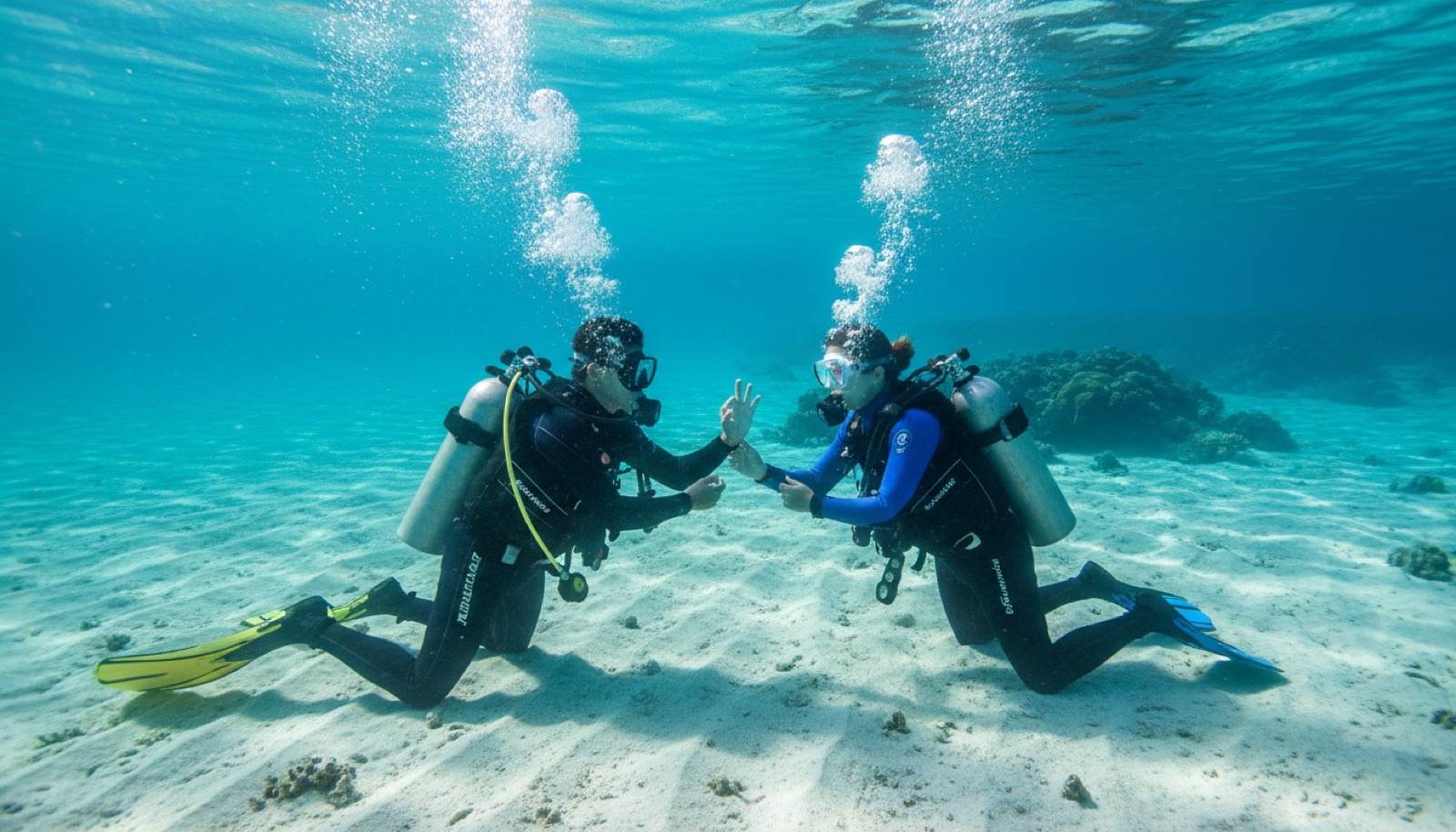
Ask three dive shops what Open Water certification costs and you will get three honest, different answers, because the price depends on where you are, what is bundled, and how the shop pays its instructors. The figures below are typical ranges as this site goes to press; treat them as orientation, not quotes, and always confirm the all-in number before paying a deposit.
Typical course prices by region
- Southeast Asian training hubs (Koh Tao, and similarly Utila in the Caribbean): roughly 250–420 USD for the full course, sometimes with basic accommodations thrown in. Volume keeps prices low; quality varies by shop, not by price alone.
- Most warm-water resort destinations (Mexico, Egypt, Thailand outside the hubs, the Caribbean): roughly 350–550 USD.
- North America, Europe, Australia: roughly 450–800 USD once eLearning, pool time, gear rental and certification fees are all counted, and courses are often spread over several weekends.
Advanced Open Water typically runs 300–500 USD in warm-water destinations. A supervised try-dive experience, if you want to test the water first, is usually 80–200 USD, and many shops credit part of it toward the full course if you continue.
What the quoted price should include
A complete quote covers agency eLearning or classroom materials, instructor time, pool or confined-water sessions, four open-water dives with boat or site fees, all rental equipment including tanks and weights, and the certification card fee. The most common surprises sit exactly where quotes go vague, so ask directly about these.
- eLearning sold separately, often 100–200 USD when not bundled.
- Certification card or processing fees charged at the end of the course.
- Boat, marine-park or site entry fees per training dive.
- A requirement to buy personal gear: some cold-water shops expect you to own mask, snorkel, fins and boots, which adds roughly 100–300 USD.
- Medical evaluation costs if your questionnaire answers require a physician's sign-off.
Cheap, expensive, or somewhere between
Price tracks local wages and volume more than quality. A 300 USD course on Koh Tao and a 700 USD course in California can be taught to the identical standard; the expensive one is not automatically better, and the cheap one is not automatically a factory. What actually predicts a good course: small groups (four to six students per instructor is comfortable), unhurried pool time, an instructor you have met before paying, and a shop that answers cost questions without flinching.
Timing and packaging shift the math at the margins. Low season brings genuine discounts in resort towns, course-plus-accommodation bundles in the training hubs often undercut booking separately, and shops sometimes discount a booked pair or family learning together. Currency swings matter too: a course priced in baht, pesos or Egyptian pounds can move noticeably against your home currency between booking and travel, so recheck the converted figure before you commit.
Two spending rules serve beginners well. First, never pick between two shops on a 30 dollar difference; pick on the instructor and group size, because that difference disappears the moment you compare it against airfare and hotel. Second, budget past the card: your first dozen post-certification dives, which are where the learning actually consolidates, will cost as much again as the course. A certification you never use afterward is the most expensive version of all.